
How to Use Brainwave Entrainment Safely?
The short answer
To use brainwave entrainment safely, start with short sessions of 10 to 15 minutes, keep the volume comfortable and never use it while driving. People with epilepsy or a history of seizures should avoid flashing-light methods and speak to a doctor first. Stop if you feel unwell.
Key points
- Start with 10 to 15 minutes and build up gradually.
- Never use entrainment while driving or operating machinery.
- People with epilepsy or seizures should ask a doctor first.
- Mild headaches, dizziness or poor sleep are the side effects people report.
- Evidence that entrainment changes brain activity is mixed, so keep expectations modest.
Contents (11)
Brain activity is often described in terms of rhythms, each linked with a different state. Alpha is linked with calm, delta with deep sleep and gamma with active thinking. Brainwave entrainment tries to guide those rhythms on purpose using sound.
Entrainment uses external stimuli, such as rhythmic sounds or lights. The idea rests on the frequency following response, in which the brain’s electrical activity tends to follow the frequency of an outside stimulus. Before you press play, here is how to do it safely.
Introduction to Brainwave Entrainment
What Is Brainwave Entrainment?
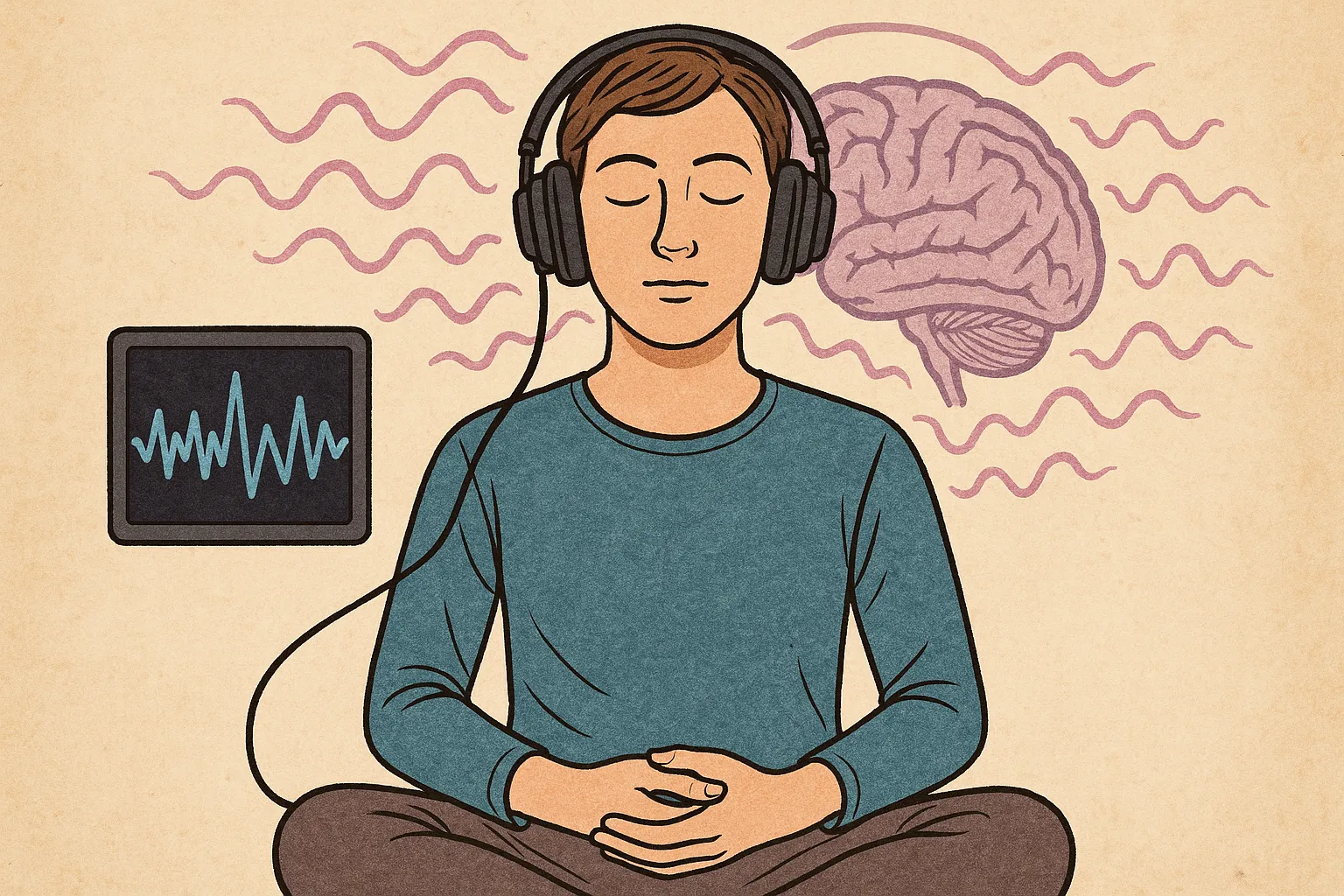
Brainwave entrainment is rhythm training for your brain. Audio entrainment includes binaural beats, isochronic tones and monaural beats. Many people use these sounds to guide themselves toward a calmer or more focused state. It is a bit like neuroscience meeting meditation.
How Does It Work?
When your brain hears a rhythmic pattern, especially one it cannot ignore, activity may start to follow it. That process is called “entrainment”, a little like your foot tapping to music without you noticing.
Different Types of Brainwave Entrainment
- Binaural Beats: need headphones. Two different frequencies are played, one in each ear, and your brain perceives the “difference.”
- Isochronic Tones (also known as isochronic beats): sharp, regular beats that do not need headphones.
- Monaural Beats: two tones combined into one pulsing sound, so headphones are not essential.
- Audio Visual Entrainment: synchronized sound and light, aimed at relaxation, focus or sleep.
- Visual Entrainment: rhythmic light, such as flashing or strobe lights, delivered through devices.
The Science Behind Brainwaves
The Five Major Brainwave States
Each brainwave band is commonly linked with a different state of mind:
Delta (0.5-4 Hz): Deep Sleep. Commonly linked with deep sleep and profound calm.
Theta (4-8 Hz): Meditative/Creative. The dream-like state of deep meditation. Great for visualization or creative brainstorming, according to many practitioners.
Alpha (8-13 Hz): Relaxed Focus. The “in the zone” feeling on a walk or during light meditation. Alpha is associated with calm, clear attention.
Beta (13-30 Hz): Alert and Awake. You are solving problems, chatting or hustling. Beta is associated with alertness and concentration.
Gamma (30-100 Hz): Cognition and Memory. Associated with learning, memory and sharp mental function.
Benefits of Brainwave Entrainment
People report a range of benefits from entrainment, but the evidence is mixed. A 2023 systematic review of 14 studies on binaural beats and brain oscillations found five in line with the entrainment idea, eight with contradictory results and one with mixed results. Keep that in mind as you read the points below.
Better Sleep
Some people use delta tracks to help them wind down for sleep. These slow rhythms are associated with relaxed, calm mental states, though individual results differ.
Enhanced Focus and Learning
Some people use beta and gamma tracks before work or study sessions and say they feel more focused.
Stress and Anxiety Reduction
Alpha and theta tracks are popular for calming down. Many people say they feel relaxed and less stressed afterwards.
Improved Meditation and Mindfulness
New to meditation? Some people find that entrainment audio eases them into the quiet of a session, and that it makes the practice feel simpler.
Is Brainwave Entrainment Safe?
General Safety for Healthy Individuals
Entrainment audio is noninvasive: no pills, just sound. Even so, some people report side effects, so it pays to start gently.
Who Should Be Cautious?
- People with epilepsy
- Individuals with a history of seizures
- Those with severe mental health issues (consult your doctor)
Other methods, such as transcranial magnetic stimulation (TMS), are also used to influence brain activity, but they have different safety considerations.
Common Side Effects (If Any)
- Mild headaches
- Dizziness, especially if you overuse it or use visual stimuli such as flashing lights
- Sleep disturbances if used at the wrong time
Guidelines to Use Brainwave Entrainment Safely
Start Slow and Short
First time? Use it for just 10 to 15 minutes. Rhythmic sounds or lights should be introduced gradually, so you can see how you respond. Like coffee, you do not need a triple shot right away.
Choose the Right Frequency
Want focus? People commonly choose beta or gamma tracks. Want sleep? Many choose delta. Using a stimulating track late at night is like drinking espresso at midnight. Choose tracks that suit the state you want.
Use High-Quality Audio Tracks
Poorly made tracks with harsh sound design are best avoided. High-quality audio tracks use clean, pure tones and a comfortable volume. Choose content from creators you trust.
Avoid When Driving or Operating Machinery
You could end up too relaxed or zoned out, which is not what you want behind the wheel or near machinery.
Tactile stimuli, such as vibrations, are also used in some entrainment methods and should be avoided while driving or operating machinery.
Never Use with Epilepsy or Seizure Conditions
This is not a maybe. Check with your doctor first. The NHS advises people with epilepsy to keep a diary of possible seizure triggers and lists flashing lights as one example, so any method that uses flashing or strobe light calls for particular care.
How to Select the Right Program for You
Define Your Goal First
Do you want better sleep, more energy or less stress? Your goal helps you choose a frequency.
Test Different Methods (Binaural Beats, Isochronic Tones, etc.)
Everyone’s brain reacts differently. Try binaural beats, isochronic tones and monaural beats and see what feels comfortable and what you enjoy.
Use Trusted Sources and Apps
Look for platforms like:
- Brain.fm
- iAwake
- Insight Timer
- YouTube creators with a good reputation
Best Times and Settings for Use
Ideal Times of Day for Each Frequency
- Delta: before bedtime, since this range is associated with deep sleep.
- Theta: during meditation or creative work, since it is associated with relaxation and creativity.
- Alpha: mid-day breaks, when a calming track can offer a short reset.
- Beta/Gamma: mornings or peak work sessions, since these ranges are linked with alertness and mental energy.
Creating a Distraction-Free Environment
Silence your phone. Dim the lights. Reducing noise and visual clutter can help you settle into a session. Sit or lie down comfortably.
Headphones vs. Speakers: What’s Better?
Binaural Beats: headphones are required. Two tones of slightly different frequencies play one in each ear, so the brain perceives a third tone that is not in the audio itself.
Isochronic Tones: speakers are fine.
Tracking Your Results
Journaling Effects
After each session, jot down how you felt. More focus? Deeper sleep? Look for trends over several weeks.
Over time, you may notice changes in focus or mood, though a journal cannot tell you whether the audio caused them.
Apps and Tools for Monitoring Brain Activity
If you are serious, headbands such as Muse or NeuroSky can show brainwave readings in real time. They are consumer devices, so treat their readings as a rough guide.
Myths vs. Facts
“It Rewires Your Brain”: True or False?
Not established. The sources used in this article do not show that entrainment rewires the brain. It is a listening practice, not a brainwashing device, and its effects on brain activity are still being studied.
“It Works Instantly”: Reality Check
You might feel relaxed right away, because sitting quietly with calm sound is relaxing in itself. Any longer-term changes, if they occur, are more likely to come with regular use, and results differ between people.
Conclusion
Brainwave entrainment is a gentle, noninvasive listening practice. Whether you want to sleep better, focus or simply relax, use it with care. Start slow, stay consistent, keep the volume comfortable and always listen to your body.
Frequently asked questions
Can brainwave entrainment be addictive?
Entrainment audio is not a drug, but some people may come to rely on it to relax. Balance it with other ways to unwind.
Is it safe for kids and teenagers?
Always consult a healthcare professional before introducing it to children. If a professional agrees, keep sessions short and the volume low.
How often should I use it?
Start with 3 to 4 times a week. You can go daily once you are comfortable, depending on your goal.
Can I use it for lucid dreaming?
Some people use theta and delta tracks hoping to improve dream recall or lucid dreaming. This article cites no evidence that it works, so treat it as an experiment.
Are there any long-term effects?
This article cites no long-term safety data, so keep use moderate and stop if you feel unwell. Some people say they feel more focused or emotionally steady over time, but that is personal experience, not a research finding.