
Can brainwave entrainment improve focus?
The short answer
Brainwave entrainment may help some people concentrate, but the evidence is mixed. A 2019 meta-analysis of 22 studies found a medium overall effect of binaural beats on cognition, anxiety and pain, with results depending on frequency, timing and listening time. A 2023 review found studies of brain effects split, so expect modest and personal results.
Key points
- Entrainment uses rhythmic sound or light to nudge brain activity toward a target rhythm.
- A 2019 meta-analysis found a medium overall effect of binaural beats on cognition, anxiety and pain.
- A 2023 review found studies of brain effects were split and hard to compare.
- Beta tones are the usual pick for focus, and alpha for calm focus.
- Start with 15-30 minutes and stop if you get headaches or dizziness.
Contents (16)
What is Brainwave Entrainment and Can It Improve Focus?
Staying focused is hard. Notifications ping, emails pop up and thoughts jump around. The idea behind brainwave entrainment is that you could tune your brain toward a rhythm that suits concentration, a bit like tuning a radio.
Entrainment techniques such as light and sound stimulation are used with the aim of guiding the brain into states that support concentration. That is the claim. This article looks at how it is meant to work and what the evidence says.
Introduction to Brainwave Entrainment
What is Brainwave Entrainment?
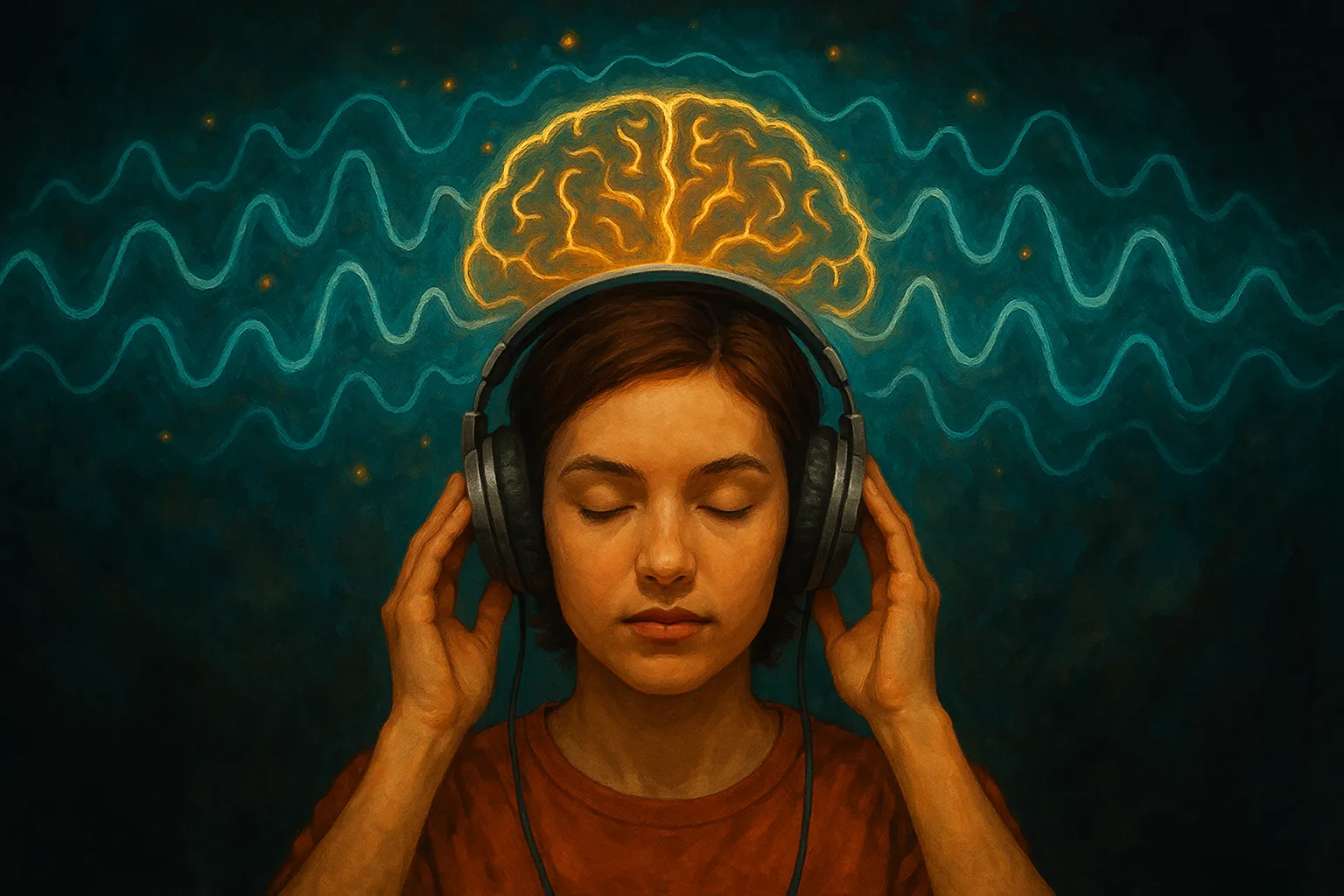
Brainwave entrainment is the process of using external stimuli, such as sound or light, to synchronize brain activity. Think of it as a gentle nudge toward a more productive rhythm.
Techniques include audio and visual stimulation such as binaural beats, isochronic tones and rhythmic light pulses, all meant to align brainwave frequencies with desired mental states.
Brief History and Evolution
The concept is not new. Ancient cultures used rhythmic drumming and chanting in ways that some describe as early forms of entrainment. Today it is delivered through apps, headphones and frequency generators.
How It Works on a Neurological Level
The proposed mechanism is that, when exposed to a consistent external rhythm, the brain’s own electrical activity starts to match it. Researchers call this the frequency following response, and you can picture it as your brain catching a beat at a silent disco. How reliably this happens is still being studied.
Understanding Brainwaves and Their Role
Types of Brainwaves
Alpha and delta waves are commonly targeted for relaxation and sleep.
- Delta (0.5-4 Hz): Deep sleep and unconsciousness. Delta waves are slow oscillations linked with deep sleep and relaxation.
- Theta (4-8 Hz): Light sleep, creativity, daydreaming
- Alpha (8-12 Hz): Relaxed, calm, alert but not focused. The alpha rhythm is associated with relaxed, calm and alert states.
- Beta (12-30 Hz): Active thinking, focus, problem-solving
- Gamma (30-100 Hz): Linked with concentration, learning and memory
Which Brainwaves Affect Focus and Attention?
Beta waves are the ones most often tied to focus. Different brainwave states, such as beta and gamma, are associated with different levels of attention. Beta is most active when you are alert and mentally engaged, and gamma is linked with high-level tasks and peak attention.
Methods of Brainwave Entrainment
Binaural Beats
These require headphones. A binaural beat is created when two slightly different frequencies are played, one in each ear, for example a slightly higher pitch in the right ear. Your brain perceives the difference as a third tone that is not in the audio signal.
Isochronic Tones
Isochronic tones use a single tone pulsed on and off at regular intervals to produce a rhythmic pulse. Some users find the pulse clear and easy to follow.
Monaural Beats
Two pure tones of different frequencies are combined before reaching the ears to produce monaural beats. They work without headphones.
Visual and Vibrational Stimulation
Flashing or flickering lights are used in photic stimulation, which uses periodic stimuli to try to influence brain activity. The visual cortex processes these signals, and it plays a role in how light-based entrainment feels and works. Some devices combine sound and light, known as audio visual entrainment, using LEDs plus audio.
Touch can also be involved, for example with vibrating devices, giving a multi-sensory approach. This is less common.
Focus and Cognitive Performance
What Is Focus in Neuroscience Terms?
Focus is the brain’s ability to filter out distractions and lock onto a task. It is often described as a tug-of-war between the prefrontal cortex (focus) and the limbic system (distraction).
Common Causes of Poor Focus
- Stress
- Sleep deprivation
- Multitasking
- Information overload
- Poor diet or hydration
Why Traditional Methods Often Fall Short
Meditation and mindfulness can work, but they take time. Supplements may help, but results vary. Entrainment is pitched as a quicker, lower-effort route, although whether it delivers is the open question.
Scientific Evidence Behind Brainwave Entrainment
Studies Supporting Focus Enhancement
A 2019 meta-analysis in Psychological Research pooled 22 studies of binaural beats and found a medium overall effect on cognition, anxiety and pain perception. The authors reported that the direction and size of the effect depended on the frequency used, the time under exposure and the moment of exposure. The review covered several outcomes, and focus is only part of the picture.
Skeptical Views and Criticisms
A 2023 systematic review of 14 studies asked whether binaural beats actually change brain oscillations. Five studies found results in line with the entrainment idea, eight reported contradictory results and one was mixed. The authors said the studies differed widely in how they were run, which limits comparison and calls for standardization.
Current Limitations in Research
Because methods differ so much between studies, firm conclusions are hard. Focus effects in particular are not settled, so treat any early positive result as a reason to test it yourself, not as a promise.
How to Use Brainwave Entrainment to Improve Focus
Choosing the Right Frequencies
- Use frequencies in the beta range (13-30 Hz) for concentration
- Alpha (8-12 Hz) if you are feeling overwhelmed and need calm focus
- Some programs combine both for balance
Best Practices for Listening
- Use noise-canceling headphones
- Sit in a quiet place
- Avoid multitasking
- Focus on a single task while listening
Ideal Duration and Timing
Start with 15-30 minutes per session. Many people use it before or during focused work, and some try it mid-afternoon when energy dips.
Tools and Apps for Brainwave Entrainment
Popular Apps and Devices
- Brain.fm: AI-curated music for focus
- Binaural Beats Generator: Customizable
- Neuroprogrammer 3: Desktop software
- Mindplace Kasina: Light and sound machine
Free vs Paid Options
Free apps work for trying the idea. Paid versions often add sound quality, presets and more customization.
Brainwave Entrainment vs. Other Focus Techniques
Meditation
Meditation changes how you relate to your thoughts over time. Some people use entrainment audio to help them settle into that state sooner.
Nootropics
Nootropics are supplements and drugs marketed for focus, and you should talk to a doctor before trying them. Entrainment is noninvasive, but it can have its own side effects.
Pomodoro and Time Blocking
These are great for task management, but they do not play a rhythm into your ears. Some people pair them with entrainment audio.
Personal Experiences and Testimonials
Real Stories from Users
Individual stories are not evidence, but they show why people try it. Some say they use binaural beats before coding sessions or writing blocks because the sound helps them tune out the room.
What Users Say About Focus Changes
Many users report better focus, less mental fatigue and an easier time getting into a “flow” state. Others notice nothing.
Risks and Considerations
Is It Safe for Everyone?
People with epilepsy or neurological conditions should consult a doctor first.
Who Should Avoid It?
Those who are sensitive to sound, prone to migraines or have a history of seizures should be cautious.
Potential Side Effects
Some users report mild dizziness, headaches or agitation, especially with a frequency that does not suit them.
Who Can Benefit the Most?
Students
Some students use it during study sessions to stay on task. It is not clear whether it improves retention or test results.
Professionals
Some professionals use it for deep work and creative problem-solving.
ADHD and Neurodivergent Individuals
It is not a treatment for ADHD. Some people say they feel calmer or more focused with regular use, and anyone with ADHD should ask their clinician before relying on it.
Integrating It Into Daily Life
Morning Routines
Try 15 minutes of focus-based entrainment instead of scrolling your phone.
During Study or Work Sessions
Play beats during writing, reading or intense concentration.
Before Bed to Improve Next-Day Focus
Use alpha or theta tones to calm the mind before sleep.
Myths About Brainwave Entrainment
It Works Instantly
You may feel something quickly, but any lasting benefit is more likely to come from steady use.
It Replaces Sleep or Diet
No. It is a tool, not a replacement for good habits.
You Must Use Headphones
Not always. Isochronic tones work without them, but for binaural beats, headphones are a must.
Final Thoughts on Brainwave Entrainment and Focus
Can brainwave entrainment improve focus? It may, for some people. It is not a magic bullet, and the evidence is mixed.
If you want to try it, start small, keep the volume comfortable and track whether your focus actually changes. Keep it if it helps and drop it if it does not.
Frequently asked questions
How fast can I expect results from brainwave entrainment?
Some people feel a change within minutes, while others notice nothing. Any lasting change in focus is more likely to come from regular listening over a few weeks, though that is a personal experience rather than a promise.
Do I need special headphones for brainwave entrainment?
Not always. Binaural beats require headphones, but isochronic tones can be played through speakers.
Can I use brainwave entrainment while working or driving?
People often use focus tracks while working. Avoid deep relaxation tones unless you are safely seated, and do not listen while driving or operating machinery.
Is brainwave entrainment scientifically proven?
No. Some studies report effects on focus and anxiety, but results are mixed and more research is needed before firm conclusions.
Can children or teens use brainwave entrainment?
Ask a doctor first. If they agree, keep sessions short and have an adult supervise, especially for younger users.