
What are the health benefits of Himalayan salt lamps?
The short answer
There is little evidence that Himalayan salt lamps improve health. Cleveland Clinic says they do not produce enough negative ions to make a difference, and that there is no evidence they absorb toxins from the air. Many people still enjoy the warm glow as a relaxing part of a bedtime or meditation routine.
Key points
- Cleveland Clinic says there is little evidence for the claimed health benefits of salt lamps.
- There is no evidence that salt lamps absorb toxins from the air.
- A review of 33 studies found no consistent effect of air ions on anxiety, mood or sleep.
- The warm, dim light may still help create a calm atmosphere for some people.
- Treat a salt lamp as decor and keep it safely away from children and pets.
Contents (10)
What is a Himalayan Salt Lamp?
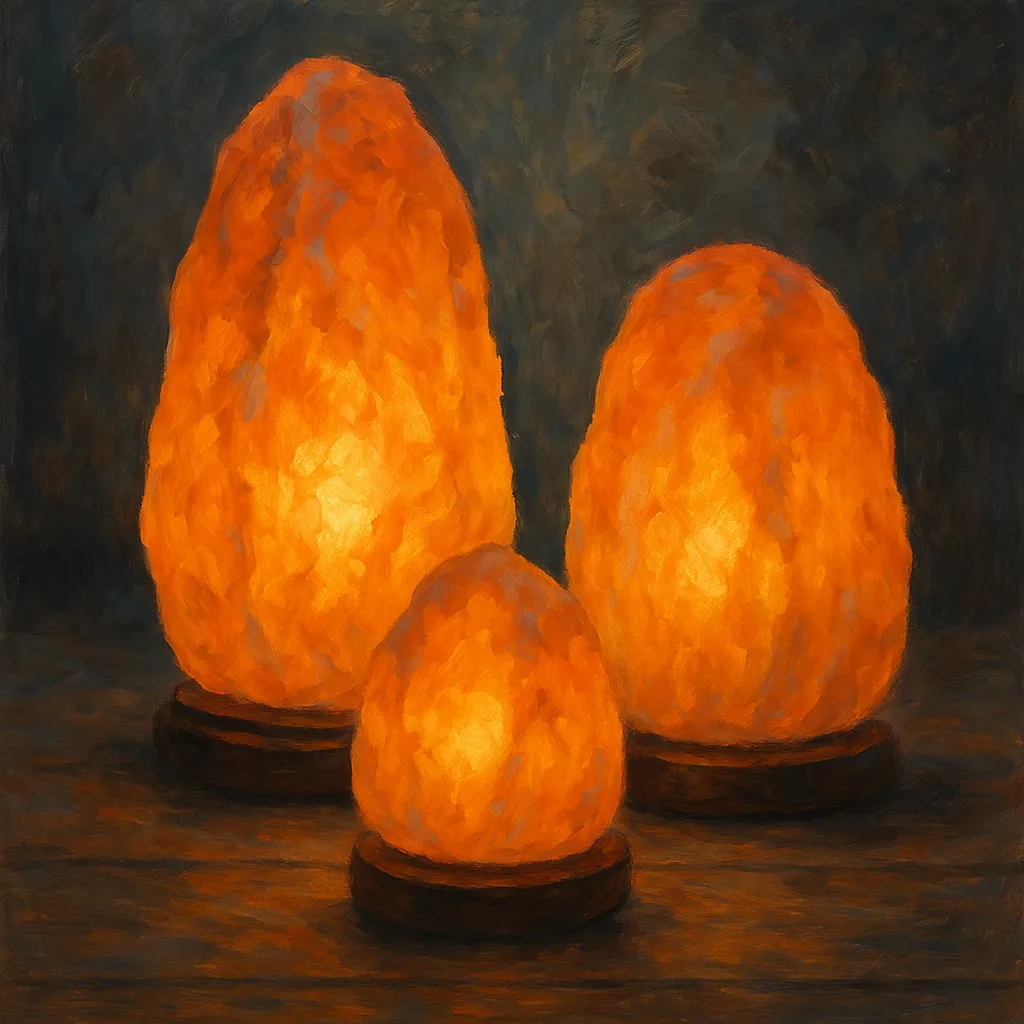
You’ve probably seen one glowing softly in a spa or yoga studio, a pinkish-orange rock sitting on a wooden base. That’s a Himalayan salt lamp. Made from chunks of pink salt crystals mined from the Khewra Salt Mine in Pakistan, they’re hollowed out to fit a light bulb inside. Once lit, they give off a soft amber glow.
How Are They Made?
Craftsmen carve large blocks of salt into various shapes, from rugged chunks to polished spheres, then drill them to make space for a light bulb. The claim is that once lit, the salt is gently heated and this activates its ionizing properties. As we’ll see below, that claim is not well supported.
The Appeal of Their Warm Glow
Even if they did nothing for your health, people would still buy them for the cozy look. A warm, dim light is a pleasant way to create a calm corner of a room.
The Science Behind Salt Lamps
Do They Really Emit Negative Ions?
Many of the claimed health benefits revolve around the release of negative ions. The idea is that heat plus salt produces negative ions, which are said to attach to pollutants and neutralize them.
Ionization and Air Purification Explained
Negative ions are found in nature, for example after a storm or near waterfalls, and they are often linked with fresh air and a sense of well-being. The claim is that the lamps replicate this effect indoors by drawing moisture and airborne particles such as dust, pollen and smoke out of the air. Cleveland Clinic says there is no evidence that the lamps can absorb toxins from the air.
Scientific Support: What Do Experts Say?
Here’s the catch: Cleveland Clinic says there is not a lot of evidence to support the idea that salt lamps provide any of the supposed health benefits. It notes that one study suggested negative ions might decrease depression in some people, but that the lamps do not produce enough negative ions to make a difference. A review of 33 studies on air ions and mood found no consistent effects for anxiety, mood, relaxation, sleep or personal comfort. Negative ionization was associated with lower depression scores, particularly at the highest exposure level.
Potential Health Benefits of Himalayan Salt Lamps
Air Quality
Many users say the air in their space feels cleaner with a salt lamp on. That is a personal impression, and the evidence above does not show that the lamps change the air.
Dust and Allergens
The claim is that the lamps attract water molecules and, with them, dust and allergens. Cleveland Clinic says you can try an air purification machine if allergens are a concern.
Mold and Bacteria
Some people believe the lamps reduce airborne mold spores and bacteria. Cleveland Clinic says there is little evidence for improved air quality. If air quality is a concern, it says you can try an air purification machine.
Mood and Energy
People often say they feel better around these lamps. Cleveland Clinic describes the calming effect as anecdotal, so it may be the light, the surroundings or simply the habit of slowing down.
Stress and Anxiety
Think of a salt lamp as a candle’s electric cousin. A gentle light in the evening can be part of a wind-down routine after a stressful day. Any calming effect is a personal impression rather than something the evidence has shown.
Sleep
If you want to cut screen time before bed, a dim, warm lamp is a pleasant alternative to bright lights. Cleveland Clinic says there is little evidence for better sleep from salt lamps, so any benefit people notice may come from the dim light and the routine rather than the salt.
Respiratory Health
Cleveland Clinic says there is little evidence for improved respiratory health from salt lamps. If you struggle with sinus congestion or asthma, a lamp is not a substitute for medical advice or treatment.
Seasonal Affective Disorder (SAD)
When the days get shorter and your mood dips, a warm glow can feel like a mini sunrise in your room. Speak to a doctor if low mood is affecting your life.
Aesthetic and Wellness Benefits
Ambiance and Relaxation
Think of Himalayan salt lamps as wellness decor. They can turn a bland room into a calm retreat, whether you’re meditating, reading or just unwinding.
Mindfulness and Meditation Support
A glowing salt lamp in your meditation corner can act as a visual anchor and help you stay settled. The soft light is a pleasant backdrop for breathwork or journaling.
Decorative Value in Your Home
From rustic to modern, these lamps suit nearly every decor style. They come in different shapes and sizes, and some are carved into animal forms or set in baskets with multiple chunks.
Limitations and Common Myths
The Negative Ion Debate
Many claims around negative ions are overstated. Cleveland Clinic says salt lamps do not produce enough negative ions to make a difference.
Overblown Claims and Skepticism
Cleveland Clinic says there is little evidence for the claimed health benefits, so keep your expectations grounded.
Placebo Effect: Is That So Bad?
Even if the effects are partly psychological, feeling calmer or more settled with a lamp on your nightstand is a perfectly good reason to enjoy it.
How to Use a Himalayan Salt Lamp for Maximum Benefit
Placement Tips
- Bedroom: Pleasant for winding down before sleep
- Office: Softer than harsh overhead light
- Living Room: Adds a cozy feel for guests or quiet nights in
Choosing the Right Size
Match the lamp to the room. A small lamp suits a bedside table, while larger spaces suit a bigger lamp or a few small ones.
Cleaning and Maintenance
Salt attracts moisture, so keep your lamp in a dry area. If it gets damp, unplug it and wipe it down with a dry cloth. Place it on a stable surface, and use a coaster on wooden furniture.
Final Thoughts
Are Himalayan salt lamps magic? Probably not. Can they make your space more peaceful and help you unwind? For many people, yes, as decor. As health products, the evidence is thin.
Enjoy one for the look and the glow, and treat any health benefit as a bonus rather than a promise.
Frequently asked questions
Do Himalayan salt lamps actually clean the air?
There is no evidence that they do. Cleveland Clinic says you can try an air purifier if you want cleaner air. A salt lamp is better thought of as decoration.
Can I use one in my child’s room?
Cleveland Clinic advises keeping a lamp where it can’t be knocked over and out of reach of children and pets.
How long should I leave it on?
Follow the manufacturer’s instructions. The sources cited here do not give a recommended time.
What size lamp do I need for my room?
Choose a size that suits the space. A small lamp is enough for a bedside table, while a larger room may suit a bigger lamp or several small ones.
Are there any health risks?
The main concerns are practical: keep it dry, stable and out of reach of children and pets. Don’t use it as a substitute for medical treatment.