
What Certifications Are Needed for Sound and Vibration Therapists?
The short answer
Requirements vary by country and workplace, so no single certification fits every sound and vibration therapist. Many practitioners take courses in sound therapy, anatomy and client safety to build skills and trust. If touch massage is part of the work, local massage licensing rules may also apply.
Key points
- Requirements differ by country, region and employer, so check local rules first.
- Sound therapy, vibrational healing and music therapy courses cover different skills.
- Check a program's accreditation and who recognizes it, not only its title.
- People with epilepsy, pacemakers or pregnancy should ask a clinician before whole body vibration.
- Many programs combine coursework, supervised practice and an assessment.
Contents (14)
Introduction
Holistic wellness is popular, and sound and vibration therapy is part of that interest. Many people see wellbeing as more than medicine: it is also about balance, rest and feeling well in your body. If you want to practice sound and vibration therapy professionally, the right training matters. It shows your skills and gives clients confidence that they are in safe hands.
Understanding Sound and Vibration Therapy
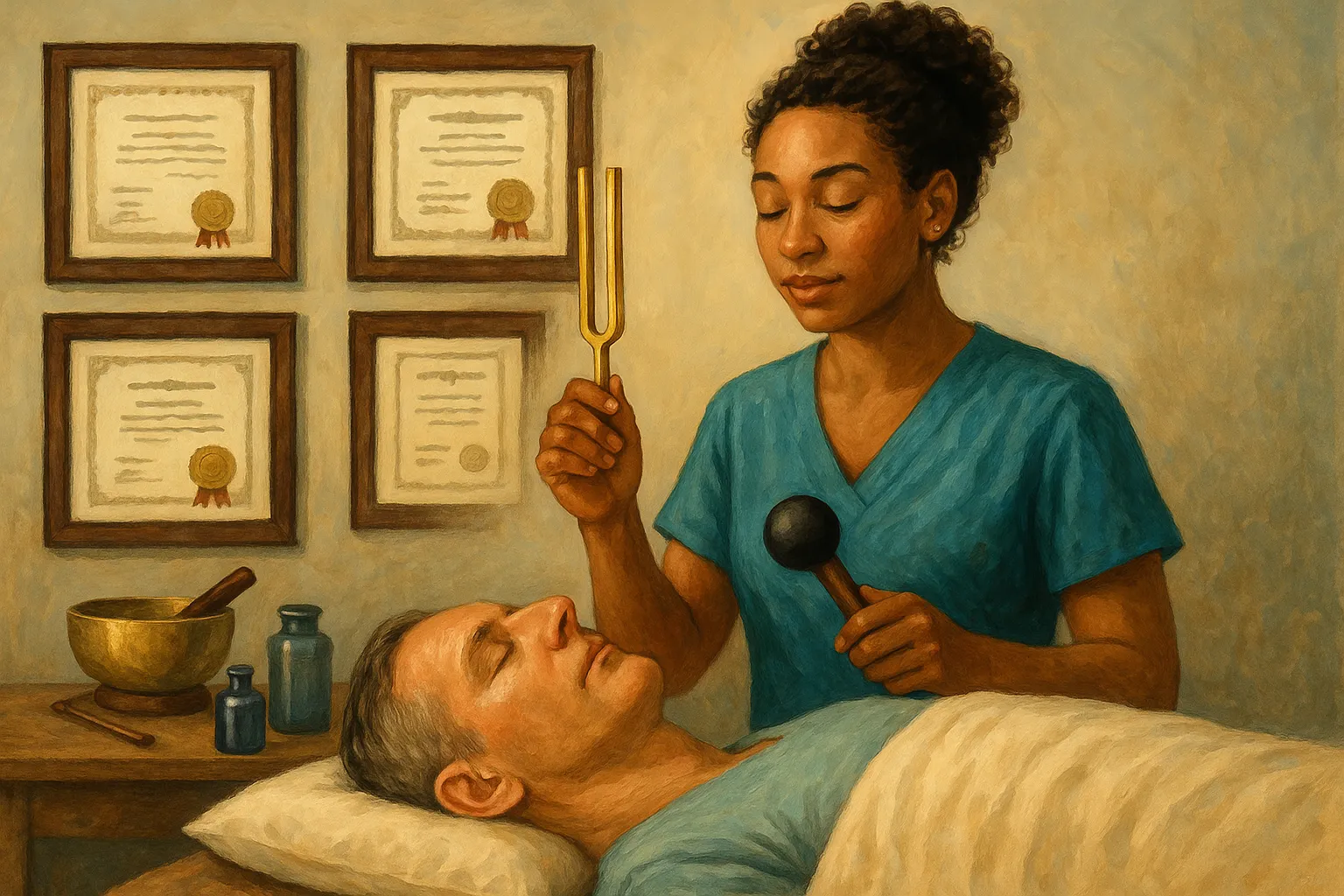
Sound and vibration therapy is the use of sound and vibration to help the body and mind relax. Practitioners may use singing bowls, tuning forks, drums, or even their voice to create resonant tones that many people find calming.
Practitioners describe the sounds as affecting brain waves and tissues, and as helping the body’s natural rhythms settle. These are descriptions from within the practice, not measured facts.
Many clients report better sleep, less anxiety, improved focus, and sometimes relief from chronic pain. One observational study of 62 adults found that people reported less tension, anger, fatigue and depressed mood after a singing bowl meditation. Because it was an observational study, it cannot show that the bowls caused the change. Research is still catching up with what practitioners and clients describe.
Types of Sound Healing
Sound healing is a broad field with many techniques, all aimed at relaxation and a sense of balance.
Sound therapy often involves listening to selected tones, either live or pre-recorded, to help people unwind and ease stress.
Vibrational medicine is a name practitioners give to using tools like tuning forks, which are placed near or on the body to produce vibrations. Practitioners say this supports energy flow and balance. These are traditional descriptions rather than established medical effects.
Music therapy is another popular approach, where music is chosen to encourage emotional processing and relaxation. It is often used in clinical settings to support mental health and well-being.
Sound baths place participants in a meditative setting filled with sound from instruments like crystal singing bowls, Tibetan singing bowls, and gongs. Many people find the sound and vibration calming.
Other sound healing techniques include guided meditation with sound, tuning fork therapy, neurologic music therapy, vibroacoustic therapy, brainwave entrainment, Nordoff-Robbins music therapy, and the Bonny Method of Guided Imagery and Music (GIM).
Whether you are drawn to the gentle hum of tuning forks or the immersive experience of a sound bath, there are many ways into this field.
The Importance of Certification
You might wonder whether anyone can buy a singing bowl and start offering therapy. In many places that may be possible, but without training it is hard to build credibility. Certification shows you have studied the techniques, understand client safety, and know how to use the tools well.
It is also about ethics. Good programs teach professional guidelines that keep sessions safe. In many regions you will also need official training to work in wellness centers, spas, or medical collaborations. In the United States, for example, 45 states and the District of Columbia regulate massage therapy, and therapists there must get a license or certification before practicing massage. Whether that applies to sound work depends on local rules.
Core Certifications for Sound and Vibration Therapists
Certified Sound Therapy Practitioner
This is one of the most common course titles. It typically covers the basics: how to use different instruments, an introduction to sound healing, client care, and how to run a session.
Its focus is on foundational skills, which makes it a sensible starting point for beginners.
Certified Vibrational Healing Practitioner
This type of program goes deeper into vibration, energy-field concepts from healing traditions, and how vibration is used on the body. It may cover binaural beats and devices that vibrate to stimulate muscles, which make them contract and relax.
Certification in Music Therapy
Music therapy is more clinical than most sound healing. Routes into it differ by country, so check what your local professional bodies require. Programs often include training in research methods, such as how a control group is used to measure outcomes.
Reiki and Energy Healing Certifications
Many sound therapists combine their practice with Reiki or other energy healing methods, which adds a spiritual element to sessions.
Internationally Recognized Certifications
The schools below are examples of providers you may come across. Confirm each one’s current courses, accreditation and recognition on its own website before enrolling.
International Sound Healing Academy (ISHA)
Described as offering online and in-person courses at several levels, from beginner to advanced.
Globe Institute of Sound and Consciousness
Described as a U.S.-based school offering diploma programs in sound healing.
College of Sound Healing (UK)
Described as offering training in vocal toning, gong therapy, and sound baths.
International Institute for Complementary Therapists (IICT)
Described as a certification body that also provides professional membership and insurance benefits for practitioners.
Complementary Training and Certifications
Yoga Alliance and Meditation Teacher Training
Pairing sound therapy with yoga or meditation training makes your practice more versatile.
Mindfulness-Based Stress Reduction (MBSR)
MBSR training can add to your skills in stress management techniques.
Holistic Health and Wellness Coaching
Gives you tools to offer clients a more complete wellness plan.
Anatomy and Physiology Courses
Even basic knowledge of the human body can build your confidence and safety as a practitioner.
Safety Considerations in Sound and Vibration Therapy
Approach these practices with safety in mind. Before starting any sound session or whole body vibration exercise, it is wise to consult a healthcare professional, especially if you have underlying health conditions or specific concerns.
Whole body vibration may not suit everyone. People with spinal fractures, multiple fractures, a recent joint replacement, or metal pins or plates should ask a clinician first. The same goes for people with neuropathy, fibromyalgia, epilepsy, pregnancy, pacemakers, skin rashes, open wounds, hypertension, or a risk of blood clotting. Always discuss your health history with your practitioner.
Sessions should take place in a comfortable, supportive setting, guided by a qualified practitioner who understands the safety considerations and can adapt to your needs.
Taking these precautions helps you enjoy a relaxing experience while keeping risks low. Good guidance and a focus on safety matter more than any claim about benefits.
How to Choose the Right Certification Program
Not all certifications are equal. Before enrolling, check if the program is accredited, who recognizes it, and whether it fits your career goals.
Also think about logistics: can you commit to in-person workshops, or do you prefer online flexibility? How much time and money are you ready to invest?
How to Become a Sound Bath Practitioner
Sound baths are one of the types of sound healing covered above. Requirements vary by country and workplace, so no single certification fits everyone. In many places offering sessions may be possible without training, but certification shows you have studied the techniques and client safety, and many programs combine coursework, supervised practice and an assessment.
Steps to Becoming a Certified Sound and Vibration Therapist
- Research schools and programs: Compare curriculums, costs, and reviews.
- Complete core training: This could be a few weeks to a year, depending on the program.
- Gain supervised practice hours: Many certifications require practical hours before awarding credentials.
- Pass assessments: This could be a written test, practical exam, or final project.
- Commit to ongoing education: Renew your certifications and stay updated on new techniques.
Career Opportunities After Certification
With a certification, several paths open up:
- Wellness centers and spas: Offer relaxation therapies.
- Private practice: Build your own client base.
- Yoga or meditation studios: Add sound healing to existing classes.
- Corporate wellness: Offer relaxation sessions at work.
- Online sessions: Reach a wider audience through virtual sessions.
Challenges and Considerations in This Field
Sound therapy is not yet fully integrated into mainstream healthcare. Some clients may be skeptical, so education and clear communication are key. Insurance coverage can also be tricky, depending on where you practice. And like any profession, you will need to keep learning and refining your skills.
Conclusion
Sound and vibration therapy is a growing field. To practice it professionally and ethically, good training matters. It builds credibility, supports client trust, and widens your career options. Whether you want to work in a spa, a yoga studio, or with private clients, the right certification can help you stand out.
Frequently asked questions
Do you need a license to practice sound therapy?
It depends on where you live and what the work involves. Rules differ by country, and touch-based massage may fall under separate licensing, so check with your local authority. Even where nothing is required, a recognized certification helps show professionalism and credibility.
How long does it take to become certified?
Depending on the program, it can take anywhere from a few weeks for basic courses to a year or more for advanced diplomas.
Are online sound therapy certifications valid?
Many academies offer online certifications, but make sure the program is accredited and recognized where you plan to work.
Can sound therapy be combined with other healing practices?
Yes. Many practitioners combine it with Reiki, yoga, meditation, or holistic coaching.
How much can certified sound and vibration therapists earn?
Income varies with location, experience and how a practice is set up, for example private sessions, workshops or retreats. Check what practitioners in your area charge before planning around any figure.