Can Sound and Vibration Massage Relieve Pain?
How sound baths, massage guns and whole-body vibration relate to muscle tension and pain, what research suggests, and how to try them with sensible limits.

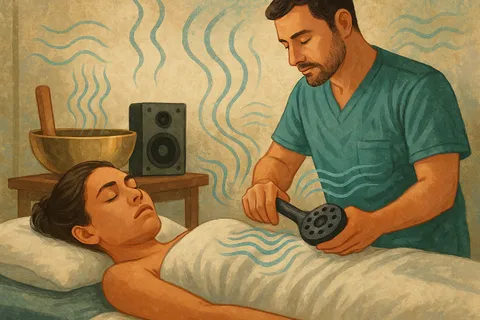
Sound and vibration massage uses gentle tones and physical vibration, rather than hands alone, to help the body relax. A practitioner may place singing bowls on or near the body, hold a tuning fork close to it, or use a table or device that carries low frequency vibration. The sound is felt as much as heard, and many people describe a soft humming sensation that spreads through the muscles and chest. Sessions are usually done lying down, fully clothed, in a quiet room, and they tend to be slower and more passive than a traditional massage because there is little pressure or kneading. People often try it to unwind, to ease a feeling of tension or to take a break from a busy mind. Research on vibration and sound for comfort and stress is still developing, and results vary from person to person, so it is best seen as a relaxation practice rather than a medical treatment. Some people should ask a doctor first, for example anyone who is pregnant, has a pacemaker or has a condition affecting the bones, joints or circulation. The articles below explain how it works, what tools and techniques are used, what to expect in a session, who it suits and what to consider if you want to train as a practitioner.
How sound baths, massage guns and whole-body vibration relate to muscle tension and pain, what research suggests, and how to try them with sensible limits.
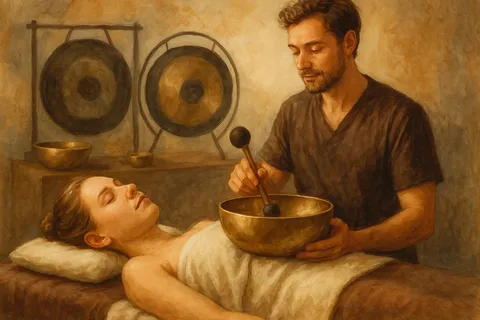
An overview of the reported benefits of sound and vibration massage, from relaxation and muscle comfort to sleep and mood, and what evidence exists.
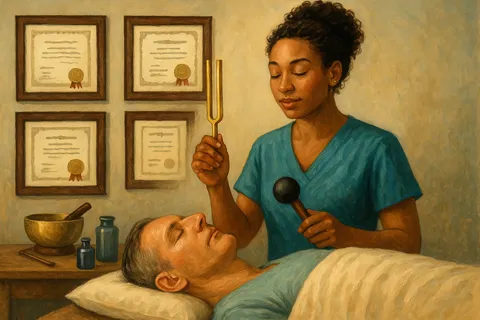
An overview of certifications and courses for sound and vibration therapists, why they matter for professional practice, and how to compare providers.
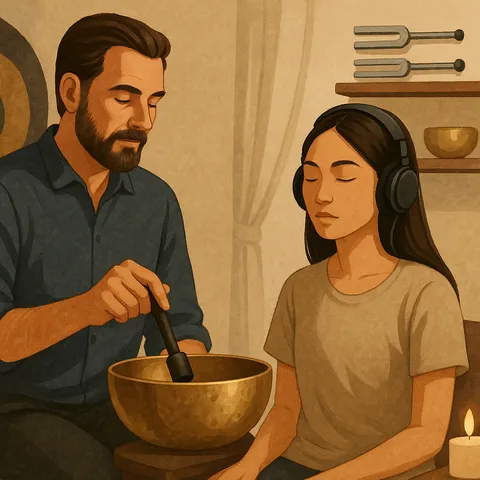
Professional practice points for sound and vibration therapists: client screening, consent, session structure, instrument care and ongoing learning.
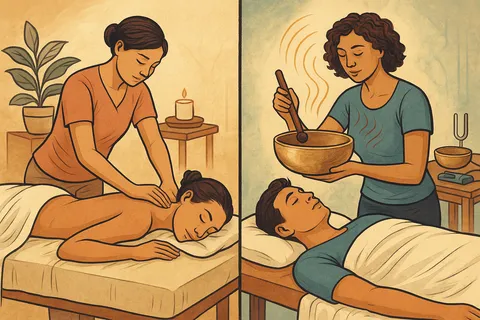
A side-by-side look at sound and vibration therapy and traditional massage: touch versus resonance, tools, session feel, who each suits and what to consider.
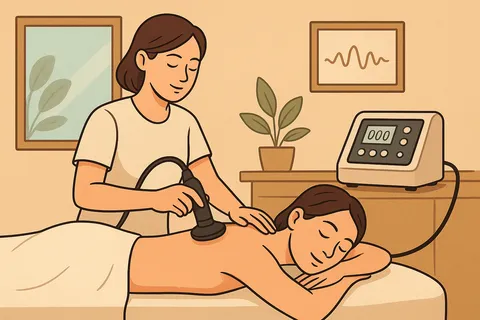
What training is involved in offering sound and vibration massage: core skills, safety knowledge, instrument practice, regional rules and further learning.
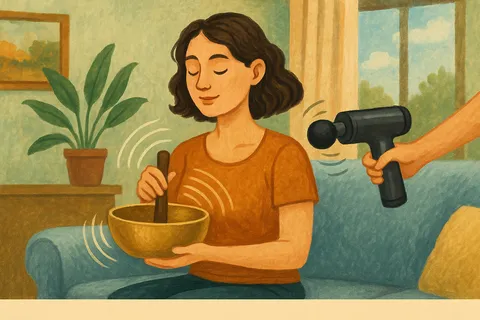
A practical guide to trying sound and vibration massage at home, with simple tools, a calm setup, basic technique tips and safety points to keep in mind.
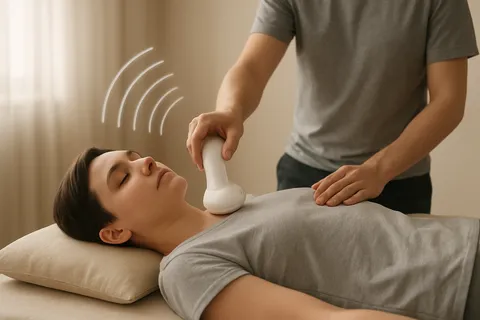
A look at what studies say about vibration massage, massage guns and sound sessions after exercise, including soreness, fatigue and how to use them.
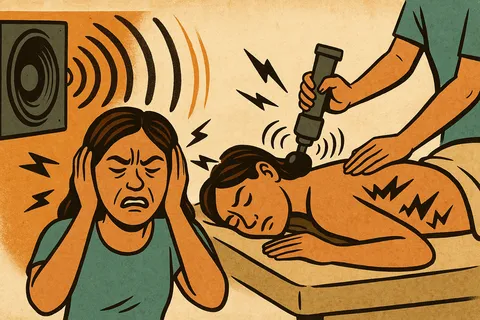
The main risks and precautions of sound and vibration massage, including loud volumes, massage gun misuse, who should take care and when to stop a session.
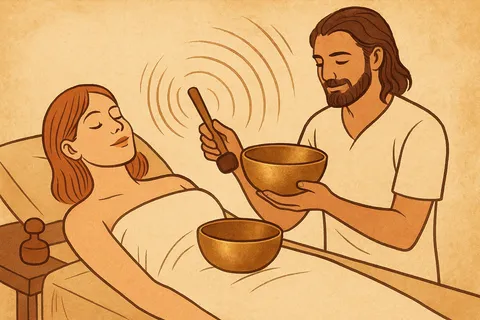
Guidance on how often to book sound and vibration massage, from occasional sessions to regular routines, and how goals and recovery needs shape the rhythm.
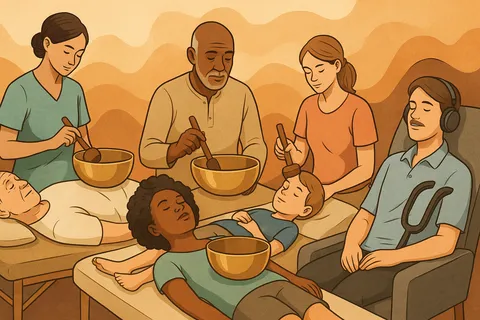
Who tends to be a good fit for sound and vibration massage, who should be cautious or check with a clinician first, and how to choose a suitable practitioner.
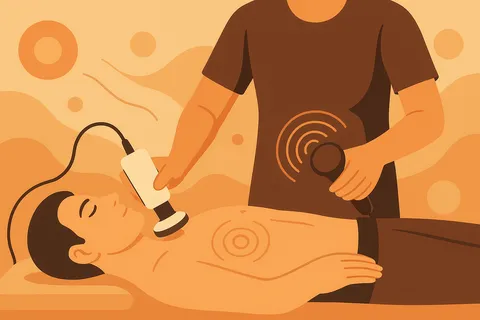
A guide to common sound and vibration massage techniques: singing bowls, tuning forks, gongs, voice, massage guns and vibroacoustic furniture.

An overview of how sound baths and vibration massage may affect stress, mood and the nervous system, what the research does and does not show, and safe use.
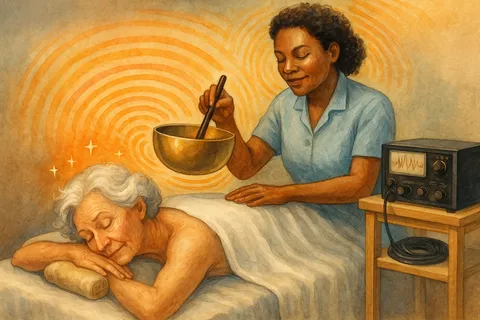
How long a sound and vibration massage usually lasts, how short and long sessions differ, how often people book them and tips for making the most of it.
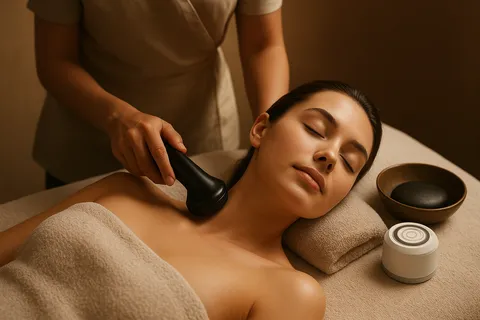
An introduction to sound and vibration massage: how a session runs, the sensations to expect, the tools used, how it differs from touch massage.
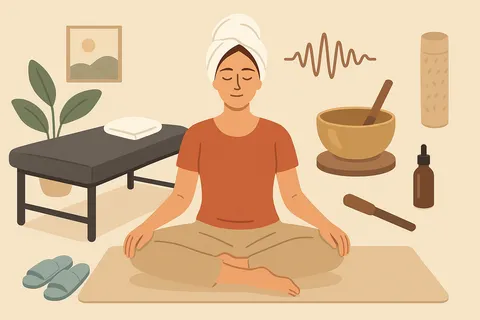
Simple steps to prepare for a sound and vibration massage: what to wear, what to eat and drink, how to settle your mind and what to tell your practitioner.
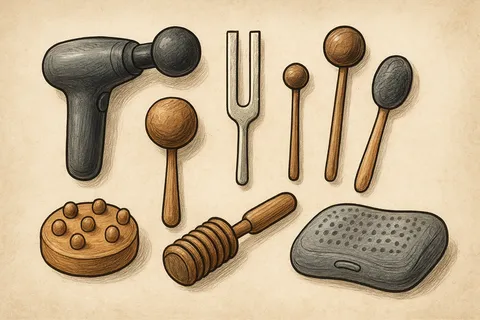
A rundown of the tools used in sound and vibration massage, from singing bowls and tuning forks to massage guns, handheld devices and vibrating mats.
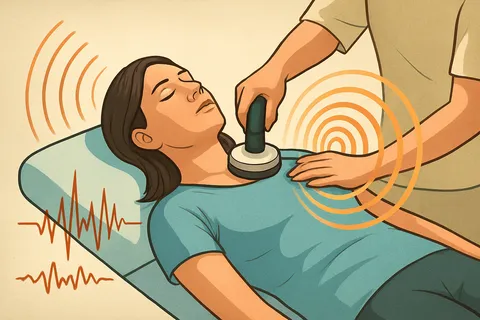
An explanation of how sound waves and vibration reach the body, how they affect muscles and the nervous system, and what a typical session involves.