
How Often Should You Get a Sound and Vibration Massage?
The short answer
There is no proven schedule for sound and vibration massage, so how often you go is a personal choice. The weekly, biweekly and monthly rhythms below are common practice among practitioners, not research findings. Start with what suits your goals and budget, then adjust to how you feel.
Key points
- Weekly to monthly is common practice, not a researched schedule, so adjust by how you feel.
- Goals matter: stress, recovery after exercise and simple curiosity can each call for a different rhythm.
- A 2023 review of massage guns found short-term gains in flexibility, mostly in young healthy men.
- Massage guns can cause harm; one case report described severe muscle breakdown after use.
- Keep a short journal after sessions to spot your own patterns over time.
Contents (20)
Introduction
Sound and vibration massage has become popular in wellness circles, and one question keeps coming up: how often should you actually get it? Frequency shapes how the sessions feel and what you take from them. This guide helps you find a rhythm that suits your body and mind. The schedules below are common practice, not the result of studies, so treat them as starting points.
What Is a Sound and Vibration Massage?
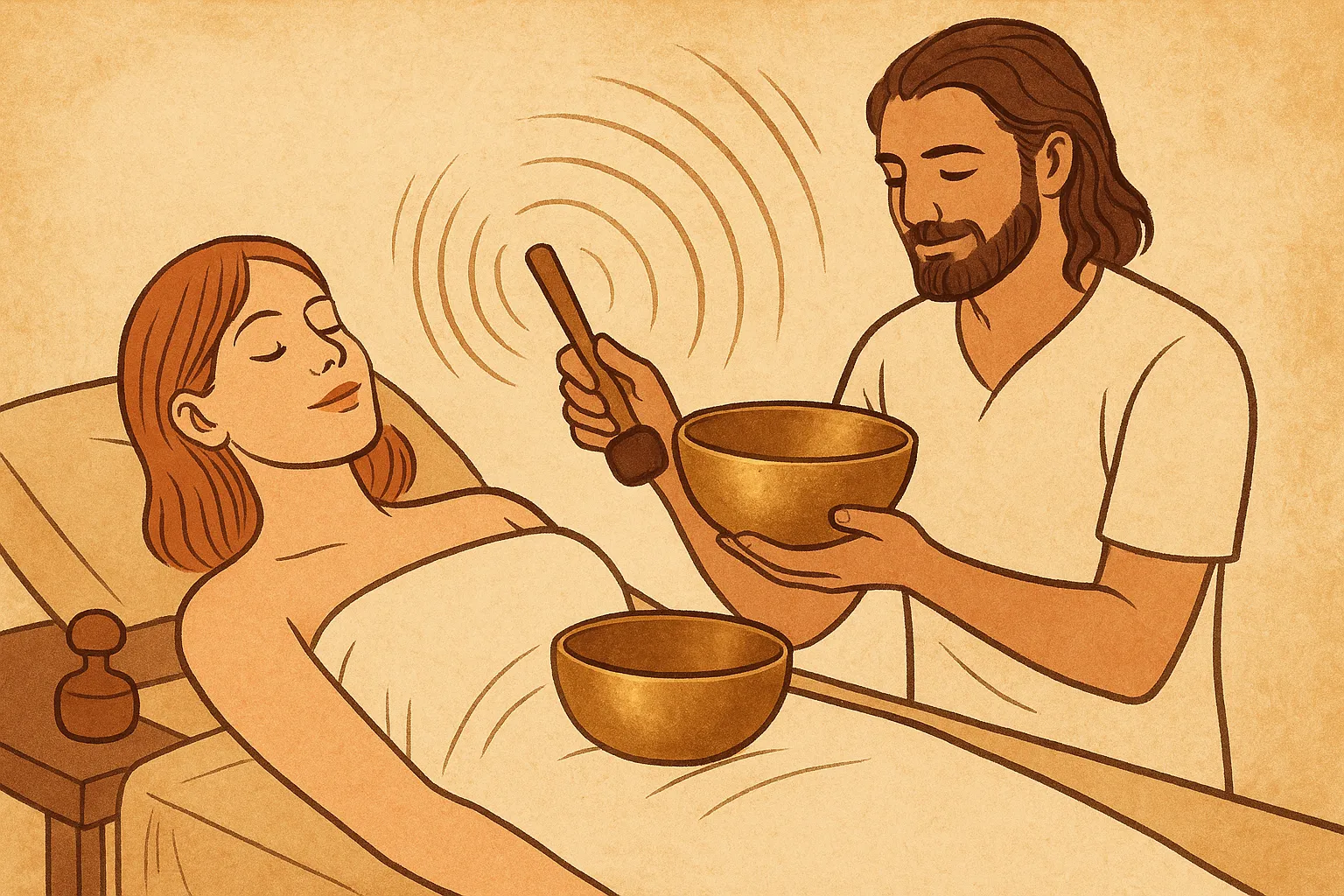
Unlike traditional massage, which relies on physical touch, sound and vibration massage uses sound and mechanical vibration. It is a form of vibrational therapy, which applies specific frequencies to the body. Practitioners may use singing bowls, tuning forks, gongs, or vibration beds that send gentle waves through your body. Instead of kneading muscles, practitioners in this tradition describe it as working with the body’s energy system. That is a belief of the practice, not something measured.
The Science Behind Sound and Vibration Therapy
Ever noticed how a favourite song can lift your mood? A session may feel similar, but it is hard to say how much of the effect comes from the sound and vibration themselves, and how much from lying still in a calm room. Practitioners often explain the experience through resonance, the idea that certain frequencies “align” with the body. That is a way of describing the experience, not an established mechanism. Some people say they feel calmer and more relaxed afterwards, and that is the most that can be said in general terms. The sections below look at the evidence we can point to.
Benefits of Sound and Vibration Massage
- Stress reduction: Many people say they feel deeply relaxed after a session. Relaxing muscles and calming the mind may help with stress.
- Muscle comfort: Vibration can feel like it loosens tight muscles. For massage guns, a 2023 systematic review of 11 studies found improved flexibility and range of motion in the short term. It also noted a moderate risk of bias in 10 of the 11 studies and mostly young, healthy male participants.
- Muscular tension and cramps: Some people use vibration to ease tense muscles or cramps, and many find that it feels good.
- Emotional balance: Many people say they release built-up emotions during sessions.
- Sleep: Some people feel deeply rested afterwards and sleep better, though experiences vary.
Choosing the Right Equipment
The right equipment should match your goals, whether you want to relax your whole body or loosen a specific muscle. Not all devices are alike. Massage guns are popular for sore muscles, but they are percussive tools rather than the broader vibration you get from a platform or bed. Consider whether you want a handheld device for specific muscle groups or a platform for whole body sessions. Check that the device is designed for the purpose you have in mind and follow the manufacturer’s instructions. Manufacturers often quote frequency ranges, but this article cannot point to research that shows one range is best.
Massage Technique
How you use vibration matters as much as the equipment. Massage therapists often use a gentle vibration technique with an up and down movement. This approach aims to loosen muscle fibres and ease muscle pain without overwhelming the body. Some therapists combine vibration with other techniques, such as percussion massage, to work on stubborn muscle knots. Pressure matters too: too much can cause discomfort or adverse effects, while light, controlled pressure is the safer place to start. Whether you use a device at home or work with a professional, good technique and gradual intensity make for a safer session.
Blood Circulation and Vibration
Vibration is often said to boost blood circulation. The idea is that rhythmic vibration increases blood flow, which could deliver oxygen and nutrients to tissues. This article does not cite research that confirms it for sound and vibration massage, so treat it as a common explanation, not a proven benefit. If you have poor circulation, chronic pain or neck pain, speak to your doctor before you rely on any vibration therapy.
Vibration Massage and Exercise
Many athletes and fitness enthusiasts use vibration massage before or after exercise. Before a workout, the aim is a gentle warm-up. After a workout, vibration massage may aid muscle recovery by easing soreness and stiffness. The 2023 review of massage guns mentioned above found benefits mainly in the short term, from right after the intervention up to 24 hours. For strength, balance, acceleration and agility, the authors did not recommend using a massage gun, and they warned that using one in the five minutes before a strength activity may harm performance. So a massage gun may help you feel looser, but it should not be expected to improve performance.
Factors That Determine Frequency
There is no one-size-fits-all. Your needs shape how often you go. Someone going through a stressful period might choose weekly sessions, while someone who is simply curious about relaxation might go once a month. Lifestyle, health goals and stress levels all matter. If you have a health condition such as high blood pressure, speak to your doctor first rather than treating sessions as a way to manage it. If you use vibration for muscle recovery after training, you may want to book sessions closer together when your training load is high.
General Guidelines for Frequency
These rhythms are common practice among practitioners, not research findings.
- Weekly: Often chosen by people under high stress or in a demanding period.
- Biweekly: A balance many people use for maintenance.
- Monthly: Works well for general relaxation.
- Occasional: Use it as a reset when life gets overwhelming.
When to Get Sessions More Frequently
Sometimes life throws curveballs. If you are an athlete, you may choose more frequent sessions around heavy training. If you are facing intense stress or emotional challenges, you may want more regular sessions as one part of your support. If you are recovering from an injury, follow your doctor’s or physiotherapist’s advice rather than booking more sessions on your own. As with going to the gym, consistency can make a practice feel more rewarding.
When Less Is More
Too much can overwhelm sensitive people. Some need time to settle after a strong session, especially if strong emotions came up. Listen to your body. If you feel drained instead of refreshed, it may be time to space out sessions.
Signs You May Need More Sessions
These are not medical signs. They are simply cues that some people use to decide they would like another session. If any of them persist, talk to a doctor.
- Trouble falling asleep
- Tension that does not go away
- Feeling stuck emotionally
- Constant fatigue
Combining With Other Therapies
Sound massage is often paired with other relaxing practices. Yoga can prepare the body, meditation can deepen the sense of calm, and traditional massage can work alongside vibration. Some people use a massage gun alongside a session for targeted work. Many also combine it with Reiki, acupuncture or breathwork as part of a wellness routine.
Potential Risks and Precautions
Sound and vibration massage is gentle for most people, but there are exceptions. People with pacemakers should avoid strong vibrations. Pregnant women should consult their doctor. If you are prone to migraines or have extreme sound sensitivity, sessions may need to be modified.
Massage guns are a separate concern. A published case report described severe rhabdomyolysis, a serious breakdown of muscle, in a young woman with untreated iron deficiency anaemia. It followed percussion gun treatment, and she developed thigh pain. It was a single case, and the authors concluded that percussion massage guns should be used appropriately and safely, especially by people with an underlying disease or condition.
Cost and Accessibility
Prices vary with the practitioner. Vibrating massagers and platforms are sold at many price points. You do not always need to spend a lot: group sound baths are usually the more affordable way to try it, and you can also practise at home with a simple singing bowl or a vibration speaker.
Creating a Personal Routine
Keep a journal after your sessions. Note how you feel mentally, physically and emotionally. Some people prefer gentle pressure during vibration massage, while others prefer more, depending on comfort and goals. Over time you may spot patterns, such as whether you do best with weekly resets or a monthly recharge. Think of it as fine-tuning your own wellness routine.
Future of Sound and Vibration Massage
New devices keep coming to market, from massage guns to vibrating platforms for use at home or in a clinic. How these tools will be used in future is hard to predict. The 2023 massage gun review noted that the studies it included were few and of moderate quality, followed people only in the short term, and reported device settings only in part. More careful research would be needed before anyone could say what long-term benefits, if any, to expect.
Conclusion
There is no magic number for sound and vibration massage. Weekly, biweekly or monthly, the key is to notice how you feel and adjust. Like music, it is personal.
Frequently asked questions
Can I do sound massage at home?
Yes. Tools like singing bowls or tuning forks can give you a short session whenever you like. Vibrating massagers or platforms can also be used at home on specific areas of pain or stiffness. Vibration devices are used in rehabilitation settings, and some are sold for home use.
How long does a typical session last?
Most sessions last between 45 and 90 minutes, depending on the practitioner. Some people find that regular vibration massage helps their range of motion, but responses differ.
Is sound massage safe for children?
Gentle sessions can be suitable for children, but always check with a certified practitioner first.
What’s the difference between sound baths and vibration massage?
Sound baths are immersive group experiences, while vibration massage is more direct and body-focused. Both are often used for relaxation and recovery, but they work through different mechanisms.
Can sound therapy replace medical treatment?
No, it is complementary. Use it alongside professional medical care, not instead of it. Vibration massage is used in sports medicine and physiotherapy settings for rehabilitation and recovery, but it does not replace medical care.