
Who is Suitable for Sound and Vibration Massage?
The short answer
Sound and vibration massage suits many healthy adults who want a calm, low-effort way to relax, including people under everyday stress and active people with sore muscles. People with pacemakers, metal implants, epilepsy or pregnancy should check with a doctor first. It is a complement to medical care, never a replacement.
Key points
- Many healthy adults who want to relax can try it.
- People with pacemakers, metal implants, epilepsy or early pregnancy should ask a doctor first.
- An observational study of 62 adults found less reported tension after singing bowl meditation.
- A review found massage guns improved short-term range of motion in studies.
- Choose a certified practitioner and tell them about any health conditions.
Contents (11)
Introduction to Sound and Vibration Massage
Sound and vibration massage is more than lying down while someone plays soothing tones. It uses sound and vibration to help the body and mind unwind. As a specialized form of massage therapy, it fits within a broader tradition of using touch and technique to support well-being. Many people describe feeling the sound through the body, not just hearing it with the ears.
What is Sound and Vibration Massage?
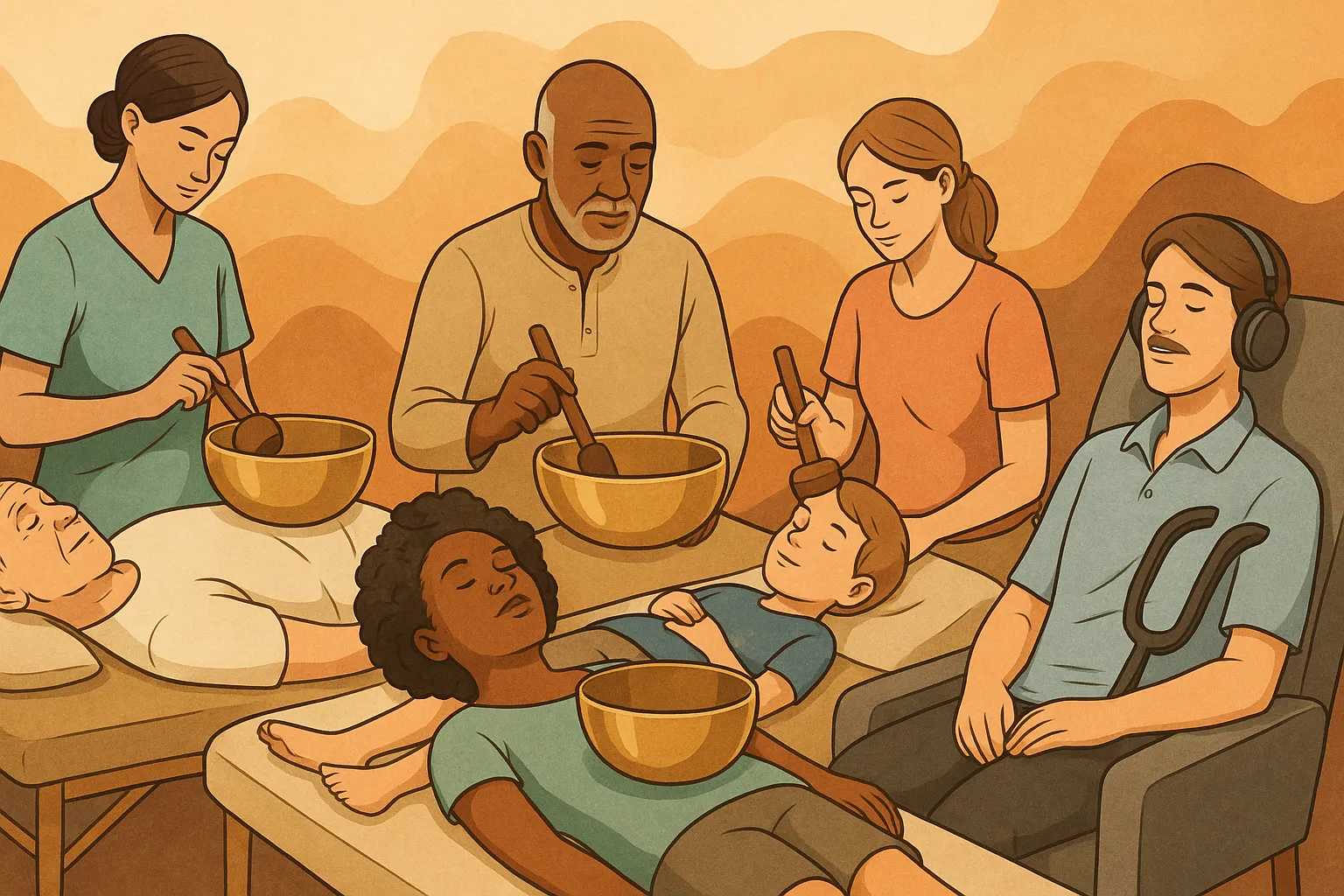
This therapy combines acoustic instruments like singing bowls, gongs, or tuning forks with vibration that can be felt through the body. Practitioners may also use vibroacoustic beds or chairs that deliver low-frequency vibration, which many people find relaxing. Some practitioners also apply a vibration technique with their hands and fingers, using gentle, trembling movements on soft tissues.
A Brief History of Sound Healing
Sound as a healing tool is not new. Ancient cultures from Tibet to Greece used drums, chants, and instruments in ritual. Pythagoras, the Greek philosopher, believed in the “music of the spheres,” one example of how sound has long been tied to ideas about health.
How Sound and Vibrations Affect the Body
Many traditions teach that the body is made up of energy and vibration, and that specific frequencies can bring cells, organs and even brainwaves into harmony. These are beliefs from within those traditions, not measured facts. What people can feel for themselves is vibration on the skin and a sense of calm, a bit like tuning an instrument, except the instrument is you.
The Science Behind Sound Therapy
Frequency and Resonance Explained
Every object has a natural frequency, and practitioners often use this idea to explain why sound can feel as though it moves through the body. It is a useful picture, but it is not proof that sessions change how the body works.
The Role of Brainwave Entrainment
Practitioners describe sound as a way to guide the brain toward states like alpha (relaxed) or theta (deep meditation). This idea is called brainwave entrainment. Some people say it helps them unwind and think more clearly.
Vibrations and Cellular Health
Some practitioners say low-frequency vibration supports circulation and cellular repair. Treat this as a claim from the practice rather than an established result. What can be said is that many people find vibration soothing, like a subtle internal massage.
Physiological Effects of Sound and Vibration Massage
How Vibrations Influence the Nervous System
Vibration massage, also known as vibration therapy, uses gentle, rhythmic movements on the body’s soft tissues, including muscles, tendons, and ligaments. The nervous system plays a role in how we sense touch, pain and relaxation, which is why these techniques tend to feel so noticeable.
When massage therapists apply vibration massage techniques, they create a soothing up and down movement on the skin and underlying tissues. Many people say this eases stiffness and tension, including after exercise.
Vibration massage is often combined with other massage methods, such as effleurage or petrissage, so that a therapist can work on both surface and deeper layers of tissue.
People who feel tense or overwhelmed sometimes use it as a way to unwind. For stress or anxiety, it should be seen as a relaxation aid that can sit alongside professional support, not a substitute for it.
Benefits of Sound and Vibration Massage
Physical Benefits
Muscle Relaxation and Pain Relief
Many people say vibration eases muscle stiffness. Some massage techniques, such as friction, use more pressure to reach deeper tissues, and people sometimes try them to relieve chronic pain. Some clients report feeling relief from tension headaches and back pain, but these are personal reports, and persistent pain should be checked by a doctor.
Improved Sleep Patterns
Some people find that gentle sound makes it easier to wind down in the evening. Experiences differ.
Mental and Emotional Benefits
Stress Reduction and Emotional Balance
In one observational study of 62 adults, participants reported significantly less tension, anger, fatigue and depressed mood after a singing bowl meditation. People new to this kind of meditation reported a bigger drop in tension than experienced participants. Because the study was observational, it cannot show that the bowls caused the change.
Enhanced Focus and Creativity
After a session, some people say they feel mentally clearer and more inspired. This is a personal experience and varies from person to person.
Who is Suitable for Sound and Vibration Massage?
People Experiencing Stress and Anxiety
If your mind is racing or you feel overwhelmed, a calm sound session may help you slow down. It is not a treatment for anxiety, so seek professional support if anxiety affects your daily life.
Those with Sleep Disorders
If you have restless nights, a relaxing session may be a pleasant way to unwind. Insomnia that persists should be discussed with a doctor.
Individuals Seeking Pain Relief
People with chronic pain sometimes find comfort in sound therapy as a complement to medical care.
People Working Through Strong Emotions
In energy-healing traditions, grief, trauma or unresolved emotions are described as stuck energy that sound can help release. This is a belief rather than an established finding. If you are dealing with trauma or grief, a qualified mental health professional is the right first contact.
Spiritual Seekers and Meditators
For those exploring mindfulness or spirituality, many people say sound deepens their meditation and heightens awareness.
Athletes and Active Individuals
Vibration massage is often used before or after activity. A 2023 systematic review of 11 studies found that massage guns improved range of motion and short-term recovery-related outcomes, but were overall ineffective for improving strength. The reviewers noted that the studies were of moderate quality, mostly involved young adults, and offered limited long-term data.
Who Should Be Cautious or Avoid It?
Pregnant Women (First Trimester)
Intense vibration may not be recommended during early pregnancy. Always consult a doctor first.
People with Pacemakers or Metal Implants
If you have a pacemaker or another implanted device, ask your doctor before trying sound or vibration devices.
Individuals with Epilepsy
If you have epilepsy, ask your doctor before trying it.
Those Sensitive to Loud Sounds
If you are highly sound-sensitive, start gently or choose quieter methods like tuning forks.
Different Methods of Sound and Vibration Massage
Tibetan Singing Bowls
Placed on or around the body, they produce vibration you can feel through the skin and muscles.
Gong Baths
Large gongs create immersive soundscapes that many people find deeply relaxing.
Tuning Fork Therapy
Practitioners strike tuning forks and place them on points they work with, so the vibration is felt directly on the body.
Vibroacoustic Therapy
Special beds or chairs deliver low-frequency sound directly into the body.
Preparing for a Sound and Vibration Massage
What to Expect in a Session
You will lie down fully clothed while the practitioner uses instruments or vibration devices around or on you.
How to Choose a Practitioner
Look for certified practitioners with experience in sound healing. Personal recommendations or reviews can help you find the right fit.
Setting Intentions Before the Session
Clarify what you want from it, such as stress relief, emotional release, or spiritual growth. This gives you and the practitioner a shared focus for the session.
Aftercare and Integration
Post-Session Reflection
Take time to journal or meditate on what you felt during the session.
Hydration and Grounding Practices
Drink water, walk barefoot, or do light stretches to ease back into your day.
Incorporating Sound Healing into Daily Life
Use singing bowls, calming music, or humming as mini-sessions between professional treatments.
Conclusion
Sound and vibration massage suits a wide range of people, from stressed professionals to athletes and spiritual seekers. It is usually described as gentle, but certain groups should take precautions. If you are curious about trying it, start with an open mind and see how your body responds. It may become one of your favorite ways to relax.
Frequently asked questions
How many sessions are recommended?
There is no standard number. Some people try one session to see how they feel, while others go regularly. Ask your practitioner, and keep your expectations realistic.
Can sound healing replace traditional medicine?
No, it is a complementary therapy, not a replacement for medical treatment.
Is sound massage safe for children?
Some practitioners offer gentle forms to children, but always consult a pediatrician first.
How long does a typical session last?
Sessions often last between 45 and 90 minutes, but this varies by practitioner.
Do I need prior experience with meditation to benefit?
No. Sessions are guided, so you do not need to have meditated before.