
What Are the Risks of Sound and Vibration Massage?
The short answer
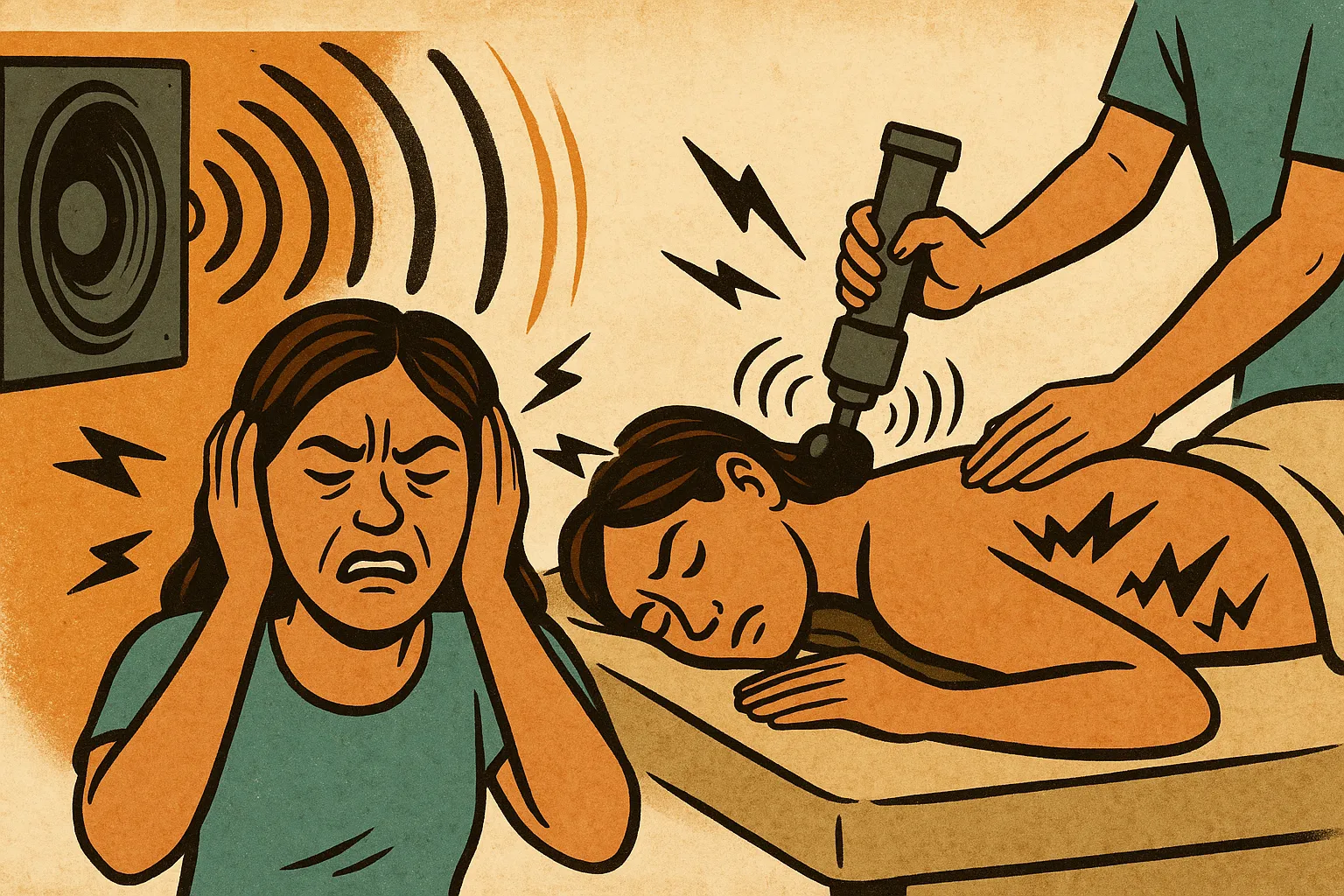
The main risks are sound that is too loud, vibration that is too strong or lasts too long, and treatment over sensitive areas such as implants or fresh injuries. Some people feel dizzy, get headaches or notice ringing in the ears. Massage guns can cause harm if misused, so ask a clinician first if you have a health condition or an implant.
Key points
- Too loud, too close, too long or over red-flag areas causes most problems.
- Ask a clinician first if you have a pacemaker, epilepsy, pregnancy, recent surgery or clotting risk.
- A published case report described severe muscle breakdown after massage gun treatment.
- A 2023 review of massage guns noted risks from repeated aggressive use and listed contraindications.
- Stop at once if you feel sharp pain, spinning dizziness, chest discomfort, numbness or lasting ringing.
Contents (19)
Sound and vibration therapies can feel like a spa day for your nervous system, until they do not. Many people leave a sound bath or vibroacoustic session feeling light, grounded and rested. Others notice dizziness, headaches, ringing in the ears or simply “too much” stimulation. If you are wondering what the real risks are and how to lower them, this guide explains it in plain language. If you are new to these therapies, how sound and vibration massage works covers the basics first.
Quick note: nothing here is medical advice. If you have a health condition or any implants or devices, talk to your clinician before trying these therapies.
A Quick Overview: What These Therapies Are (and Aren’t)
Sound massage vs. vibration massage
- Sound massage / sound therapy: Uses sound from instruments like Himalayan singing bowls, crystal bowls, gongs, chimes or recorded sound to create a “bath” of sound. Sometimes bowls are placed on the body so you feel gentle vibration.
- Vibration massage / vibroacoustic therapy: Uses chairs, mats or beds with built-in transducers that deliver low-frequency vibration through the body. Localised vibration can also be aimed at specific muscles or body parts.
- Percussive massage (massage guns): Not strictly sound therapy, but many people group it in because it is mechanical vibration, made of rapid pulses.
Common tools (bowls, gongs, tuning forks, chairs, beds, massage guns)
Each tool comes with its own intensity, frequency range and possible side effects. Bowls and gongs can be surprisingly loud at close range. Tuning forks deliver focused vibration to specific points. Vibroacoustic beds and chairs spread lower frequencies more evenly. Massage guns add forceful percussion that can be too much for inflamed or fragile tissue.
Safety Snapshot
Who should avoid or get medical clearance first
- People with pacemakers/ICDs or other implanted electronic devices
- Those with cochlear implants or hearing aids (extra caution)
- Anyone with a history of seizures/epilepsy
- Pregnant people (especially in the first trimester)
- People with recent surgery, unhealed fractures, acute injuries, or DVT/active clotting issues
- Those on anticoagulant medications or with bleeding disorders
- People with severe osteoporosis, active infection, open wounds, or skin conditions at contact sites
When to stop immediately
If you feel sharp pain, spinning dizziness, chest discomfort, numbness or tingling, ringing that persists, panic or visual changes, speak up and stop the session. Your body is giving you information, so listen.
How Risks Arise: Volume, Frequency, Amplitude, and Duration
Loudness and hearing health
Even relaxing instruments can reach uncomfortable levels when placed near the head or struck forcefully. Loud sound near the ears may be uncomfortable or may aggravate tinnitus, so keep bowls, gongs and speakers at a respectful distance from your ears.
Low frequencies and body resonance
Low-frequency vibration can feel soothing, but some people report nausea, head pressure or lightheadedness, especially those with a history of migraine or vestibular disorders such as Menière’s disease.
Intensity and exposure time
Like sun exposure, it is about dose. High intensity for a long time raises the chance of problems. Start mild, go slow and pause if your body says “enough.”
Short-Term Side Effects You Might Notice
Headache, fatigue, nausea, dizziness
These are the most commonly mentioned. They may appear when volume is too high, the instrument sits directly on a sensitive area, or the session runs long without breaks. Water and fresh air often help afterwards.
Anxiety or overwhelm in sound baths
Gongs and layered drones can be emotionally intense. People who are processing trauma or who have sensory sensitivity may feel trapped, startled or flooded. It is fine to lie near the exit, use earplugs or step out.
Ear & Hearing Considerations
Tinnitus flare-ups and ear sensitivity
Close-range gongs or bowls near the head may trigger ringing or a feeling of pressure. If you already have tinnitus or hyperacusis, ask the facilitator to keep instruments well away from your head and to avoid sudden crescendos.
Ear infections or blocked ears
If your ears are congested or infected, resonance can feel like pressure. Wait until you have healed, or keep the intensity very low.
Neurological Considerations
Migraine history
Certain frequencies or repetitive pulses may trigger a migraine in susceptible people. Dim lights, slower pacing and lower intensity may help. Let your practitioner know your triggers.
Epilepsy and seizure thresholds
If you have epilepsy, ask a clinician for clearance first, and work only with practitioners who will keep frequency, volume and duration conservative.
Cardiovascular & Circulatory Risks
Anticoagulants and easy bruising
If you bruise easily or take blood thinners, avoid percussive tools and strong local vibration over bony areas and thin tissue. Gentle, broad and indirect approaches are the more cautious choice.
DVT, varicose veins, and recent surgery
Avoid direct vibration over suspected clots, inflamed veins or post-surgical sites. Practitioners generally treat these as no-go areas, so ask a clinician before any vibration there.
Pregnancy & Postpartum
First trimester caution
Many providers avoid sound on the abdomen or lower back in the first trimester and keep overall intensity low. When in doubt, skip it or get medical guidance.
Abdominal and lower-back exposure
Direct vibration on the abdomen or sacrum is typically avoided during pregnancy. Distant, calm sound may be acceptable with medical clearance and a skilled practitioner.
Implants, Devices, and Metal in the Body
Pacemakers and implanted defibrillators
Strong mechanical vibration near a cardiac implant is a reason for caution. Do not place vibrating tools near the chest of someone with a cardiac implant, and get written clearance first.
Cochlear implants, hearing aids, and dental work
Close-range bowls or gongs can feel uncomfortable for people with hearing devices or extensive dental work. Keep your distance, lower the volume and talk to the practitioner throughout.
Bones, Joints, and Soft Tissue
Fractures, osteoporosis, acute injuries
Fragile bones need gentle handling. Avoid direct vibration on healing fractures, osteoporotic areas or fresh sprains and strains, because strong vibration there may irritate the area.
Massage guns and overuse risks
Massage guns are widely used, but misuse can cause harm. A published case report described severe rhabdomyolysis, a serious breakdown of muscle, in a young woman with untreated iron deficiency anaemia after percussion gun treatment. She recovered well during follow-up. It was a single case, and the authors concluded that percussion massage guns should be used appropriately and safely, especially by people with an underlying disease or condition.
A 2023 systematic review of massage guns included 11 studies, which mostly followed healthy young men in the short term. The same review listed contraindications, including recent scars or wounds, fractures, blood clotting disorders, diabetes and sensitive body areas, and warned that repeated aggressive application risks muscle fibre damage, blood vessel dissections and internal bleeding.
Avoid the neck carotid area, bony landmarks, fresh tattoos, varicose veins and numb regions. Keep sessions short, light and targeted.
Mental Health & Trauma Sensitivity
Startle responses and dissociation
Sudden gong strikes or deep drones can set off a fight-or-flight response. People with PTSD, autism spectrum sensory sensitivities or panic disorder may need predictable pacing and control, such as a “raise your hand to pause” signal.
Creating psychological safety
- Share a pre-session plan: what instruments, how long, how loud.
- Offer opt-out choices: earplugs, distance, a chair instead of the floor.
- Invite check-ins: “How is this intensity on a scale of 1 to 10?”
Children, Older Adults, and Other Special Populations
Adjusting intensity and session length
Children and older adults often do better with shorter, gentler sessions. For people with cognitive impairment or communication challenges, use clear consent cues and frequent check-ins.
Comparing Modalities: Which Ones Carry More Risk?
Singing bowls & gongs
- Risks: sudden loud peaks, tinnitus flare-ups, startle responses
- Tips: keep distance from the head, favor softer mallets, and build gradually rather than slamming a crescendo.
Tuning forks
- Risks: local discomfort if pressed hard; avoid bony areas and open wounds
- Tips: use light touch, short applications, and avoid placing forks near implants or over carotid arteries.
Vibroacoustic beds & chairs
- Risks: dizziness or nausea in vestibular-sensitive people; not suitable for DVT, acute infections or post-op sites
- Tips: start at low intensity, keep sessions short at first, and document medical history. Some whole-body vibration treatments use a vibrating platform in a half squat position.
Percussive massage guns
- Risks: bruising, nerve irritation, aggravating tendon problems and, in rare reported cases, severe muscle breakdown with misuse
- Tips: avoid front of the neck, spine, kneecaps and elbows; use the lowest effective setting and short applications to each area.
Hygiene & Infection Control
Shared equipment and skin contact
Mats, bowls placed on the body, tuning forks and gun attachments should be cleaned between clients. Avoid contact over broken skin, rashes or active infections.
Red Flags During a Session
Symptoms that mean “pause or stop”
- Sharp or escalating pain
- Ringing in the ears that persists or worsens
- Spinning dizziness or nausea
- Numbness, tingling or unusual weakness
- Chest pressure or shortness of breath
- Panic or intense emotional distress
It is your session and you can stop anytime. A good practitioner will support that choice.
How to Minimize Risk (Practical Checklist)
Screening questions
Before you begin, share:
- Heart or circulation issues (including pacemaker/ICD, DVT, varicose veins)
- Neurological history (epilepsy, migraines, vestibular disorders)
- Pregnancy or trying to conceive
- Recent surgeries, injuries or fractures
- Medications (anticoagulants, pain medicines)
- Implants (cochlear, dental, orthopedic) and hearing conditions (tinnitus)
Safe volume, placement, pacing
- Keep instruments away from the head and build intensity gradually.
- Prefer lower volumes and shorter exposures when starting out.
- Avoid direct vibration over the abdomen (pregnancy), fresh injuries, implants and suspected clots.
- With massage guns, use the lowest effective setting and short durations.
Aftercare
- Drink water, rest, and notice how you feel over the next 24 hours.
- Mild heaviness or sleepiness can be normal. Severe or persistent symptoms are not, so contact a clinician.
Evidence, Regulation, and Practitioner Competence
Why training and standards matter
Sound and vibration therapies are only as safe as the person delivering them. Look for practitioners who:
- Take a health history and explain contraindications
- Have formal training in their modality, not just a weekend course
- Welcome informed consent, give you control of loudness and encourage feedback
- Keep clean equipment and a calm environment
- Are comfortable saying “this is not appropriate today” when needed
Conclusion
Sound and vibration massage can be very relaxing, but it is not risk-free. Most problems come from sound that is too loud, too close, too long, or from vibration over red-flag areas such as implants, fresh injuries, the pregnant abdomen or suspected clots. With careful screening, clear boundaries, gentle pacing and a skilled practitioner, you can keep the risks low. Your body has the final say, so let it lead.
Frequently asked questions
Is a sound bath safe if I have tinnitus?
It may be, but keep instruments away from your head, start quiet and avoid big gong crescendos. Bring earplugs and sit near the exit in case you need a quick break. Check with your clinician first.
Are vibroacoustic chairs/beds okay during pregnancy?
Direct abdominal or sacral vibration is generally avoided in pregnancy, especially in the first trimester. Get medical clearance first, and if you go ahead, choose very low intensity.
Can massage guns damage muscles or nerves?
With misuse, they can. A published case report described severe muscle breakdown after massage gun use, and a 2023 review warned about repeated aggressive application. Use short sessions on low settings, avoid sensitive areas (front of the neck, bony points, varicose veins, fresh injuries), and stop if in doubt.
I have a pacemaker can I try sound therapy?
You may be able to enjoy distant, gentle ambient sound, but avoid direct vibration on the chest and get written clearance from your cardiology team before any vibratory treatment.
I felt dizzy after a gong bath normal?
Mild lightheadedness can happen, especially if you are dehydrated or sensitive to low frequencies. If the dizziness is strong or persistent, speak with a clinician and try shorter, quieter sessions, or skip gongs.