
What Training Is Required to Perform Sound and Vibration Massage?
The short answer
Training requirements depend on where you work and what the sessions involve. Most good programs cover anatomy, safe use of instruments, client care and supervised practice. If your work includes touch massage, a local massage license may also be required, so check the rules in your region.
Key points
- Requirements differ by country, and touch massage may need a separate license.
- Core training covers anatomy, instrument use, client care and safety.
- Supervised practice with feedback from experienced mentors is a sign of a quality program.
- A 2023 review found massage guns improved short-term range of motion, not strength.
- Know the contraindications, including pregnancy, epilepsy and heart conditions.
Contents (18)
Introduction
Sound and vibration massage is more than striking a singing bowl or pressing a vibrating tool against the skin. It blends traditional practices with modern wellness techniques. To perform it safely, proper training is important, both for credibility and to protect the wellbeing of clients.
Understanding Sound and Vibration Massage
Brief History and Origins
Sound healing has roots in Tibetan, Indian, and Native traditions. Singing bowls, gongs, and chanting have been used for centuries to restore a sense of balance. Vibration massage emerged more recently, using sound and mechanical tools to create vibration through the body.
Difference Between Sound Therapy and Vibration Massage
- Sound therapy uses tones to help people relax.
- Vibration massage uses tactile vibration on the body to loosen muscles.
Vibration massage is one of several massage techniques used alongside physical therapy and recovery routines. Together, practitioners describe them as a holistic experience.
How Sound Frequencies Affect the Body
Many practitioners say that every cell in the body vibrates, and that the right tones help the body “re-tune” itself, like adjusting an instrument that has gone off-key. This is an idea from within the practice, not a measured fact.
What can be said more safely is that vibration is felt through the skin and muscles, and that many people find different tones and speeds either soothing or stimulating.
Benefits of Sound and Vibration Massage
- Stress reduction: many people find it calming.
- Pain management: may ease tension and support muscle comfort.
- Emotional balance: some people say it helps them feel more at ease.
- Energy flow: in chakra tradition, sound is used to balance the energy centers. This is a belief, not an established finding.
Vibration massage is described as offering pain relief and deep relaxation, though results differ from person to person.
Scientific Foundation of Vibration Massage
The research on vibration massage is still developing. A 2023 systematic review of 11 studies found that massage guns improved range of motion and short-term recovery-related outcomes, but were overall ineffective for improving strength. The reviewers noted that the studies were of moderate quality, mostly involved young adults, and offered limited long-term data.
Vibration therapy is also used in some rehabilitation settings and to manage chronic pain. Practitioners should avoid promising specific results for these uses. Anyone with ongoing pain should be encouraged to see a health professional.
Core Training Requirements
To practice safely, you will need:
- Anatomy and physiology basics: knowing muscles and nerves, and the energy lines described in traditional systems.
- Sound knowledge: how different tones and instruments are used, and how people tend to respond.
- Energy healing awareness: understanding concepts such as chakras, meridians, or biofields as traditions.
- Clinical application understanding: knowing how to use vibration massage safely and where its limits are.
Types of Training Programs Available
Short Certification Courses
Beginner-friendly, lasting a few days or weeks. Useful for yoga teachers, massage therapists, or anyone adding a new modality.
Advanced Practitioner Programs
In-depth training that covers theory, practice, and supervised sessions. Often takes several months.
Online vs In-Person Training
- Online: flexible but less hands-on.
- In-person: gives direct feedback and instrument practice.
International Standards and Accreditation
Some schools follow standards set by holistic associations. Look for accreditation and ask who recognizes it, since this can affect whether you can work in spas, clinics, and retreats.
Essential Skills for Practitioners
- Active listening: noticing both the sound and the client’s response.
- Instrument mastery: bowls, forks, gongs.
- Creating safe spaces: atmosphere, intention, and respect.
- Intuition: reading the client’s cues and energy, as practitioners describe it.
- Mastering light pressure: applying gentle, minimal force during vibration massage, which supports comfort and safety.
Instruments and Tools Training
Tibetan & Crystal Singing Bowls
Used on or near the body to produce resonant tones.
Gongs and Drums
Used to create deep, immersive sound.
Tuning Forks
Applied to the body or held near it for focused vibration. Practitioners often place them on points from traditional energy maps.
Modern Devices
Electronic vibration tools offer precision and accessibility. Modern devices can deliver localized vibration to specific muscle groups.
Hands-On Practice and Supervised Sessions
Theory is not enough, and practice is critical. Most quality programs include:
- Many hours of practice.
- Supervised case studies.
- Feedback from experienced mentors.
Some advanced programs also teach research methods, such as how a control group is used to compare outcomes, so students can read studies with a critical eye.
Practical Application of Vibration Massage
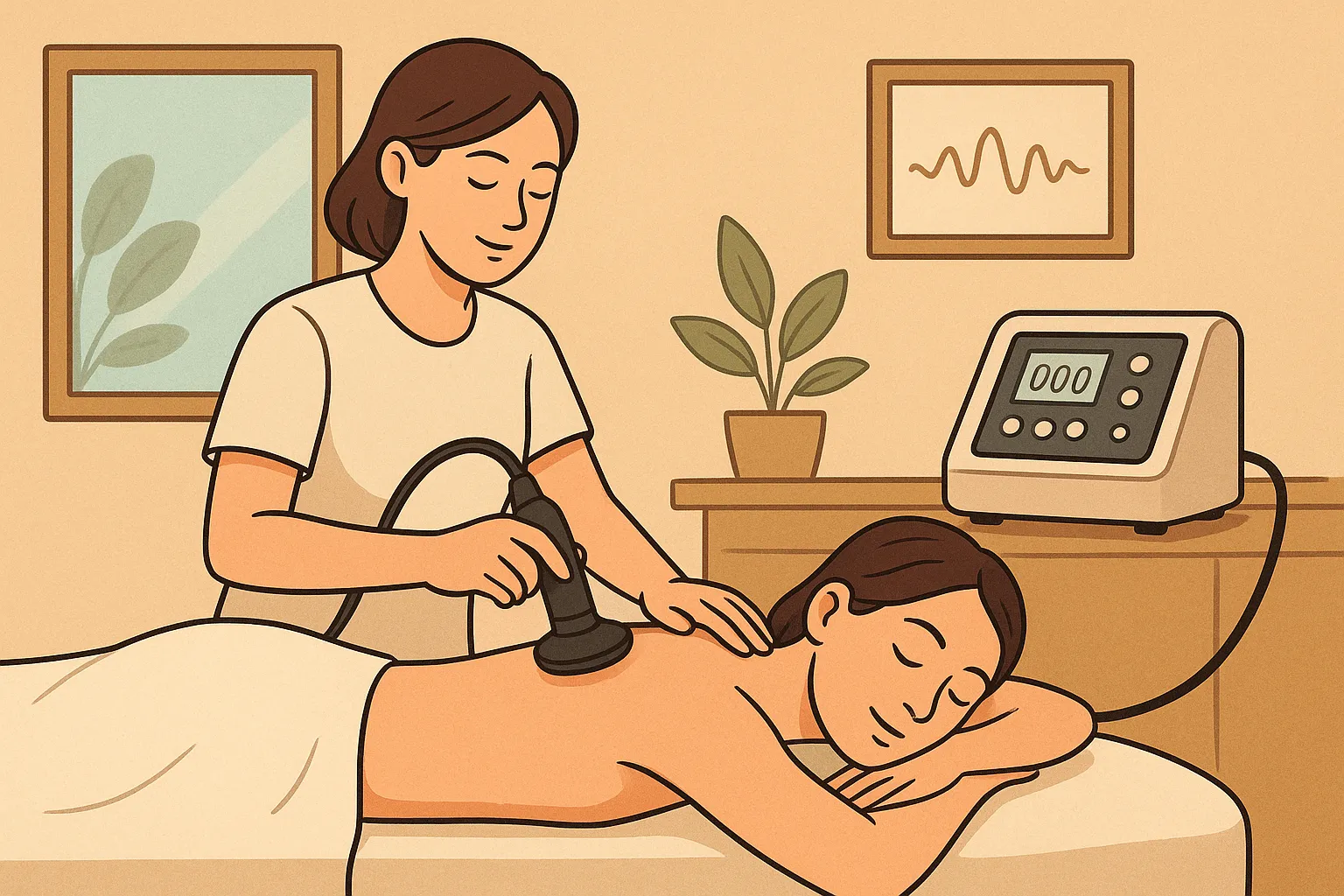
In practice, vibration massage is delivered with tools such as massage guns and vibrating massagers, which let practitioners apply vibration to specific areas of the body. Massage therapists and athletes often use these devices in their routines.
The technique typically starts with gentle pressure and builds up gradually, so the body can adapt without discomfort. Practitioners adjust speed and intensity to suit the client.
Safety is a key consideration. It is important to avoid applying too much pressure, as excessive force can lead to discomfort or injury. Practitioners focus on light, controlled movements over muscles and areas of tension.
Ethics and Client Care
Sound and vibration massage may look simple, but client safety comes first:
- Know contraindications (e.g., pregnancy, epilepsy, heart conditions).
- Be cautious with clients who have scar tissue, and ask for medical guidance where needed.
- Maintain confidentiality.
- Set clear professional boundaries.
Certification and Licensing
Requirements differ by country:
- Some regions allow open practice with certification.
- Others require a massage therapy license. In the United States, for example, 45 states and the District of Columbia regulate massage therapy, and therapists there must get a license or certification before practicing massage.
- Practitioners often carry liability insurance.
Complementary Training
Many practitioners combine sound and vibration massage with:
- Yoga and breathwork.
- Meditation and mindfulness.
- Reiki or energy healing.
Some also add whole body vibration platforms as a complementary tool alongside sound and vibration massage.
This makes sessions broader in scope.
Continuing Education and Mastery
Learning does not stop after certification. Advanced practitioners often attend:
- Sound healing retreats.
- International workshops.
- Discussions of new research.
They also stay up to date by reading professional and scientific journals.
Challenges in Training and Practice
- Some people dismiss sound healing as “woo-woo.”
- Balancing intuition with structured techniques can be tricky.
- Knowing when to use more pressure and when to stay gentle is a challenge, as too much pressure can cause discomfort or injury.
- Building trust takes time and consistency.
Career Opportunities
Once trained, practitioners can work in:
- Private wellness studios.
- Spas and resorts.
- Retreats and workshops.
- Online sessions.
- Sports clinics, working with athletes and rehabilitation teams on recovery and mobility.
Conclusion
Sound and vibration massage takes more than enthusiasm. It calls for structured training, hands-on practice, and respect for the client’s wellbeing. With the right education, practitioners can offer sessions that many clients find relaxing, while staying honest about what the research does and does not show.
Frequently asked questions
Can anyone learn sound and vibration massage?
Yes. A background in wellness helps, but anyone can train with dedication.
How long does it take to become certified?
Short courses may take a weekend, while advanced programs can take months.
Is it scientifically proven?
Not in a settled way. Some studies of vibration tools report short-term benefits, such as better range of motion with massage guns, but the evidence is limited.
Do I need a background in massage therapy?
Not always, but understanding anatomy is highly recommended.
What’s the difference between sound healing and music therapy?
Music therapy uses structured music in clinical settings, while sound healing focuses on tones and vibration for general wellness.