
Can sound therapy help with PTSD?
The short answer
Sound therapy may help some people with PTSD relax, but it is not a treatment for PTSD on its own. The NHS names trauma therapy, EMDR and antidepressants as the main treatments. A 2024 review of music therapy for PTSD found lower symptom scores in some comparisons when it was added to usual care, but rated the evidence low in certainty.
Key points
- The NHS lists trauma-focused CBT, EMDR and antidepressants as the main PTSD treatments.
- A 2024 review of nine music therapy trials rated the certainty of its evidence as low.
- Sound therapy is best seen as a relaxation aid next to professional care, never a replacement.
- Binaural beats, singing bowls and tuning forks are used for relaxation, and we cite no PTSD studies for them.
- Talk to a doctor first if sounds or music can trigger distress.
Contents (16)
Introduction
PTSD can affect anyone who has been through a frightening or life-threatening event. The main treatments are well established, but some people also look for gentler tools to help them relax. This article looks at where sound therapy might fit, and where it does not.
What is PTSD
Causes of PTSD
According to the NHS, PTSD is a mental health condition caused by very stressful, frightening or distressing events. Examples include war, physical or sexual assault, abuse and serious accidents. A person can develop it after living through an event, seeing it happen to someone else, or hearing about it happening to someone close to them.
Symptoms of PTSD
The NHS describes the main symptom as repeated distressing thoughts about the event, including flashbacks, intrusive images and nightmares. Difficulty sleeping and feeling very anxious are also listed. It is worth talking to a doctor about them.
Traditional PTSD Treatments
Medication and Therapy
The NHS names three main approaches: trauma therapy such as trauma-focused cognitive behavioural therapy (CBT), eye-movement desensitisation and reprocessing (EMDR), and medicines, usually an antidepressant. Sound therapy is not on that list.
Limitations of Traditional Treatments
Treatment does not feel the same for everyone, and some people look for extra support alongside it. That is one reason complementary therapies like sound therapy attract interest.
What is Sound Therapy?
History of Sound Therapy
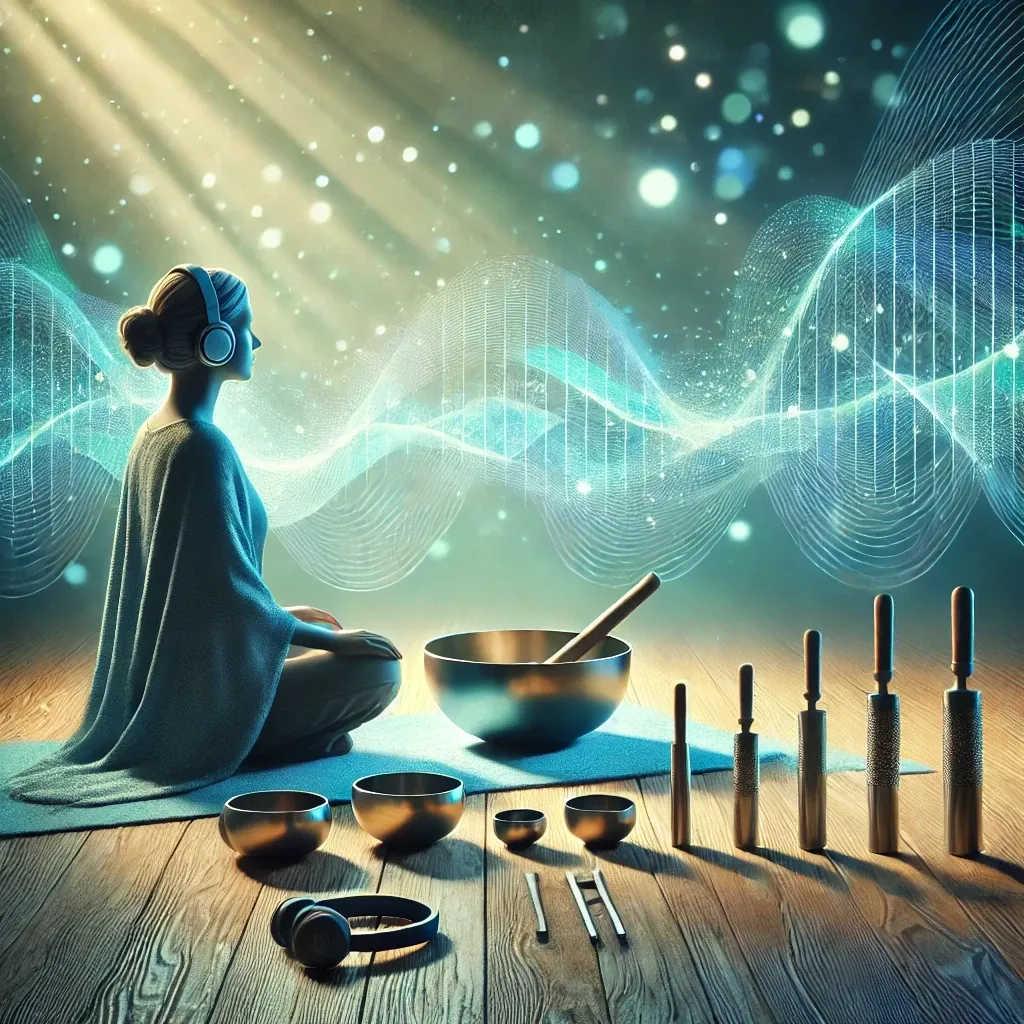
Singing bowls have a long history in Tibetan meditation practice. Today the term covers many techniques that people use for relaxation and well-being.
How Sound Therapy Works
Practitioners often say that sound frequencies influence brainwave activity and calm the mind. That is a common explanation, not an established mechanism for PTSD.
Types of Sound Therapy
Music Therapy
Music therapy uses music in a structured way. The review in the next section looks at it.
Binaural Beats Therapy
Binaural beats play two slightly different tones, one in each ear, and some people find the result meditative. We cite no PTSD studies for this approach, so see it as a personal relaxation tool.
Singing Bowls Therapy
Singing bowls come from Tibetan practice and make long, harmonic tones. Practitioners describe them as balancing the body’s energy, which is a belief rather than a measured effect.
Tuning Fork Therapy
Practitioners hold tuning forks near the body and describe the vibration as relaxing. We cite no PTSD studies for tuning forks, so treat them as an optional relaxation aid.
White Noise Therapy
Some people use white noise at night to cover other sounds while they fall asleep. We cite no PTSD studies for it, so it is a personal comfort measure and not a treatment.
The Science of Sound Therapy
How Sound Affects the Brain
Music and sound are explored for emotional regulation, but we do not have PTSD research to show that a given frequency calms the brain’s response to traumatic memories.
Neuroscience and Sound Waves
The strongest evidence we found is for music therapy. A 2024 systematic review and meta-analysis of randomized trials covered nine studies with 527 people with PTSD, and all nine had a high risk of bias. Scores were lower when music therapy was added to usual care than with usual care alone, and comparable to usual care plus standard psychotherapy or medicine. The authors rated the certainty of the evidence as low and called for more rigorous studies.
Benefits of Sound Therapy for PTSD
Stress Relief
Many people say sound helps them unwind. That is a personal experience and not a proven PTSD treatment.
Sleep
PTSD can disturb sleep, and some people play calm music, white noise or binaural beats at bedtime. If sleep problems continue, tell a doctor.
Emotional Regulation
Mindful listening can help some people slow down and notice how they feel.
Less Anxiety
Some people say calm sound eases daily anxiety. The review above rated its evidence as low in certainty, so do not expect a reliable effect.
Sound Therapy vs Traditional Treatments
Adjunct Treatment
At most, sound therapy is an extra tool next to conventional treatment such as medication or talk therapy. It does not stand in for them.
Key Differences
Trauma therapy and medicines are the established treatments the NHS names. Sound therapy is a sensory experience.
Sound Therapy Success Stories for PTSD
Why Personal Stories Are Not Proof
You may read accounts of people with PTSD who feel better after binaural beats, singing bowls or white noise. Such stories can be sincere, but they cannot show that the sound caused the change.
Where to Look for Evidence
Trials and reviews are a better guide than single stories. In the 2024 review above, all nine studies had a high risk of bias.
How to Use Sound Therapy
Sound Therapy Routine
If you want to try it, start with calming music and stop if it feels uncomfortable. We cite no research-backed routine, so go by what feels right.
Find a Sound Therapist
If you work with a sound practitioner, ask about their training and whether they have experience with trauma. Tell your doctor too.
Side Effects of Sound Therapy
Mild Discomforts
Some people find certain tones or volumes uncomfortable. Lower the volume or stop, and avoid sounds that bring back distressing memories.
Debunking Myths
The honest summary is that the evidence is low in certainty, so sound is best used as relaxation support.
Who can use Sound Therapy?
PTSD Sufferers
People with PTSD may try sound for relaxation if their care team agrees. It should not replace trauma therapy or medicine.
People with Anxiety and Depression
Some people with anxiety or low mood also use calming sound. See a doctor if symptoms last.
Those Seeking Mental Clarity
Anyone can use quiet music as a pause in a busy day.
Sound Therapy with Other Treatments
Holistic PTSD approaches
Some people use sound alongside talk therapy or medicine.
Get Better Results
We cannot say that adding sound improves outcomes. Keep established treatment first.
DIY Sound Therapy
Sound Therapy Apps
Many apps offer guided sound sessions. They are no substitute for professional care.
Self guided Meditation and Sound
Some people meditate with sound for relaxation. Stop if it stirs up distress.
Conclusion
Sound therapy is not a PTSD treatment. At most, it is a relaxation aid next to trauma therapy, EMDR or medicines. A 2024 review rated the evidence for music therapy in PTSD as low in certainty, so go gently and keep your care team involved.
Frequently asked questions
What is sound therapy?
Sound therapy is an umbrella term for using music, voices, instruments or recorded tones to support relaxation and well-being. Practitioners often describe frequencies changing brainwave activity, but that idea is a tradition and a theory, not a settled fact.
How long does it take to see results?
It varies. Some people say they feel calmer after a single session, while others notice little. No timeline can be promised, and PTSD symptoms should be followed up with a health professional.
Is sound therapy safe for everyone?
It is generally gentle, but people who are sensitive to certain sounds, or whose trauma is linked to loud noise, should talk to a professional first and keep the volume low.
Can sound therapy replace traditional PTSD treatments?
No. It is at most a complement to treatments such as trauma therapy, not a replacement for them.
Where can I find a sound therapist?
Start with your doctor or a mental health professional, who can say whether sound-based support suits you. If you look for a practitioner yourself, ask about their training and experience with trauma.