
What Colors Correspond to Different Chakras?
The short answer
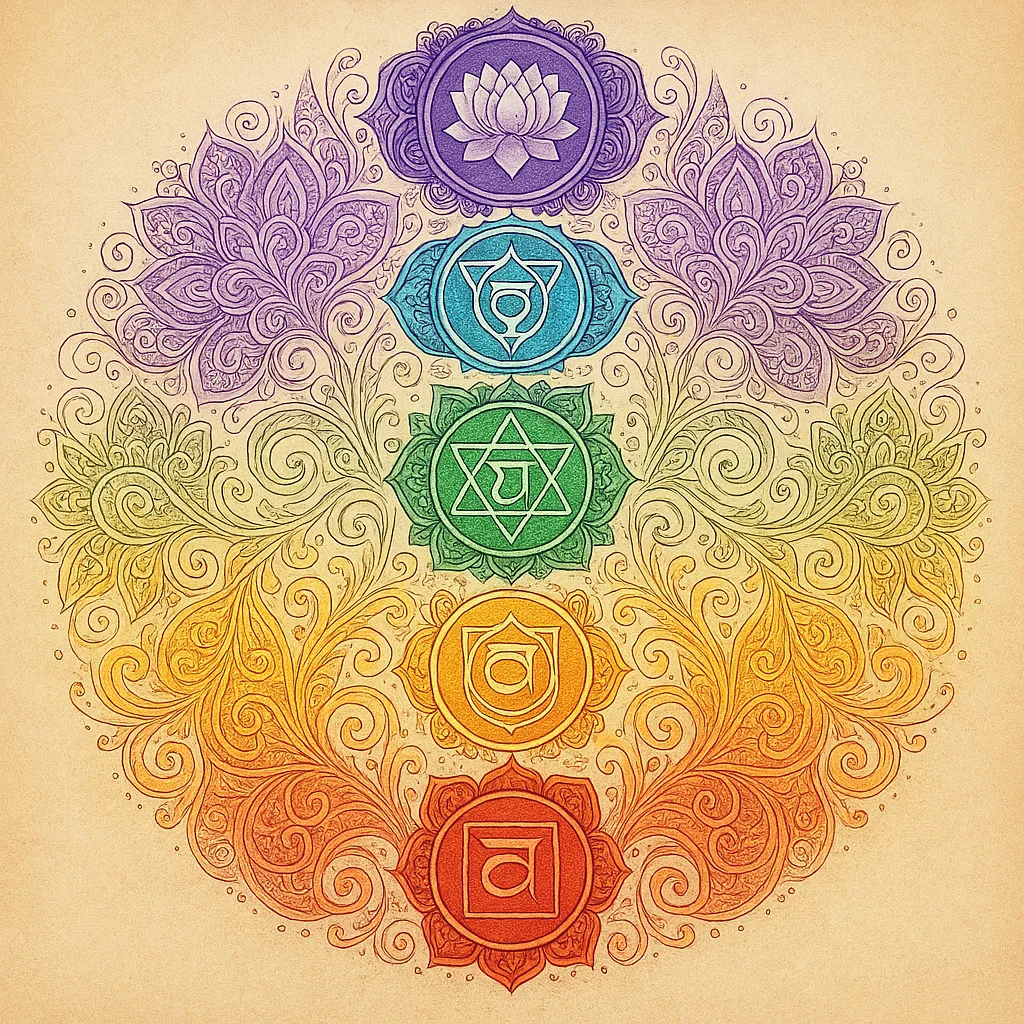
In the common modern system, the seven chakras follow the rainbow: red for root, orange for sacral, yellow for solar plexus, green for heart, blue for throat, indigo for third eye and violet or white for crown. These colors are a tradition used for meditation and visualization. They are not measured properties of the body.
Key points
- The seven chakra colors follow the rainbow from red at the base to violet at the crown.
- Some sources add pink to the heart chakra and white to the crown.
- Chakra colors are used for visualization, clothing, crystals and food pairings.
- These pairings come from tradition, not from measured effects on the body.
- The NHS says a variety of fruit and vegetables gives different nutrients.
Contents (7)
Introduction to Chakras and Their Energies
What Are Chakras?
Imagine your body as a superhighway of energy, with the chakras as the power stations along the route. In yoga tradition, chakras are energy centers along your spine, each linked with different physical, emotional and spiritual themes. There are seven main chakras, and each is said to spin at its own frequency and radiate a specific color. This is a spiritual picture, not a measurement.
The Role of Color in Chakra Healing
In chakra work, color plays a central role. Practitioners describe each chakra as vibrating at a frequency that matches a color in the visible spectrum. So the idea is that using that color in your daily life, whether through meditation, clothing or environment, helps align your energy centers. That is a belief within the practice, and many people simply enjoy it as a mindful ritual.
The Seven Main Chakras and Their Corresponding Colors
Let us look at each chakra, the color it is tied to and what that color represents.
Root Chakra (Muladhara)
Location and Purpose
Base of the spine
Linked to safety, survival and grounding
Associated Color: Red
Red is a strong, primal color. It represents life force, strength and stability. If you feel ungrounded, people who practice say that focusing on red helps anchor them.
Sacral Chakra (Svadhisthana)
Location and Purpose
Lower abdomen, just below the navel
Linked to creativity, sensuality and emotion
Associated Color: Orange
Orange is the color of pleasure and play, vibrant and full of life.
Solar Plexus Chakra (Manipura)
Location and Purpose
Upper abdomen, around the stomach
Linked to confidence, self-esteem and personal power
Associated Color: Yellow
Yellow stands for sunshine and happiness. Practitioners use it to focus on confidence when feeling dim or unsure.
Heart Chakra (Anahata)
Location and Purpose
Center of the chest
Described as the bridge between the earthly and spiritual chakras; linked to love and compassion
Associated Color: Green (and Pink)
Green is the main color here, symbolizing healing and growth. Pink is also used for this chakra, representing unconditional love.
Throat Chakra (Vishuddha)
Location and Purpose
Throat
Linked to communication and self-expression
Associated Color: Blue
Think of blue skies and calm seas. Blue is paired with the throat chakra and with speaking clearly and truthfully.
Third Eye Chakra (Ajna)
Location and Purpose
Between the eyebrows
Linked to intuition, insight and mental clarity
Associated Color: Indigo
Indigo is deep, mysterious and wise. In this tradition, it is linked with seeing beyond the physical: gut instincts, dreams and inner wisdom.
Crown Chakra (Sahasrara)
Location and Purpose
Top of the head
Linked to the connection with the divine, the higher self and universal consciousness
Associated Color: Violet (and White)
Violet is spiritual and reflective. Some traditions picture this chakra radiating white light, representing purity and enlightenment.
Why Chakra Colors Matter
The Psychology of Color in Spiritual Practice
People often have personal feelings about colors, and chakra practice builds on that. Practitioners say the right color can stimulate or soothe, activate or balance. This is how the tradition describes color, not a measured result.
Chakra Color Imbalances
In chakra teaching, when a chakra is out of balance its color is pictured as dull, too intense or even reversed. For example, an overactive root chakra is said to show up as aggression, and an underactive one as insecurity.
How to Use Colors to Balance Your Chakras
Color Meditation
Picture the color of a specific chakra as a glowing ball of light. Visualize it spinning and expanding, cleansing the area. Many people find this a calming practice.
Wearing Chakra Colors
Your wardrobe can be part of your practice. Want a confidence boost? Throw on something yellow for your solar plexus. Want to express yourself better? Blue accessories are traditionally paired with the throat chakra.
Surrounding Yourself with the Right Colors
Change your phone wallpaper, paint a wall or buy a few crystals in the chakra color you want to focus on. Small changes in your space can make your practice feel more present.
Additional Tools for Chakra Healing
Crystals and Gemstones
Traditional crystal pairings for each chakra color:
Red: Red Jasper
Orange: Carnelian
Yellow: Citrine
Green/Pink: Rose Quartz, Green Aventurine
Blue: Lapis Lazuli, Aquamarine
Indigo: Amethyst
Violet/White: Clear Quartz, Selenite
Foods That Support Chakra Colors
Eat the rainbow, as the tradition suggests. The NHS says a variety of fruit and vegetables gives you different combinations of fibre, vitamins, minerals and other nutrients. It does not mention eating by color.
Red: Beets, apples
Orange: Oranges, carrots
Yellow: Bananas, corn
Green: Leafy greens, avocados
Blue/Indigo: Blueberries, eggplant
Violet/White: Purple cabbage, cauliflower
Aromatherapy and Color Association
Traditional essential oil pairings:
Root: Cedarwood
Sacral: Ylang Ylang
Solar Plexus: Lemon
Heart: Rose
Throat: Peppermint
Third Eye: Frankincense
Crown: Lavender
Conclusion
Chakra colors are a tradition, and a practical one: they give you a simple way to focus during meditation, choose a crystal or plan a colorful meal. Whether you are meditating with crystals, eating color-rich foods or just wearing a shade you like, you are taking part in an old spiritual practice. Enjoy your inner rainbow.
Frequently asked questions
What happens when chakra colors are out of balance?
In chakra teaching, you might feel emotionally or physically off. For example, an unbalanced throat chakra is said to show up as trouble expressing yourself. These are traditional ideas, not diagnoses.
Can you open chakras using only color therapy?
Practitioners say color works best alongside other practices like meditation, breathwork and sound. Color on its own is one tool among many in this tradition.
Are there more chakras than the main seven?
Some traditions describe many minor chakras, but the seven main ones are the foundation of most modern chakra practice.
Why do some sources list pink for the heart chakra?
Pink is associated with love and compassion, which are core themes of the heart chakra, so some sources use it alongside green.
How often should you do color-based chakra balancing?
There is no fixed rule. Some people do weekly meditations, while others take a daily mindful moment with color.