
How Does Music for Chakra Affect Balancing?
The short answer
In chakra teaching, music is used to tune each energy center, and many people find it relaxing. Chakra notes and frequencies are traditional associations, not measured facts. A meta-analysis of binaural beats found a medium overall effect on memory, attention, anxiety and pain, but it was not about chakras, and music should never replace medical care.
Key points
- Chakra notes and frequencies are traditional associations, not scientific measurements.
- Common tools include singing bowls, mantras, drums, flutes, and binaural beats.
- A 2019 meta-analysis found a medium overall effect of binaural beats on several outcomes.
- Binaural beats play a slightly different tone in each ear, so you need headphones.
- Music can complement medical or psychological care but should not replace it.
Contents (10)
What Are Chakras?
In yoga tradition, chakras are energy centers within the body. The word “chakra” is Sanskrit for “wheel.” Practitioners picture them as spinning wheels of energy, each linked with a different aspect of emotional, physical, and spiritual health. There are seven main chakras, from the base of your spine to the crown of your head. The chakra system is a framework from tradition, not a measured part of anatomy.
The Seven Main Chakras Explained
In tradition, each of the seven chakras governs a unique area of life:
- First Chakra: Root Chakra (Muladhara): Located at the base of the spine, associated with the element earth, grounding, and stability. Linked with feeling secure, safe, and connected to your physical existence.
- Sacral Chakra (Svadhisthana): Found in the lower abdomen. Linked with creativity, sexuality, pleasure, and emotional well-being. Its essence is fluidity.
- Third Chakra: Solar Plexus Chakra (Manipura): Located in the upper abdomen. The center of self worth, self confidence, and personal power.
- Heart Chakra (Anahata): At the center of the chest. Its essence is love, joy, and inner peace, and the ability to give and receive love and compassion.
- Throat Chakra (Vishuddha): Located at the throat. Linked with communication and expressing your truth.
- Third Eye Chakra (Ajna): Situated between the eyebrows. The center of intuition, wisdom, and insight.
- Highest Chakra: Crown Chakra (Sahasrara): Located at the top of the head, associated with light, spirit, and spiritual connection.
Why Balancing Chakras Matters
In chakra teaching, when your chakras are aligned, energy flows freely and you feel centered and vibrant. When they are blocked, practitioners say stress or emotional confusion can creep in. Science has not confirmed these ideas, and illness has medical causes that deserve medical care.
The Science Behind Sound and Vibration
Everything Is Energy, Including You
Chakra teaching holds that everything in the universe vibrates, including your body, and that chakras are part of an energetic body. Music is sound, which is vibration. Practitioners say it can interact with your energy body. This is a belief from tradition, not a measured fact.
How Sound Frequencies Interact with the Body
In chakra practice, certain sound frequencies are said to stimulate specific energy centers, much like tuning a guitar string. Science has not shown that the body’s energy centers can be tuned this way.
Brainwave Entrainment and Energy Flow
Some practitioners say music designed for relaxation can influence brainwave states and help chakras harmonize. Both ideas are beliefs, not research findings.
Chakra Frequencies and Musical Notes
The Frequency of Each Chakra
Correlation Between Chakras and Musical Notes
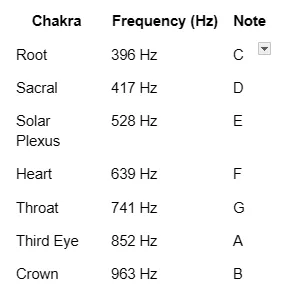
Musicians and sound practitioners use the notes above to design soundscapes meant to soothe or stimulate each chakra. The pairings come from tradition, not measurement.
How Specific Sounds Target Specific Chakras
By tradition, a drumbeat suits the root chakra, a flute the heart chakra, and ethereal chimes the crown. It is about resonance and intention.
Types of Music Used in Chakra Healing
Binaural Beats
Binaural beats are a perceptual effect: two tones that differ slightly in frequency are played separately to each ear. A 2019 meta-analysis of 22 studies found an overall medium effect (g = 0.45) of binaural beats on memory, attention, anxiety, and pain. The authors reported that the size of the effect depends on the frequency used, the time of exposure, and when the exposure takes place. That research is not about chakras.
Solfeggio Frequencies
These tones are called ancient and are said by followers to promote healing. For example, 528 Hz is called the “miracle tone” and is linked in this tradition with the solar plexus. These are beliefs, not research findings.
Tibetan Singing Bowls
Bowls are tuned in tradition to chakra frequencies. They produce rich, resonating tones that many people find feel like a gentle massage.
Chanting and Mantras
Repetitive vocal sounds like “OM” or Sanskrit mantras make your throat, chest, and head vibrate. Practitioners say this energizes or calms specific chakras. Chanting can also support clear speaking, which tradition links with a balanced throat chakra.
Chakra-by-Chakra Breakdown of Musical Impact
Root Chakra: Stability and Drumming
Low-frequency instruments like drums, didgeridoos, or cello are traditional choices. Practitioners say the primal beat grounds your energy at the base of the spine, where the root chakra sits.
In chakra teaching, a balanced root chakra goes with feeling grounded, secure, and confident in facing life’s challenges.
Sacral Chakra: Creativity and Flowing Melodies
Flutes, flowing rhythms, and watery ambient sounds are linked with creative energy and emotional openness.
Solar Plexus Chakra: Confidence and Upbeat Rhythms
Think empowering tracks with a strong beat. Guitar riffs or steady piano chords can make you feel confident.
In chakra teaching, an imbalance here shows up as butterflies or a pit in the stomach, and as self doubt. Digestive trouble has medical causes, so see a doctor if it persists.
Heart Chakra: Love and Soft Harmonies
Soothing strings, harps, and gentle vocals are linked with love, compassion, and forgiveness.
Throat Chakra: Truth and Vocal Expression
Your voice is your instrument here. Singing, humming, or listening to vocal-heavy tracks is linked with self-expression.
Third Eye Chakra: Intuition and Ambient Soundscapes
Dreamy ambient music, synth pads, or soundscapes are linked with clarity and inner vision.
Crown Chakra: Spirituality and Silence or High Frequencies
Sometimes the best sound is silence, or bells, high chimes, or crystal bowls that feel celestial.
How to Use Music for Chakra Balancing
Listening with Intention
It is not just background noise. Set a clear intention before pressing play: “I want to open my heart,” or “I need grounding.”
Combining Music with Meditation
Use chakra-specific music during meditation. Focus your breath on the chakra area while the sound guides your attention.
Daily Rituals and Playlists
Create a playlist for each chakra, or listen to chakra music in the bath, during yoga, or while journaling. A few minutes a day is a simple start.
Movement and Dance as Chakra Activation
Put on chakra music and move. Let your body guide you. Dance is as valid a practice as stillness.
Common Signs Your Chakras Are Misaligned
Physical, Emotional, and Mental Symptoms
In chakra teaching, these are signs of imbalance. They also have many ordinary causes:
- Fatigue or pain in specific body parts, which practitioners say can impact your physical health
- Emotional outbursts, numbness, or feelings such as insecurity or loneliness
- Lack of motivation or creativity
- Communication blocks
- Overthinking or spiritual disconnection
How Music Is Said to Rebalance You
Practitioners say targeted chakra music recalibrates these energy centers gently, like resetting a router. This is a belief, and persistent symptoms need medical attention.
Benefits of Chakra Music Therapy
People who use chakra music report the benefits below. They are personal reports, not research findings.
Emotional Release
Some people feel they let go of suppressed emotions, sometimes without realizing it.
Relaxation
Many people find calming sounds help them slow a racing mind.
Self-Awareness
Some people say they feel more grounded, open, and present. For example, a person caught up in constant overthinking may notice they become more present.
Final Thoughts on Music and Chakras
Music is a gentle way to relax, and a chakra playlist can be a useful tool for reflection. Chakra music is not medicine. So the next time you feel off-balance, put on a track you like, close your eyes, and see how you feel.
Frequently asked questions
Can any music help with chakra balancing?
Any music you find calming can support a relaxing practice. Practitioners prefer tracks made for chakra work, such as those tuned to traditional notes or built around chakra themes.
How long does it take for music to affect your chakras?
Some people say they feel shifts instantly, others need regular practice. There is no research timeline for chakras, so go by how you feel. A common suggestion is 10 to 20 minutes a day.
Do I need headphones for binaural beats to work?
Yes. Binaural beats are made by playing two slightly different tones separately to each ear, so headphones are needed.
What’s the best time to listen to chakra music?
Many people choose morning for grounding and focus, and evening for relaxation and inner work. Trust your intuition.
Can chakra music replace traditional healing?
No. It can complement care, but it does not replace it. Always seek medical or psychological help when needed.