
What is the History of Chakra Balancing?
The short answer
Chakra balancing grew out of ancient Indian yoga, tantra and Ayurveda, where chakras were described as energy centers in a subtle body. Western audiences met the idea in the late 19th century through the Theosophical Society, and it became a staple of New Age wellness in the 20th century. The chakras are a spiritual tradition, not an established scientific model.
Key points
- The chakra idea comes from Indian yoga, tantra and Ayurveda.
- Early Sanskrit texts such as the Upanishads are often cited as sources.
- Theosophists introduced chakras to Western audiences in the late 19th century.
- Modern chakra practices include Reiki, sound, crystals, yoga and meditation.
- The NCCIH says there is no scientific evidence for the energy field behind Reiki.
Contents (13)
The concept of chakra balancing has its roots in ancient Indian traditions, particularly yoga and Ayurveda. Early references to chakras are usually traced to sacred texts such as the Vedas and Upanishads, where they are described as energy centers within the body. Over centuries, these ideas evolved and were folded into various spiritual and healing systems, shaping how people think about energy and wellbeing.
Ancient traditions also described the subtle body as an energetic layer that interacts with the chakras, and this forms the base for many chakra balancing practices.
Introduction to Chakras
What Are Chakras?
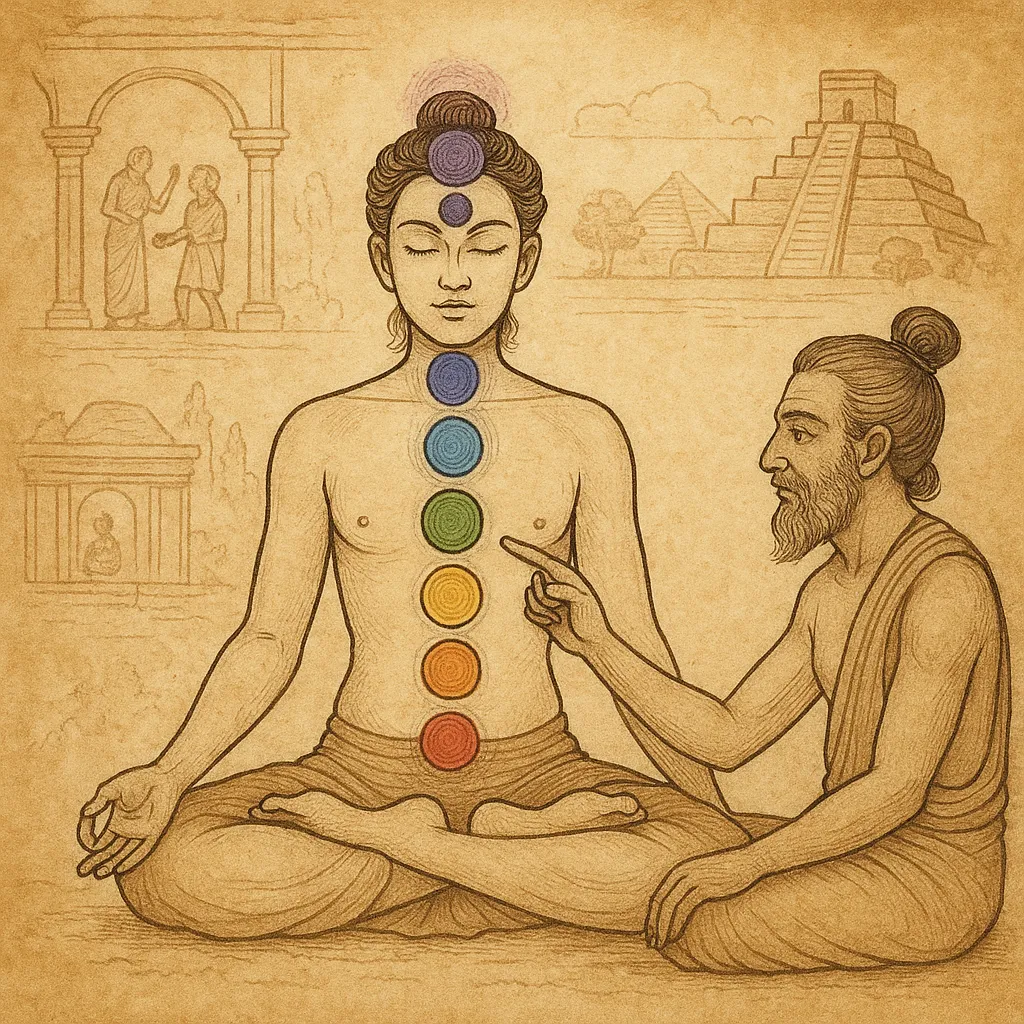
In tradition, chakras are invisible spinning wheels of energy inside the body. Each is linked with physical, emotional and spiritual themes, and teachers associate them with glands, organs, moods and beliefs. Seven main chakras are said to sit along the spine, from the base to the crown of the head.
Why Do Chakras Matter in Spiritual Practices?
Balancing chakras is about keeping energy flowing smoothly. In this teaching, when they are aligned and open you feel vibrant and grounded, and when they are blocked life feels stuck. That is why they have become central to many wellness practices around the world.
Chakra cleansing is a practice used to remove blockages and restore balance to the energy centers.
Chakra Locations and Functions
The seven chakras are described as the primary energy centers of the body, each positioned along the spine with its own role. Knowing where they sit and what they represent is the key to the chakra system as the tradition teaches it.
- Root Chakra (Muladhara): Found at the very base of the spine, the root chakra is your foundation. Its symbol represents stability, grounding and a sense of security. In chakra teaching, a balanced root chakra means you feel safe and connected to the world around you, while a blocked one brings insecurity or instability.
- Sacral Chakra (Svadhishthana): Located just below the navel, the sacral chakra is the seat of creativity, passion and emotional flow. Its symbol is linked to the water element, reflecting fluidity and adaptability. In this tradition, a balanced sacral chakra supports healthy relationships and the ability to feel pleasure and joy.
- Solar Plexus Chakra (Manipura): Situated in the upper abdomen, the solar plexus chakra is the personal power center. Its symbol is associated with self-esteem, confidence and inner strength. In this teaching, balance here means feeling motivated, disciplined and purposeful.
- Heart Chakra (Anahata): At the center of the chest lies the heart chakra, the bridge between the lower and upper chakras. Its symbol embodies love, compassion and emotional balance. Practitioners link it with giving and receiving love, empathy, harmony and forgiveness.
- Throat Chakra (Vishuddha): The throat chakra is located at the throat and is all about communication and self-expression. Its symbol represents your authentic voice. In this tradition, when it is open you express yourself clearly and confidently.
- Third Eye Chakra (Ajna): Found between the eyebrows, the third eye chakra (or eye chakra) is the center of intuition and inner wisdom. Its symbol is linked to insight, clarity and spiritual awareness.
- Crown Chakra (Sahasrara): Located at the very top of the head, the crown chakra is your connection to divine consciousness and spiritual liberation. Its symbol represents enlightenment, unity and a sense of oneness with the universe.
In the Western chakra system, each of the seven chakras is associated with a specific color, sound and element. The system is described as a network in which each energy center influences the others.
Practices like chakra meditation, yoga poses and breathing exercises are the usual ways people work with these centers. Many people say they use them for emotional wellbeing and a sense of spiritual awakening.
In Tibetan Buddhism, the chakra system is also used as a map for spiritual growth, with chakras depicted as focal points for the flow of life energy. Mandalas and visualizations help practitioners direct energy through these centers.
Understanding the locations and functions of the seven main chakras is the starting point for energy healing, chakra work and mindful practice as the tradition teaches them.
Origins of the Chakra System
Vedic Roots in Ancient India
The chakra system began in India, in a very old tradition. Some modern writers say the Vedas also refer to an etheric body, an energetic field believed to surround and interact with the physical body. They are part of a belief system rooted in the Vedas, the oldest scriptures of Hinduism. These sacred texts laid the foundation for yoga and much else, and chakras became part of that spiritual picture.
The First Mentions in Hindu Texts
One of the earliest mentions of chakras is often found in the Upanishads, a collection of mystical writings. The Yoga Kundalini Upanishad is usually cited for its description of chakras and of kundalini energy, a serpent-like spiritual energy said to lie dormant at the base of the spine and rise through the chakras. These foundational texts set the groundwork for the seven major chakras recognized today, each associated with colors and energetic influences within the human energy system.
Influence of Tantra on Chakra System
Tantric traditions expanded on the chakra system, adding rituals, deities and more symbolism. Tantric practice often focuses on the lower chakras to support spiritual growth. Unlike the purely philosophical Vedic texts, Tantra took a more practical and body-based approach to spirituality.
Chakras in Other Ancient Cultures
Buddhist Perspectives
In Tibetan Buddhism, a slightly different chakra system exists, often with five or six chakras. Practices like Vajrayana yoga use visualization, breath and chanting to move energy through the body’s central channel, with chakras as a focal point for concentration and spiritual development.
Taoist Energy Channels and Similar Concepts
Traditional Chinese medicine talks about Qi (Chi) and meridians, which are often compared with chakras and nadis (energy pathways). Energy centers and flow appear in many traditions under different names.
Ancient Egyptian and Greek Energetic Concepts
Some writers draw comparisons between kundalini and symbols from ancient Egypt and Greece, but these are loose parallels rather than evidence of a shared chakra system.
Evolution of Chakra Balancing Techniques
Early Yogic Practices and Meditation
Yogis used meditation to awaken and balance chakras. Sitting still, focusing on a single point (often the ajna chakra, or third eye) and chanting bija (seed) mantras were seen as ways to activate each chakra.
Role of Breathwork (Pranayama)
Breath control, or pranayama, was used to move life force energy through the chakras. Think of it as tuning an inner instrument by controlling the rhythm of your breath.
Use of Mantras and Mudras
Each chakra is linked to a sound (mantra) and a hand gesture (mudra). The crescent moon is a symbol often associated with the sacral chakra, representing cycles and creative energy. These were used in ritual and meditation to channel energy and clear blockages.
Chakra Balancing in Ayurveda
Doshas and Their Energetic Role
Ayurveda, India’s traditional health system, connects chakras with the doshas: Vata, Pitta and Kapha. In this teaching, each dosha can influence or be influenced by different chakras.
Healing Through Diet and Herbs
Specific foods, spices and herbs have been paired with chakras. For example, root vegetables are paired with the root chakra, while peppermint and lavender are paired with the throat chakra.
Introduction of Chakras to the West
Theosophical Society’s Influence
In the late 19th century, figures like Helena Blavatsky and C.W. Leadbeater introduced chakras to Western audiences. They mixed Eastern mysticism with Western esotericism, which made chakras accessible to spiritual seekers in Europe and America.
Carl Jung and the Psychological Interpretation
The psychologist Carl Jung is often credited with reading chakras in a psychological way, as symbols of stages of personal growth. This reading helped link Eastern spirituality with Western psychology.
New Age Movement in the 20th Century
By the later 20th century, chakras were a staple in New Age circles. Books and workshops spread, and chakra balancing through crystals, sound and color became popular.
Modern Approaches to Chakra Balancing
Reiki and Energy Healing
Reiki practitioners use hands-on or hands-near energy work, and often describe working intuitively and sensing which chakras are off. The US National Center for Complementary and Integrative Health states that Reiki has not been clearly shown to be effective for any health-related purpose, and that most research on it has not been of high quality.
Sound Therapy and Crystal Healing
Practitioners believe that certain sounds and frequencies vibrate with each chakra, and that colored crystals resonate with and rebalance energy centers. These are beliefs within the tradition. Many people say they feel calm and clear afterward.
Yoga and Mindfulness Practices
Modern yoga classes often follow chakra sequences, for example hip-opening poses for the sacral chakra or inversions for the crown. Mindfulness and intention are also used to “tune in” to your sense of self.
Scientific Perspectives
Skepticism and the State of the Evidence
The chakra system is a spiritual framework, not a scientific model. The same NCCIH page notes that there is no scientific evidence supporting the existence of the energy field thought to play a role in Reiki, a related energy practice. It does not address chakras directly.
Metaphor and Meaning
Many people find chakras useful as a metaphor for self-reflection, whatever they believe about energy. Whether you read the chakras literally or symbolically is a personal choice.
Common Misconceptions About Chakra Balancing
Oversimplification in Pop Culture
Social media often presents chakras like colorful mood rings. Practitioners of the older traditions say the real practice is deeper and sacred. Quick-fix videos and “chakra smoothies” can miss that point.
Commercialization vs. Authentic Practice
Buying a chakra bracelet is not the same as doing the inner work. Practitioners say authentic chakra balancing takes patience, intention and reflection.
The Spiritual Purpose of Chakra Work
Self-Awareness and Inner Healing
At its core, chakra work is not just about feeling better. It is about seeing yourself clearly, including your fears, your strengths and your wounds, and changing from within.
Path to Enlightenment or Wholeness
Many traditions teach that when all chakras are aligned, a person reaches a higher state of consciousness. Some call it enlightenment, others call it inner peace.
Conclusion
Chakra balancing has traveled a long path from ancient India’s sacred texts to modern yoga mats and wellness centers around the world. Whether you see it as spiritual truth, psychological metaphor or something in between, the chakra system continues to interest people with its picture of energetic harmony.
Frequently asked questions
What is the oldest known mention of chakras?
Writers often point to the Upanishads, including the Yoga Kundalini Upanishad, as an early source. Exact dates vary between sources, so treat any single date with caution.
How many chakras are there really?
Most systems talk about seven main chakras, but some traditions include additional minor chakras, with some lists going up to 114.
Is chakra balancing a religion?
No, but it is rooted in spiritual systems like Hinduism and Buddhism. Many people use chakra work without following a specific religion.
Do I need a healer to balance my chakras?
Not necessarily. Healers can guide you, but many techniques like meditation, yoga or journaling can be done on your own.
How long does it take to balance your chakras?
It varies. Some people say they feel shifts in a single session, and for others it is a lifelong practice of growth and self-awareness.