
Which Crystals Are Best for Chakra Balancing?
The short answer
By tradition, each chakra has matching crystals: red jasper or hematite for the root, carnelian for the sacral, citrine for the solar plexus, rose quartz for the heart, lapis lazuli for the throat, amethyst for the third eye and clear quartz for the crown. These pairings are a spiritual practice based mostly on color. They are not backed by scientific evidence.
Key points
- Crystal and chakra pairings follow tradition and color, not laboratory research.
- Popular picks include red jasper, carnelian, citrine, rose quartz, lapis lazuli, amethyst and clear quartz.
- People use crystals in meditation, jewelry, grids and placed on the body.
- Cleansing methods such as moonlight or sound are rituals, not hygiene.
- Pick the stones you like, and see a doctor for health concerns.
Contents (15)
Introduction to Chakras and Crystals
Chakras and crystals are two ideas that have become popular in holistic wellness circles. Chakras are described in yoga tradition as energy centers within the body linked to physical, emotional and spiritual themes.
The word ‘chakra’ comes from the Sanskrit word meaning ‘wheel’, pointing to the ancient origins of the system.
These energy centers are said to exist within the subtle body, a non-physical layer that tradition describes as connecting body, mind and spirit. This is a spiritual picture, not an anatomical one.
Crystals, in this tradition, are thought to interact with these centers. That is a belief, and there is no scientific evidence behind it, so many people use crystals as a focus for meditation rather than as a tool with proven effects.
What Are Chakras?
Imagine your body has a system of spinning energy wheels. The word ‘chakra’ is a Sanskrit word meaning ‘wheel’, reflecting the system’s ancient Indian origins. In the tradition, chakras are energy centers aligned from the base of your spine to the top of your head, and each is linked with particular emotions, organs and spiritual themes. Many teachings place them in the subtle body, an energetic field distinct from the physical body. Different esoteric traditions interpret them in their own ways.
The Role of Energy in the Human Body
In chakra teaching, you are not just flesh and bone but also energy. The etheric body is described as the energetic field around the physical body and is linked with chakra health. In this picture, when energy is balanced you feel grounded and clear-headed, and when it is blocked you feel sluggish, moody or disconnected. These feelings have many everyday causes, so see a doctor if they persist.
How Crystals Work with Chakras
Practitioners compare crystals to tuning forks for your energy field. Many believe each crystal has a frequency that resonates with a specific chakra and can help balance or unblock it. This is a belief within the practice, not a tested effect.
The Importance of Chakra Color
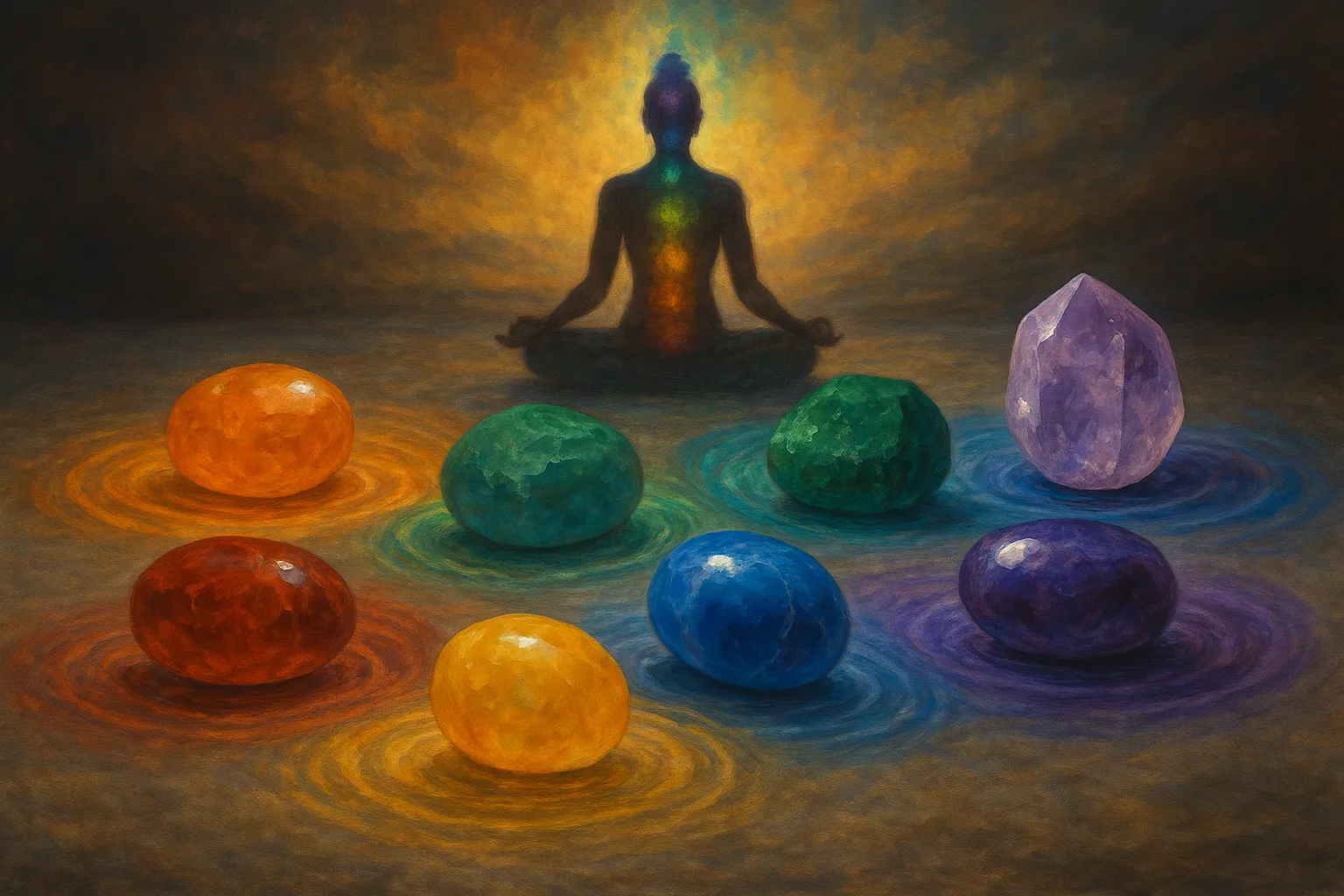
Chakra colors are the main way crystals are matched to chakras. The seven chakras are often pictured as a rainbow from the base of your spine to the top of your head. The root chakra is red, tied to grounding and security. The sacral chakra is orange, tied to creativity and emotional flow. The solar plexus chakra is yellow, tied to personal power and confidence. The heart chakra is green, tied to love and compassion. The throat chakra is blue, tied to communication. The third eye chakra is indigo, tied to intuition. The crown chakra is violet, tied to spiritual connection.
Working with crystals, visualizations or clothing in these colors is a way to focus your attention on the matching theme. Many people find that a simple, colorful ritual helps them slow down and reflect.
The 7 Main Chakras and Their Meanings
The 7 chakras are described as the primary energy centers along the central channel of the body, each with its own name and theme. They sit along the spine rather than in specific organs.
Root Chakra (Muladhara)
Location: Base of the spine
Color: Red
Theme: Survival, security, grounding
Also known as the first chakra, the root chakra is the foundation in this system.
When balanced, tradition says: You feel safe and stable
When blocked, tradition says: You may feel fearful or insecure
Sacral Chakra (Svadhisthana)
Location: Lower abdomen
Color: Orange
Theme: Emotions, creativity, sexuality
When balanced, tradition says: You are passionate, open and emotionally well
When blocked, tradition says: You feel stuck or emotionally numb
Solar Plexus Chakra (Manipura)
Location: Upper abdomen (also known as the third chakra, the power center of the body)
Color: Yellow
Theme: Confidence, willpower, personal strength
When balanced, tradition says: You feel self-esteem and personal empowerment
When blocked, tradition says: You may feel powerless or anxious
Heart Chakra (Anahata)
Location: Center of the chest
Color: Green
Theme: Love, compassion, forgiveness (also known as the fourth chakra)
When balanced, tradition says: You love freely and feel connected
When blocked, tradition says: You may feel bitterness or grief
Throat Chakra (Vishuddha)
Location: Throat
Color: Blue
Theme: Communication, truth, self-expression
When balanced, tradition says: You speak clearly and truthfully
When blocked, tradition says: You feel unheard or afraid to express yourself
Third Eye Chakra (Ajna)
Location: Forehead, between the eyes
Color: Indigo
Theme: Intuition, insight, wisdom (also known as the sixth chakra)
When balanced, tradition says: Your intuition is strong and your thinking is clear
When blocked, tradition says: You may feel lost or disconnected
Crown Chakra (Sahasrara)
Location: Top of the head
Color: Violet or white
Theme: Spirituality, higher self, divine connection
Also known as the seventh chakra, considered the highest in the system
When balanced, tradition says: You feel one with the universe
When blocked, tradition says: You feel purposeless or isolated
Best Crystals for Each Chakra
Crystals have long been paired with chakras in spiritual practice. Choosing a stone for a specific chakra is a way to focus your attention on that theme. Here are the traditional pairings and what practitioners say about each stone.
Root Chakra: Red Jasper, Hematite, Black Tourmaline
- Red Jasper: Said to bring grounding energy and endurance.
- Hematite: Said to anchor you to the earth and support courage.
- Black Tourmaline: Said to absorb negative energy.
Sacral Chakra: Carnelian, Orange Calcite, Sunstone
- Carnelian: Said to spark creativity and passion.
- Orange Calcite: Said to help release emotional hurts.
- Sunstone: Said to bring joy, sensuality and self-worth.
Solar Plexus Chakra: Citrine, Tiger’s Eye, Yellow Jasper
- Citrine: Called the “success stone” and linked with confidence.
- Tiger’s Eye: Said to encourage boldness and willpower.
- Yellow Jasper: Said to support decision-making and focus.
Heart Chakra: Rose Quartz, Green Aventurine, Rhodonite
- Rose Quartz: Linked with love and emotional comfort.
- Green Aventurine: Known as the “comforter” and linked with peace.
- Rhodonite: Said to encourage forgiveness and emotional release.
Throat Chakra: Lapis Lazuli, Blue Lace Agate, Aquamarine
- Lapis Lazuli: Linked with truth and expression.
- Blue Lace Agate: Said to calm the nerves and support clarity.
- Aquamarine: Said to help you speak your truth with grace.
Third Eye Chakra: Amethyst, Fluorite, Sodalite
- Amethyst: Linked with intuition and calm.
- Fluorite: Said to clear mental fog.
- Sodalite: Said to support logic and deep thought.
Crown Chakra: Clear Quartz, Selenite, Lepidolite
- Clear Quartz: Said to amplify energy and spiritual connection.
- Selenite: Said to carry a high vibration and cleanse other crystals.
- Lepidolite: Linked by practitioners with peace and rest.
How to Use Crystals for Chakra Healing
By placing specific crystals on or near the chakras, many believe the stones help clear blockages and restore harmony. Each crystal is paired with particular chakras, and you can choose by the theme you want to focus on. This is a spiritual practice, so see a doctor for any health concern.
Meditation with Crystals
Sit in stillness. Place a crystal on the chakra point. Visualize light flowing into that space. Many people find this calming.
Crystal Grids
Arrange crystals in geometric patterns around your space or body. Practitioners say this focuses your intention.
Wearing Crystals as Jewelry
Bracelets, necklaces or rings let you keep a stone with you all day. Match the crystal to the chakra you are focusing on.
Placing Crystals on the Body
Lie down and put the matching crystal on each chakra point. This is the usual setup for an energy alignment session.
The Role of Intention in Chakra Balancing
Intention is what practitioners call the key ingredient of chakra balancing. Setting a clear intention means choosing what you want to focus on, whether it is growth, calm or creativity. For example, if you want to open up to more love and compassion, you might set an intention to focus on your heart chakra during your next meditation. Or, if you want creativity, you can focus on the sacral chakra.
Combining intention with practices like chakra meditation or crystals is a way to align your thoughts and actions with what you want. A clear goal can make a simple routine feel more purposeful.
Signs Your Chakras Might Be Blocked
In chakra teaching, blocked chakras are linked with physical, emotional and spiritual symptoms. Some traditions associate chakras with nerve plexuses and endocrine glands, but that link is part of the tradition and is not a medical explanation.
Emotional and Physical Symptoms
Practitioners link these signs with chakras. All have many everyday and medical causes, so see a doctor about any that persist.
- Headaches: said to relate to the crown or third eye.
- Digestive issues: said to relate to the solar plexus.
- Relationship struggles: said to relate to the heart chakra.
How Crystals Help Remove Blocks
Practitioners say crystals shift the frequency of a blocked chakra and return the energy flow to balance. This is a belief, not a tested effect.
How to Cleanse and Charge Your Crystals
Smudging, Moonlight, Salt Water & More
These are traditional cleansing rituals:
- Smudging: Use sage or palo santo smoke.
- Moonlight: Leave crystals out during a full moon.
- Salt Water: A soak for hardier stones, not for soft ones.
- Sound: Singing bowls or bells are used to refresh their energy.
Why Cleansing Is Crucial
In the tradition, crystals are thought to absorb energy, good and bad, so cleansing is a way to reset them. It is a ritual rather than a necessity, so you can follow it as much or as little as you like.
Tips for Maintaining Chakra Balance
Practitioners suggest weaving simple practices into your everyday life. Start with regular yoga or meditation to give yourself quiet time. Breathing exercises like alternate nostril breathing are a traditional favorite. Sound and color are common additions, and crystals add one more ritual.
Do not forget joy and creativity. Painting, dancing or spending time in nature are good for many people, whatever they believe about chakras. Make time for self-care, connect with loved ones and listen to your body’s signals.
Chakra Balancing for Emotional, Physical, and Spiritual Well-being
Many people find chakra balancing a calming way to reflect on emotional and spiritual themes. In the tradition, balancing the solar plexus is linked with confidence, and a healthy heart chakra with deeper connection and compassion.
Regular chakra meditation is described by practitioners as a way to clear blocked energy and find inner peace. Because the system is seen as interconnected, working on one chakra is said to have effects on the others. These are personal and traditional claims, and chakra work should sit alongside, not replace, medical care for any physical or emotional health concern.
Conclusion
Balancing your chakras with crystals is a spiritual practice, a bit like tuning an instrument: the focus is on bringing your attention into harmony with a theme you care about. By choosing stones you like and using them consistently, whether in meditation, jewelry or grids, you give yourself a regular moment of calm.
Start small. Trust your intuition. See a doctor for anything that worries you.
Frequently asked questions
Can I use one crystal for multiple chakras?
Yes. Practitioners say some stones, such as Clear Quartz or Amethyst, suit more than one chakra. Pairings vary between traditions, so follow what feels right to you.
How often should I cleanse my crystals?
There is no fixed rule. Some people cleanse weekly, especially stones they use often, and others only now and then. It is a ritual, so choose a rhythm you will keep.
Are chakra crystals safe to use daily?
Crystals are usually carried or held. Do not swallow them, and keep small stones away from young children and pets. Some stones are not suited to water, so check before soaking.
Can I sleep with chakra stones under my pillow?
Many people do, often with stones traditionally linked with calm, like Amethyst or Lepidolite. Make sure they are not uncomfortable or a hazard to anyone in the bed.
What if a crystal does not feel right for me?
Trust your preference. Not every stone appeals to every person, so swap it out and try another.