
What are the Signs of Unbalanced Chakras?
The short answer
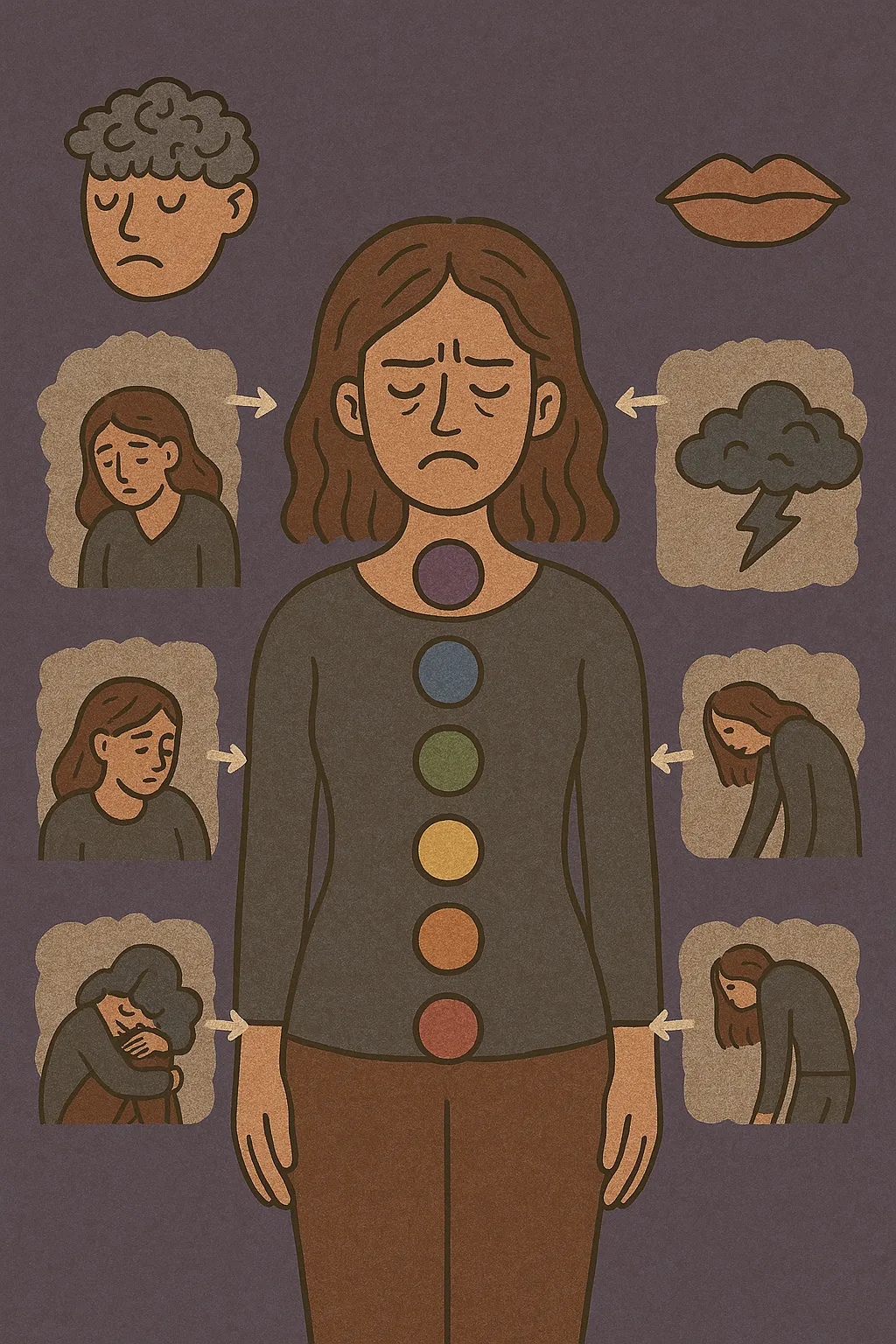
In chakra teaching, signs of unbalanced chakras include mood swings, tiredness, feeling stuck, trouble expressing yourself and physical tension. These ideas come from yoga tradition and are not medical diagnoses. Signs like these have many everyday causes, so see a doctor if they last.
Key points
- Unbalanced chakras are a yoga tradition idea, not a medical diagnosis.
- Each chakra is traditionally linked with its own emotional themes and body areas.
- The NHS lists poor sleep, stress and some illnesses among the causes of tiredness.
- See a doctor if tiredness lasts for a few weeks, or if any symptom worries you.
- Meditation, movement and gentle self-care are common ways people respond.
Contents (17)
Introduction to the Chakra System
What are Chakras?
Ever heard someone say, “My energy feels off”? In yoga tradition, that can be a way of talking about the chakras. Chakras are described as energy centers in the body that influence how we feel physically, emotionally and spiritually. The word “chakra” means “wheel” in Sanskrit, and that is how they are pictured: spinning wheels of energy along your spine.
The Role of Chakras in Our Wellbeing
In this tradition, chakras are the power stations of your body. When they are balanced, energy flows smoothly and life feels aligned.
How Energy Flow Affects Us
A blocked chakra is pictured as a kink in a garden hose. The flow of water (life energy) gets disrupted, and whatever is meant to thrive at the other end does not. In chakra teaching, that is when symptoms such as stress or disconnection show up.
Overview of the 7 Main Chakras
Root Chakra (Muladhara)
Location: Base of spine
Color: Red
Element: Earth
Traditionally linked with safety, survival and grounding.
Sacral Chakra (Svadhisthana)
Location: Lower abdomen
Color: Orange
Element: Water
Traditionally linked with creativity, sexuality and joy.
Solar Plexus Chakra (Manipura)
Location: Upper abdomen
Color: Yellow
Element: Fire
Traditionally linked with personal power, confidence and control.
Heart Chakra (Anahata)
Location: Center of chest
Color: Green
Element: Air
Traditionally linked with love, compassion and emotional connection.
Throat Chakra (Vishuddha)
Location: Throat
Color: Blue
Element: Ether
Traditionally linked with speaking your truth and communicating.
Third Eye Chakra (Ajna)
Location: Forehead between eyes
Color: Indigo
Element: Light
Traditionally linked with intuition, imagination and insight.
Crown Chakra (Sahasrara)
Location: Top of head
Color: Violet or White
Element: Cosmic Energy
Traditionally linked with a connection to the divine and higher consciousness.
General Signs of Chakra Imbalance
In chakra teaching, the signs below point to blocked or overactive chakras. They are traditional ideas, not diagnoses.
Emotional Symptoms
Mood swings, anxiety, low mood or emotional numbness are traditionally read as signs of blocked or overactive chakras. If they last, speak to a doctor or therapist.
Physical Symptoms
Pain, fatigue and recurring tension are traditionally linked with the related chakra regions. They can also have medical causes. The NHS lists not sleeping well, an unhealthy lifestyle, stress and some illnesses among the causes of tiredness, and advises seeing a GP if you have felt tired for a few weeks and are not sure why.
Spiritual Disconnect
In chakra teaching, blocked chakras can leave you feeling lost, unmotivated or out of touch with your purpose.
Signs of Unbalanced Chakras: By Chakra
Root Chakra Imbalance
Anxiety and Insecurity
In chakra teaching, feeling constantly unsafe, insecure or fearful is linked with the root chakra.
Financial Struggles or Instability
Difficulty managing money or a constant fear of losing what you have is also linked with it.
Sacral Chakra Imbalance
Lack of Creativity or Passion
Feeling “blah” or uninspired is traditionally linked with the sacral chakra.
Guilt or Difficulty With Intimacy
Shame around pleasure, difficulty with intimacy or suppressed emotions are the traditional signs.
Solar Plexus Chakra Imbalance
Low Self-Esteem
In chakra teaching, when your inner fire dims, so does your confidence.
Digestive Issues
Some practitioners link bloating or stomach discomfort with the solar plexus chakra. Get digestive problems checked by a doctor.
Heart Chakra Imbalance
Difficulty Loving or Forgiving
Walls up? Avoiding vulnerability? In chakra teaching, that points to a blocked heart chakra.
Chest Tightness
Some practitioners associate chest tightness with emotional pain held in the heart chakra. Get chest tightness checked by a doctor.
Throat Chakra Imbalance
Trouble Expressing Yourself
If you are always swallowing your truth or scared to speak up, chakra teaching links that with the throat.
Sore Throats or Jaw Pain
Practitioners sometimes associate tension in the neck and mouth with the throat chakra.
Third Eye Chakra Imbalance
Lack of Clarity or Intuition
Cannot “see the bigger picture”? In chakra teaching, that is linked with the third eye.
Headaches or Sleep Issues
Practitioners associate headaches or poor dream recall with this chakra. See a doctor if they persist.
Crown Chakra Imbalance
Feeling Lost or Spiritually Disconnected
Struggling with meaning in life or feeling alone? In chakra teaching, this chakra connects you to something greater.
Chronic Fatigue or Brain Fog
Practitioners link a sluggish mind and emotional burnout with the crown chakra.
Causes of Chakra Imbalances
Stress and Trauma
In this tradition, unresolved trauma is said to disrupt energy flow for years.
Negative Habits and Thought Patterns
Practitioners say toxic relationships or self-sabotage chip away at chakra balance.
Environmental Toxins or Energetic Pollution
Practitioners also name too much screen time and chaotic environments.
How to Rebalance Your Chakras
Meditation and Breathwork
Focus on each chakra with color visualization or sound (mantras).
Chakra Healing Foods
Each chakra is associated with a color. Many practitioners eat the rainbow to nourish their energy centers.
Energy Healing (Reiki, Sound Therapy, etc.)
Reiki and sound sessions are popular for relaxation.
Movement: Yoga, Dance, and Exercise
Certain yoga poses are traditionally paired with specific chakras.
Affirmations and Visualization
Positive, intentional language is a common practice for shifting your mindset.
Conclusion
In chakra teaching, the chakras work like a team, so when one slacks off, the rest pick up the slack. Whether it is anxiety, physical pain or just feeling “off”, speak to a doctor if it lasts, and treat chakra work as an extra.
Frequently asked questions
Can chakra imbalances cause physical illness?
Chakras are a spiritual idea rather than a medical explanation. Fatigue, digestive problems and headaches have many everyday and medical causes, so see a doctor if they continue.
How do I know which chakra is blocked?
In chakra teaching, you notice emotional, physical and behavioral signs and match them to a chakra. Each chakra has a traditional set of themes, but this is a personal reflection tool, not a test.
How long does it take to balance a chakra?
It depends. Some people say they feel relief after a single session, while others practice regularly over weeks or months.
Are chakra imbalances scientifically proven?
Chakras are part of traditional Eastern energy systems and are described by tradition rather than by medicine.
What’s the best way to start chakra healing?
Start simple with meditation, journaling and awareness. Pick one chakra and focus on that before moving to the next.