
Can Yoga Help with Chakra Balancing?
The short answer
Yoga may help you feel calmer and more aware of your body. Chakras come from spiritual tradition rather than science, so no test can show that one has shifted. Poses, breathing and meditation are a gentle way to explore the idea.
Key points
- Chakras are a traditional spiritual idea, used here as a map for paying attention to yourself.
- Research on yoga points to lower perceived stress, not to measurable changes in chakras.
- Breathwork, poses, meditation and sound each give you a different way in.
- Start with 15 to 30 minutes, three times a week, and keep it regular.
- If you are new to yoga, skip headstands and shoulder stands until you have guidance.
Contents (10)
Feeling out of sync lately? Maybe your mind is racing, or you feel stuck creatively. Some people turn to chakra yoga for exactly this. Here is what it is, how it works in practice, and what you can fairly expect from it.
One honest note first. Chakras are an idea from Indian spiritual tradition. This article treats them as a map for paying attention to yourself, not as something a medical test can measure. What research does support is the wider benefit of yoga. The US National Center for Complementary and Integrative Health (NCCIH) cites a 2020 review of 12 studies that found beneficial effects of yoga on measures of perceived stress in all of them.
Understanding the Chakra System
What Are Chakras?
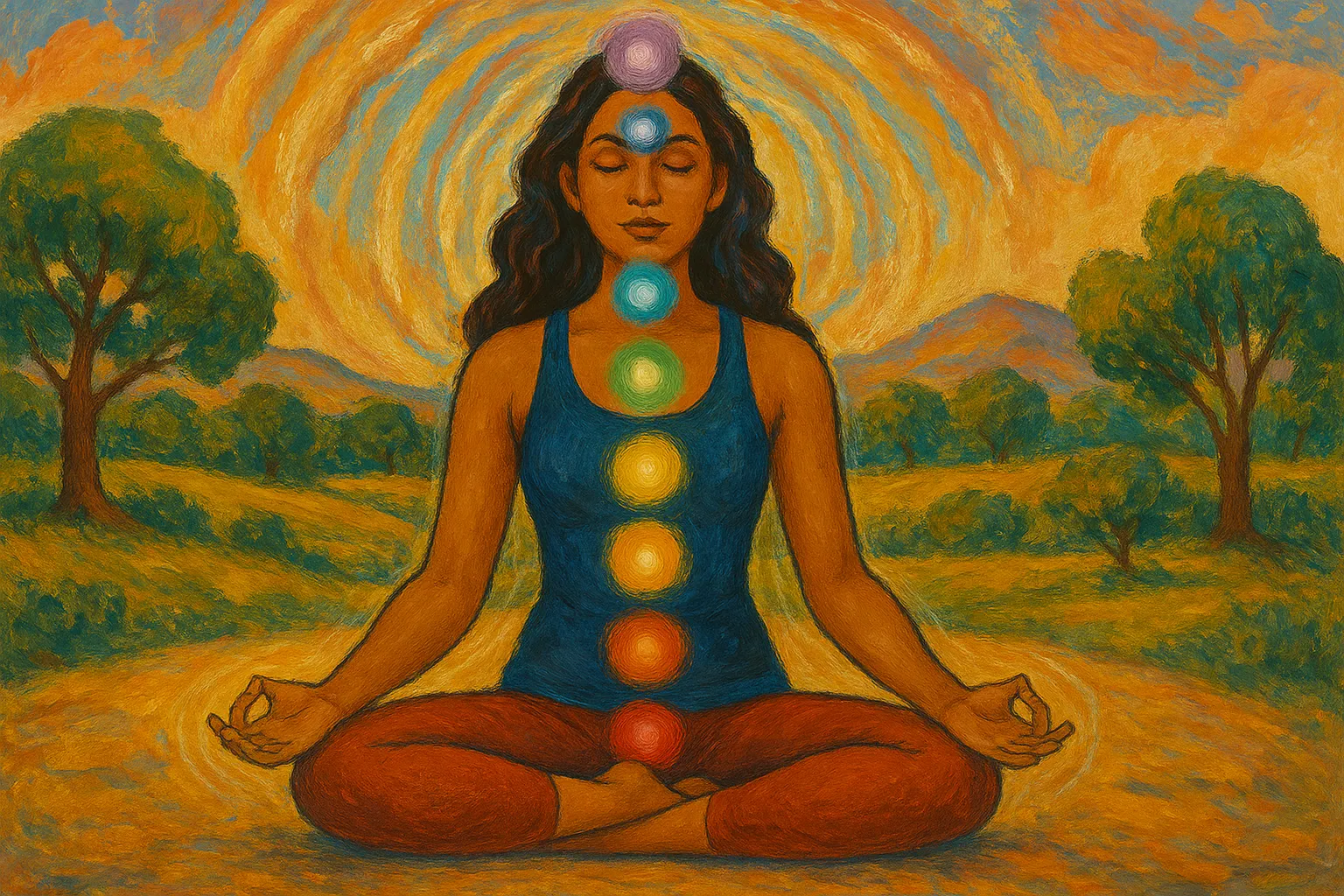
In yoga tradition, chakras are energy centers in the body. Picture them as spinning wheels of energy linked to your physical, emotional and spiritual life. When they spin freely, you feel at ease. When they feel blocked, you feel off.
The Seven Major Chakras
Each of the seven main chakras sits along the spine and has its own theme.
Root Chakra (Muladhara)
At the base of the spine, this one is about survival, safety and grounding. Feeling anxious or financially insecure? Tradition says to look here first.
Sacral Chakra (Svadhisthana)
Just below the navel, this chakra relates to creativity, pleasure and emotional well-being. If you feel stuck or emotionally numb, it may be the one to explore.
Solar Plexus Chakra (Manipura)
In the upper abdomen, this is your personal power center. Self-doubt and low motivation point here.
Heart Chakra (Anahata)
In the center of the chest, this chakra is about love and connection. Emotional pain or trouble forgiving points here.
Throat Chakra (Vishuddha)
In the throat, naturally. It relates to communication and expression. If you find it hard to speak your truth, this is the one to work with.
Third Eye Chakra (Ajna)
Between the eyebrows sits your intuitive center. Trouble making decisions or feeling lost points here.
Crown Chakra (Sahasrara)
At the top of the head, the crown chakra, the highest of the seven, stands for connection to something larger than yourself. If you feel disconnected or spiritually lost, tradition points here.
The Connection between Chakras
The chakra system is not seen as seven separate centers. In the tradition, it is an interconnected network. Prana, the life force, is said to flow through all of them, from the grounding root chakra at the base of the spine to the expansive crown chakra at the top of the head. If one center feels blocked, the idea is that the effect ripples through the rest, from your confidence to your ability to communicate.
For example, the solar plexus chakra, linked to your sense of self and personal power, is closely tied to the throat chakra, your center for expression. A pose like the spinal twist works your core, and practitioners say it also opens the throat, which can make it easier to speak up. Breathing exercises are another way to support that flow between centers. Whatever you make of the energy language, noticing these links can deepen your sense of connection with yourself.
The Concept of Chakra Imbalance
Signs Your Chakras Are Out of Balance
Teachers often describe these signs:
- Fatigue for no reason
- Emotional outbursts
- Trouble concentrating
- Physical aches and pains with no medical cause
- Feeling “off” without knowing why
These signs can have many causes. If they last, speak to a doctor first.
How Energy Blockages Affect Your Life
In this tradition, stuck energy makes everything feel harder. Relationships get rocky, work feels exhausting, and the body sends warning signals. Balancing your chakras is compared to resetting your internal operating system.
What Is Chakra Yoga?
Yoga as a Tool for Energy Work
Yoga is not only about flexibility or strength. Done mindfully, it moves attention through the body, may calm the mind and nurtures your sense of spirit.
How Chakra Yoga Differs from Regular Yoga
All yoga may help you feel better. Chakra yoga is more intentional. It focuses on specific poses, breaths, sounds and meditations targeted at each chakra. Balance sits at the heart of the practice, for body and spirit alike.
The Role of Intention in Chakra Yoga
Setting an intention is like giving your practice a compass. It points your attention toward what matters most to you. In chakra yoga, intention directs your awareness to a specific chakra and to the quality you want to grow, such as love and compassion for the heart chakra, or intuition for the third eye.
Before you step onto your mat, take a moment to think about what you want to invite in. Maybe self-acceptance, confidence, or simply more balance. Pairing your intention with a mantra or a short meditation helps hold your focus. Repeating a loving mantra during heart chakra poses, for example, keeps your mind on the feeling you chose. Weaving intention into practice gives it a clear direction and a sense of purpose.
How Yoga Helps Balance the Chakras
Breathwork (Pranayama)
Breath work is a core part of yoga and a simple way to slow down and relax. Techniques like alternate nostril breathing (Nadi Shodhana) are traditionally used to balance the left and right energy channels.
Asanas (Yoga Poses)
Different poses are linked with different chakras. Think of each pose as a way to place your attention in one part of the body.
Meditation and Mindfulness
Stillness is powerful. Chakra-focused meditations bring awareness and intention to one area at a time. Visualization is a key tool.
Mantras and Sound Healing
Each chakra has its own seed sound in tradition. Chanting, or listening to those sounds, is a way to tune in. For example, chanting “LAM” is linked with the root chakra.
Chakra Yoga and Self-Awareness
Chakra yoga is more than a physical workout. It is a way to get to know yourself and the links between your body, mind and emotions. Each pose and breathing exercise can show you something about your inner world and help you spot patterns in your thoughts, feelings and behavior. The chakra system works as a map for exploring that inner world.
By focusing on one chakra at a time, you tune in to different parts of yourself. Grounding poses like mountain pose connect you with the root chakra and build a sense of stability. Gentle inversions or meditative postures are used for the crown chakra and a sense of connection to the world around you. Breathing exercises help you notice shifts in energy and emotion. As you become more aware of your body, you get a clearer idea of your own needs and strengths.
Chakra-Specific Yoga Practices
A safety note before the poses. The NCCIH advises people new to yoga to avoid extreme practices such as headstands and shoulder stands. If a pose below is new to you, learn it with a qualified teacher first.
Yoga for Root Chakra
- Poses: Mountain pose, Warrior I, Child’s Pose
- Focus: Grounding through the feet; grounding poses for the root chakra also support the lower chakras
- Tip: Imagine roots growing from your feet into the earth
Yoga for Sacral Chakra
- Poses: Hip openers like Pigeon Pose and Goddess Pose
- Focus: Free-flowing movement, especially in the hips
- Tip: Move with fluidity, like water
Yoga for Solar Plexus Chakra
- Poses: Boat Pose, Plank, Twists
- Focus: Core activation and confidence
- Tip: Repeat affirmations like “I am powerful”
Yoga for Heart Chakra
- Poses: Camel Pose, Bridge, Cobra
- Focus: Opening the chest and shoulders
- Tip: Visualize a green light expanding from your chest
Yoga for Throat Chakra
- Poses: Shoulder Stand, Fish Pose
- Focus: Neck and upper spine alignment
- Tip: Chant or hum to feel the vibration. Creative expression or journaling is another way in.
Yoga for Third Eye Chakra
- Poses: Child’s Pose, Forward Fold, Eagle Pose
- Focus: Stillness and inner awareness
- Tip: Practice with eyes closed and tune in
Yoga for Crown Chakra
- Poses: Headstand, Corpse Pose, Tree Pose
- Focus: Connection and surrender
- Tip: Meditate in silence and visualize white or violet light. Some people also link crown chakra practice to physical health.
Lifestyle Tips for Better Chakra Alignment
Diet and Chakras
Color is the theme here. Try foods matching chakra colors: red foods for the root, orange for the sacral, yellow for the solar plexus, and so on.
Affirmations and Journaling
Daily mantras keep your intention in view. Journaling brings clarity to emotions and beliefs that feel stuck.
Surroundings and Colors
Decorate your space with chakra-associated colors, crystals or essential oils if that feels good to you.
Chakra Yoga and Nature
There is something special about practicing in nature. Many people find that being outdoors fits the chakra themes. Just as the earth gives grounding and stability, the root chakra is said to anchor you in your body and the present moment. Practicing outdoors, whether in a forest, on a mountain or by a river, can help you feel connected to the elements.
You can also bring natural elements into your practice. Stones, crystals and essential oils tied to specific chakras are popular for this. Grounding poses on the earth suit the root chakra, for example, while meditating near water suits the fluid, creative sacral chakra.
Common Myths About Chakra Yoga
You Need to Be a Spiritual Guru
Nope. You need a yoga mat and some curiosity. Chakra yoga is for everyone.
One Session Fixes Everything
Energy work is a practice, not a microwave. Consistency beats intensity every time.
Creating Your Personal Chakra Yoga Routine
How Often Should You Practice?
Start small: 15 to 30 minutes, three times a week. Listen to your body. The key is regularity.
Combining Physical and Spiritual Practices
Do not just move. Notice what you feel. Pair yoga with breath, intention and awareness.
Conclusion
So, can yoga help with chakra balancing? It may help you feel calmer, more present and more in tune with your body. Whether chakras are literal energy centers is a matter of belief, and research on yoga does not settle it. Movement, breath, sound and stillness give you a few simple tools to try, at your own pace.
Whether you are a seasoned yogi or stepping onto the mat for the first time, chakra yoga offers a personal way to explore feeling more balanced.
Frequently asked questions
How long does it take to balance chakras with yoga?
It varies. Some people notice a shift after one session. For others it takes weeks or months of regular practice. There is no fixed timeline.
Can beginners practice chakra yoga?
Yes. Start slowly, focus on your breath and your intention, and build from there.
Is chakra yoga religious?
No. It draws on spiritual ideas, but it is not tied to any one religion.
Can I focus on just one chakra?
Yes. If one chakra draws you in, start there. Over time, many people like to work with all seven.
Do I need a yoga teacher to practice chakra yoga?
Not necessarily. There are good online resources, but a qualified teacher can guide you more closely and help you stay safe in the poses.