
What Tools Are Used in Chakra Balancing?
The short answer
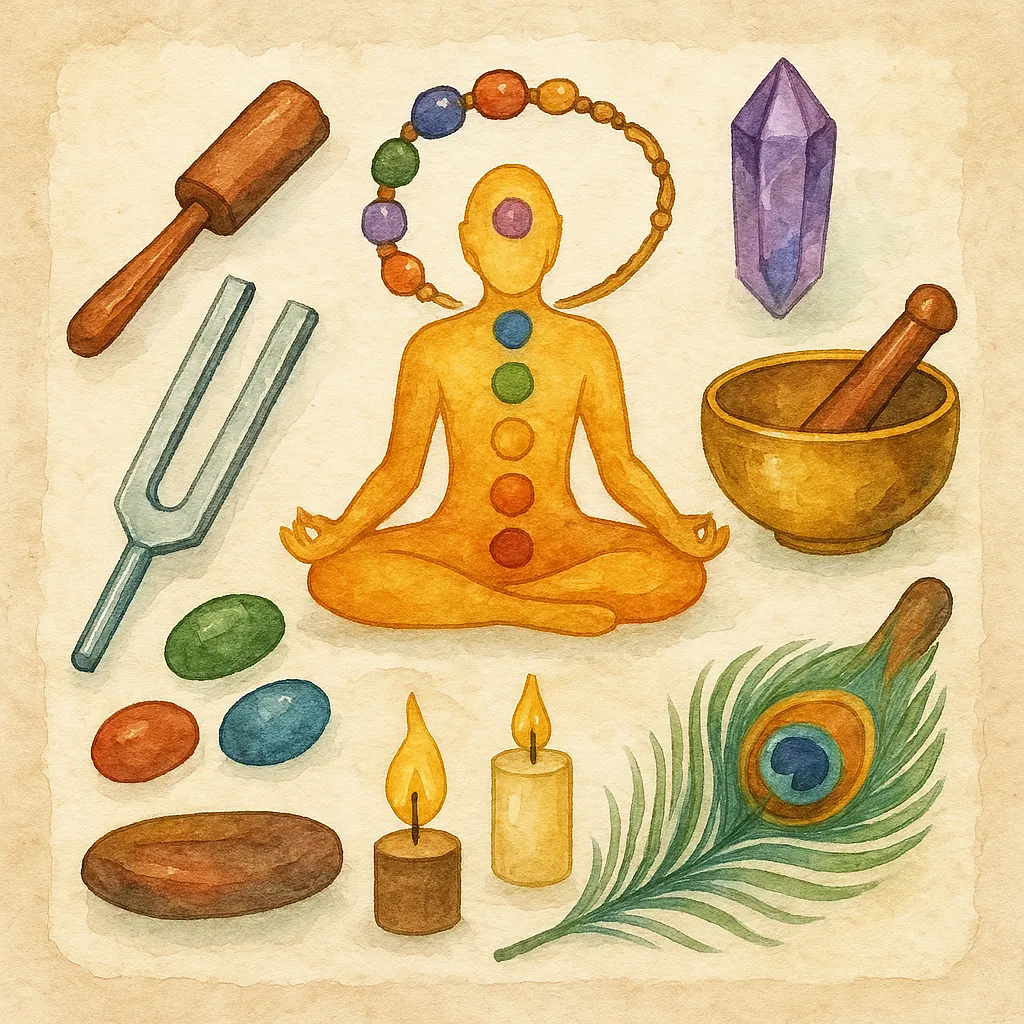
Common chakra balancing tools include crystals, singing bowls, tuning forks, essential oils, mantras, guided meditations, yoga and colors. Practitioners pair each tool with a chakra by tradition. These tools are used for relaxation and ritual, and chakras themselves are a spiritual idea rather than a medical one.
Key points
- Crystals, sound tools, oils and meditation are the most common chakra tools.
- Each tool is paired with a chakra by tradition, usually through color.
- Many people use these tools mainly for relaxation and focus.
- Start with one tool and notice how you feel.
- The NCCIH says Reiki has not been clearly shown to work for any health purpose.
Contents (17)
Introduction to Chakra Balancing
In chakra teaching, feeling out of sync means your energy is off. Chakra balancing is about tuning that inner state so you feel grounded and in flow. Practitioners use a range of tools for this, and here they are.
What Are Chakras?
In yoga tradition, chakras are spinning energy centers in the body that line up with your spine. Each is linked with different emotional, physical and spiritual themes. This is a spiritual picture, not an anatomical one.
Why Do Chakras Need Balancing?
In this tradition, stress, trauma or just daily life can clog or over-activate the chakras, and you may feel drained, anxious or stuck. Balancing them is meant to restore harmony. These feelings have many everyday causes, so see a doctor if they last.
Crystals and Gemstones
Practitioners treat crystals as small carriers of energy that interact with the chakras. This is a belief within the tradition, and many people simply enjoy them as a focus for meditation.
How Crystals Work With Chakras
Each crystal is paired with a specific chakra by color and traditional properties. You can place them on the body, carry them in your pocket or meditate with them.
Best Crystals for Each Chakra
Traditional pairings:
- Root Chakra (Red): Hematite, Black Tourmaline for grounding.
- Sacral Chakra (Orange): Carnelian, Orange Calcite for creativity and sensuality.
- Solar Plexus Chakra (Yellow): Citrine, Tiger’s Eye for confidence and willpower.
- Heart Chakra (Green/Pink): Rose Quartz, Green Aventurine for love and compassion.
- Throat Chakra (Blue): Blue Lace Agate, Lapis Lazuli for communication and truth.
- Third Eye Chakra (Indigo): Amethyst, Fluorite for intuition and inner wisdom.
- Crown Chakra (Violet/White): Clear Quartz, Selenite for spiritual connection.
Sound Healing Tools
Singing Bowls
Practitioners say the sound of a bowl matches a chakra’s frequency. Many people find a single note calming.
Tuning Forks
Used by practitioners and musicians, tuning forks are held near the body, with the aim of directing sound toward a chakra.
Mantras and Chanting
Repeating mantras like “Om” or “Lam” is a traditional way to focus on a chakra. Your own voice becomes the instrument.
Aromatherapy and Essential Oils
How Scents Affect Chakra Energy
Many people find scent pleasant and relaxing, so it is a popular addition.
Essential Oils for Chakra Healing
Traditional pairings:
- Root: Patchouli, Vetiver
- Sacral: Ylang-Ylang, Sweet Orange
- Solar Plexus: Lemon, Ginger
- Heart: Rose, Geranium
- Throat: Peppermint, Eucalyptus
- Third Eye: Clary Sage, Frankincense
- Crown: Lavender, Sandalwood
Use them in diffusers, baths or massage oils. Dilute oils before they touch skin, and check for allergies.
Meditation and Visualization Tools
Guided Meditations
These recordings walk you through a chakra visualization, which can make the practice beginner-friendly and relaxing.
Chakra Mandalas and Symbols
Practitioners use these images as a point of focus during meditation.
Meditation Cushions and Tools
A well-supported posture makes it easier to sit still.
Energy Healing Practices
Reiki Healing
Reiki practitioners place their hands on or just above the body, with the aim of guiding energy. The US National Center for Complementary and Integrative Health states that Reiki has not been clearly shown to be effective for any health-related purpose.
Hands-On Healing
This covers touch-based practices such as Healing Touch or Polarity Therapy, which practitioners say redirect energy.
Distance Energy Healing
Some practitioners offer remote sessions, based on the belief that energy is not limited by distance. This is a belief, not an established finding.
Yoga and Movement
Chakra-Specific Yoga Poses
Each chakra has yoga poses that are traditionally paired with it.
Breathwork and Pranayama
In yoga tradition, the breath is the link to life energy. Many people find slow, controlled breathing calming.
Color Therapy
Using Colors to Stimulate Chakras
Practitioners suggest chakra-related colors as a gentle daily reminder.
Clothes, Decor, and Lights
Red socks or LED mood lights are easy at-home options.
Diet and Nutrition
Foods That Support Chakra Health
In chakra tradition, food is paired with energy centers by color. Eating by chakra color is a tradition, not a nutrition rule.
Chakra Color-Coded Diet Tips
- Red foods (Root): Beets, Apples
- Orange foods (Sacral): Oranges, Carrots
- Yellow foods (Solar Plexus): Bananas, Corn
- Green foods (Heart): Spinach, Avocado
- Blue foods (Throat): Blueberries
- Purple foods (Third Eye & Crown): Grapes, Eggplant
Journaling and Affirmations
Using Affirmations for Chakra Healing
Affirmations like “I am grounded” or “I express myself freely” are used to shift your mindset.
Chakra Journaling Prompts
Ask yourself: “Where do I feel stuck?” or “When do I feel most alive?”
Digital and Modern Tools
Chakra Balancing Apps
Meditation apps such as Insight Timer offer guided meditations, reminders and tracking.
Biofeedback Devices
Some wearables claim to detect chakra imbalances through heart rate, breath or brain waves. Treat such claims with caution, since chakras are not a medical measurement.
How to Choose the Right Tool
Listen to Your Intuition
You do not need every tool, just the ones that feel right to you.
Start Small and Stay Consistent
Pick one tool, use it regularly and notice how you feel.
Tips for Safe and Effective Chakra Balancing
- Do not overdo it. Balance is the goal, not obsession.
- Drink water and rest after energy work.
- Create a calming space for your practice.
- See a doctor for pain, ongoing anxiety or fatigue, and treat chakra work as an extra.
Conclusion
Chakra balancing is not about being perfect. It is about taking time for yourself. Whether you like crystals, sounds, scents or simply your breath, the right tools are the ones that help you feel calm and focused. So light a candle, grab your favorite crystal and see how it feels.
Frequently asked questions
Can you balance all chakras at once?
Some practices, such as full-body meditation or Reiki, aim to work with all the chakras in one session. How well that works is a matter of personal experience.
How often should you do chakra balancing?
There is no fixed rule. Some people start weekly or every two weeks and then adjust based on how they feel. Daily practices like breathwork are also common.
Do chakra tools work even if I don’t believe in them?
Practitioners say belief helps, and some people use the tools simply as a calming ritual. The energy effects themselves have not been shown by research.
What is the fastest way to balance chakras?
There is no proven fast method. Many people find sound and breathwork relaxing quickly, but that is a personal experience.
Can kids use chakra balancing tools?
Gentle tools like affirmations, crystals and guided meditations are common for children, but check with a doctor if you have any health concerns.