
Do You Need a Professional for Chakra Balancing?
The short answer
No, you do not need a professional for chakra balancing. Many people practice at home with meditation, breathwork, or yoga. A practitioner can offer guidance and a calm space, which some people value, but chakra work is not a medical treatment and should never replace seeing a doctor.
Key points
- You can practice chakra balancing yourself with meditation, yoga, and affirmations.
- A practitioner offers guidance and a calm space, not medical care.
- NCCIH says Reiki has not been clearly shown to work for any health purpose.
- Look for clear training, honest claims, and a practitioner you trust.
- See a doctor or therapist first for intense emotions or physical symptoms.
Contents (10)
Everyone hits rough patches. Sometimes you feel emotionally off, physically drained, or spiritually stuck. If you have heard of chakra balancing, you may wonder whether to try it alone or call in a practitioner. This article compares both.
Understanding the Basics of Chakra Balancing
What Are Chakras?
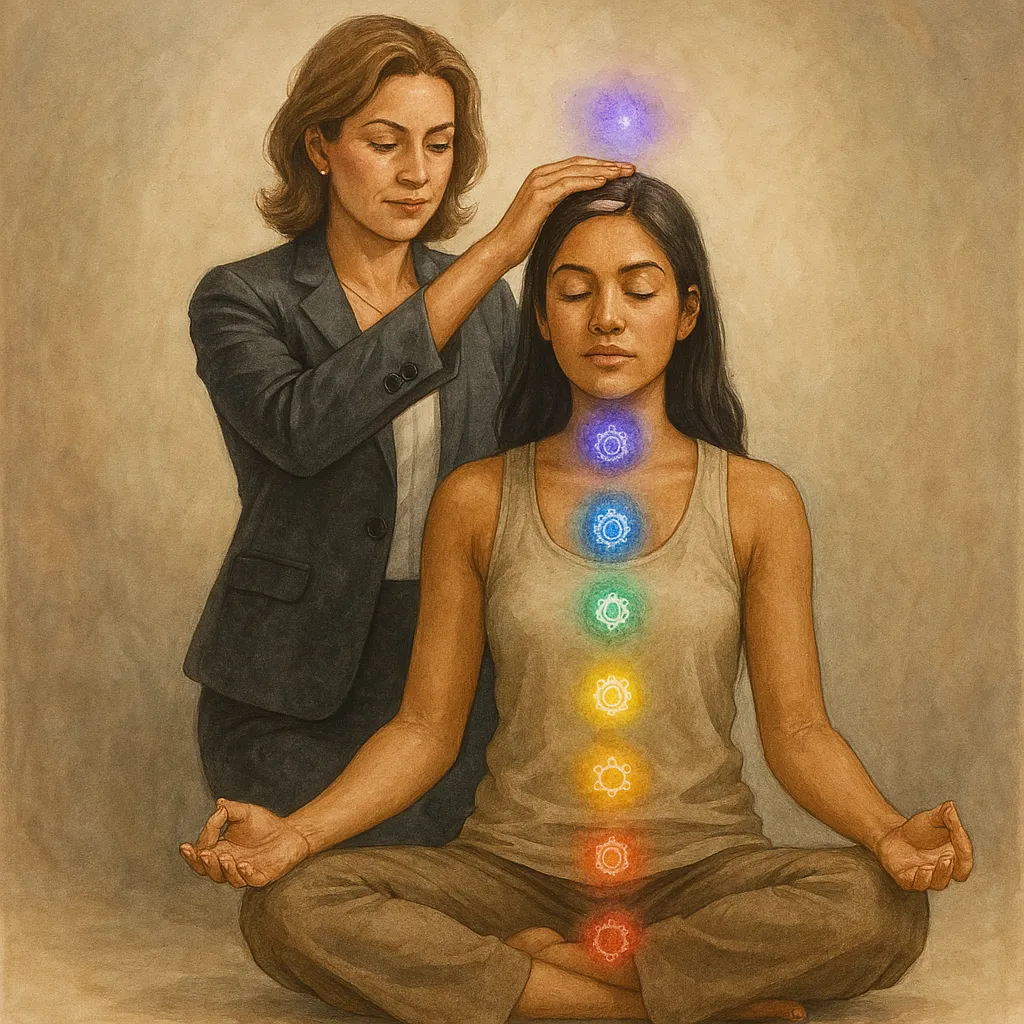
In yoga tradition, chakras are energy centers in the body, often pictured as spinning wheels. Practitioners link them with emotional, physical, and spiritual well-being. There are seven main chakras along the spine, each tied to specific aspects of life. They are a spiritual concept, and mainstream science does not recognize them as anatomical structures.
The 7 Main Chakras and Their Roles
Root Chakra (Muladhara)
Located at the base of the spine, this chakra is linked in tradition with security, grounding, and survival.
Sacral Chakra (Svadhisthana)
Situated just below your navel, this one is linked with creativity, passion, and sexual energy.
Solar Plexus Chakra (Manipura)
Located around your stomach, this chakra is described as your personal power hub, linked to confidence and control.
Heart Chakra (Anahata)
Right in the center of your chest, the heart chakra is associated with love: self-love, romantic love, compassion, and forgiveness.
Throat Chakra (Vishuddha)
Found in the throat, this is the communication center. Speaking your truth is its theme.
Third Eye Chakra (Ajna)
Between your eyebrows lies the third eye chakra, linked with intuition, insight, and imagination.
Crown Chakra (Sahasrara)
Sitting at the top of your head, this one is linked with higher consciousness or your version of spirituality.
What Is Chakra Balancing?
It is the practice of clearing and aligning your chakras so that energy flows freely. In this view, balanced chakras mean a balanced you, and unbalanced chakras may leave you feeling off emotionally, mentally, or physically.
Signs Your Chakras Might Be Blocked
In chakra teaching, these are common signs. They also have ordinary causes, so see a doctor if they persist.
- Chronic fatigue or restlessness
- Emotional instability or anxiety
- Feeling stuck or unmotivated
- Physical issues (such as throat pain or digestive problems)
- Disconnection from your body or others
Benefits of Balanced Chakras
Followers report these benefits. They are personal reports, not research findings.
- Mental clarity
- Improved emotional regulation
- Physical well-being
- Stronger intuition
- A deeper sense of peace and joy
Can You Balance Chakras on Your Own?
DIY Chakra Balancing Techniques
Meditation
Chakra-specific meditations are a common way to focus on each center. Visualize each chakra as a colored wheel spinning freely.
Yoga
Different yoga poses are linked with specific chakras in yoga tradition. For example, tree pose is linked with the root chakra, and camel pose with the heart chakra.
Affirmations
Affirmations are a popular way to shape your thoughts. Try: “I am grounded,” “I trust my intuition,” or “I speak my truth.”
Crystals and Essential Oils
Some people use crystals like amethyst or rose quartz, or oils like lavender and sandalwood, as part of their practice.
Pros and Cons of Self-Balancing
Pros:
- Free or low-cost
- Easy to fit into your routine
- Good for regular maintenance
Cons:
- May feel less satisfying if you want deeper guidance
- Takes time to learn
- Easy to misread what is going on
The Role of a Professional Chakra Healer
Who Are Chakra Healers?
They are energy practitioners trained in different modalities, such as Reiki, sound therapy, and crystal work. Their goal is to help you align and cleanse your chakras.
What Do They Do During a Session?
They might:
- Scan your energy field, as practitioners describe it
- Use hands-on or hands-off energy techniques
- Place crystals on chakra points
- Guide you through breathing or meditation
Each session is tailored to you and your needs.
Benefits of Working With a Professional
People who book sessions mention:
- A guided, calm space
- Someone to explain the practice
- Emotional and spiritual support
- Time set aside for yourself
The National Center for Complementary and Integrative Health notes that Reiki has not been clearly shown to be effective for any health-related purpose. Sessions may still feel relaxing, but they are not a medical treatment.
How to Choose the Right Chakra Healer
Credentials and Experience
Look for practitioners who can explain their training and methods plainly. Avoid anyone who promises results.
Client Reviews and Testimonials
Reviews show other people’s experience, though they do not prove a treatment works.
Personal Connection and Trust
This matters. If you do not feel comfortable with the practitioner, you may not relax enough to get much from the session.
When Should You See a Professional?
Emotional or Physical Imbalances
If emotions or physical symptoms feel too intense or out of control, see a doctor or therapist first. A chakra practitioner is not a substitute.
Lack of Progress With DIY Methods
If home practice leaves you stuck, a practitioner may offer a fresh approach.
Deep Trauma or Energy Blocks
Serious past trauma needs qualified mental health care. Chakra work can sit alongside therapy, not replace it.
Myths About Chakra Balancing
You Must Be Spiritual to Benefit
Not true. Many people use chakra practices as a relaxation routine, whatever they believe.
It’s Just a Placebo
Chakras and energy medicine have a long history in tradition. Many people report feeling better afterward, and it is hard to say whether that comes from expectation, relaxation, or something else.
All Healers Are the Same
They are not. Practitioners differ in training and approach, so do your homework.
Real-Life Experiences: Stories from Clients
People describe sessions in different ways. Some say they feel lighter or calmer afterward. Others feel emotional, and some notice nothing. These are individual experiences, not evidence of an effect.
If you are struggling with anxiety, speak to a doctor or therapist as well.
Final Thoughts: Is Professional Chakra Balancing Worth It?
If you are dealing with stress, emotional weight, or just feel off, chakra balancing may help you relax, and you can do it yourself. A professional adds guidance and a calm space, which some people value. Keep medical care for medical problems.
Frequently asked questions
Can I feel chakra balancing immediately?
Some people feel lighter or more emotional right away, while others notice gradual shifts over time. Experiences vary.
How often should I get my chakras balanced?
It varies. Some people book monthly sessions, others one a quarter. There is no research-based schedule, so tune into your body and see what feels right.
Are there risks involved in chakra healing?
The practices are gentle, but emotional releases can feel intense for some people. Choose a trusted professional and see a doctor or therapist for medical or mental health concerns.
What should I expect after a session?
You might feel relaxed, emotional, or energized. Drink water and give yourself time to settle.
Can chakra healing replace medical treatment?
No. It is complementary, not a substitute. Always consult your doctor for medical issues.